SINO MAXTON GROUP Co.,Ltd
News Details
Traditional Composting vs. Enzymatic Fermentation: Cost & ROI Guide for Organic Fertilizer Production
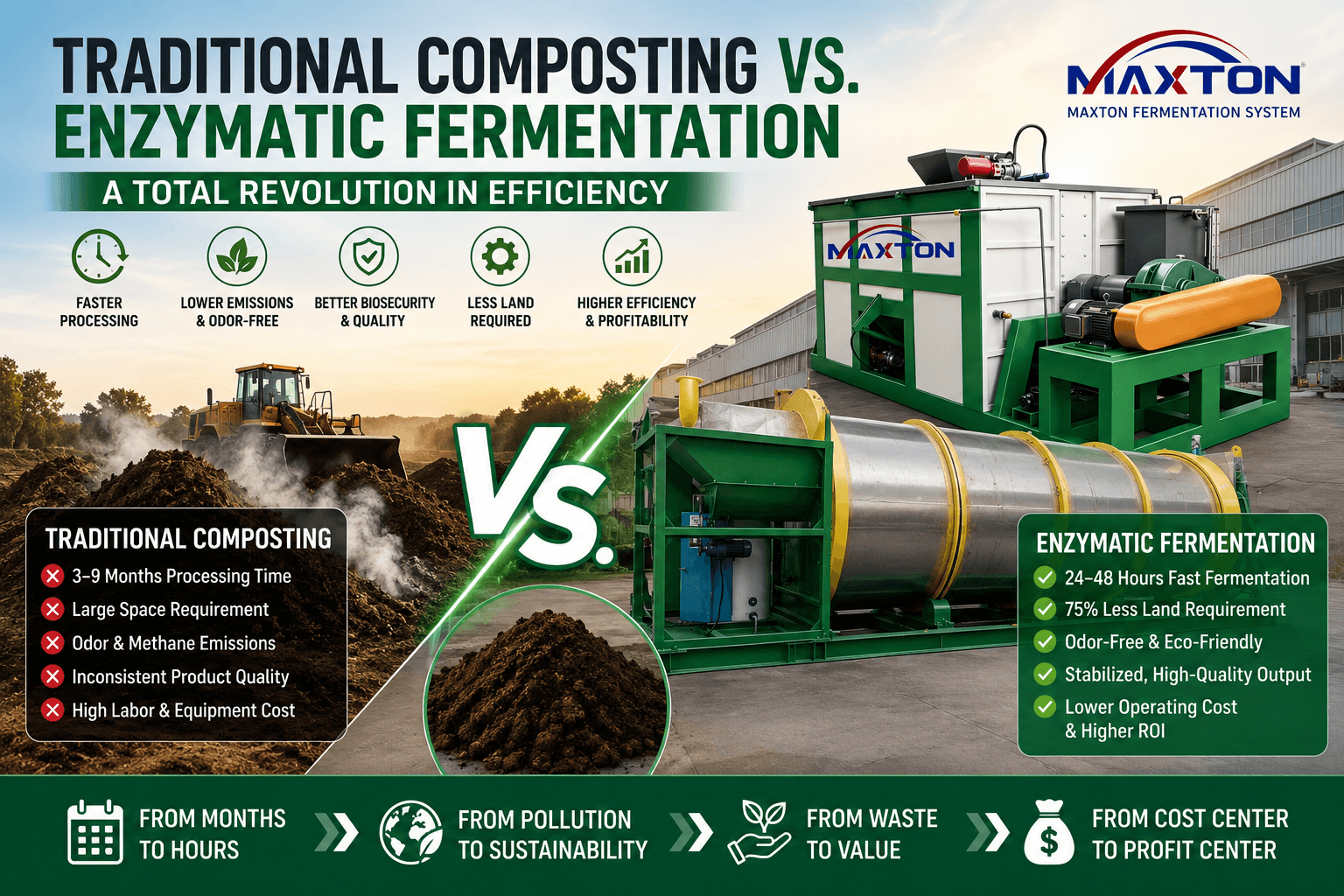
As global agriculture moves toward sustainable and high-efficiency fertilizer production, managing organic waste effectively has become a critical challenge. Traditional composting, while reliable, is slow, labor-intensive, and space-consuming. Modern enzymatic fermentation systems—like MAXTON’s rotary drum fermenters or horizontal fermenters—offer a high-speed, fully automated alternative that improves production efficiency, biosecurity, and ROI.
This article compares traditional composting and enzymatic fermentation, highlighting key efficiency differences, technological advantages, and why MAXTON solutions are transforming organic fertilizer production.
1. Mechanism: Nature vs. Bio-Tech Acceleration
Traditional Composting relies on passive microbial activity. Organic matter is broken down over 3–9 months by naturally occurring bacteria and fungi, requiring manual turning and aeration.
According to the U.S. Environmental Protection Agency (EPA), composting is a widely recognized method for recycling organic materials and reducing landfill waste.
Source: U.S. EPA Composting Resources
Enzymatic Fermentation, in contrast, introduces targeted bio-catalysts and microbial enzymes that break down proteins, fats, and cellulose into simpler nutrients. Initial pathogen inactivation and rapid decomposition can be achieved in 8–12 hours, while full stabilization and maturation are typically completed within 24–48 hours under controlled conditions.
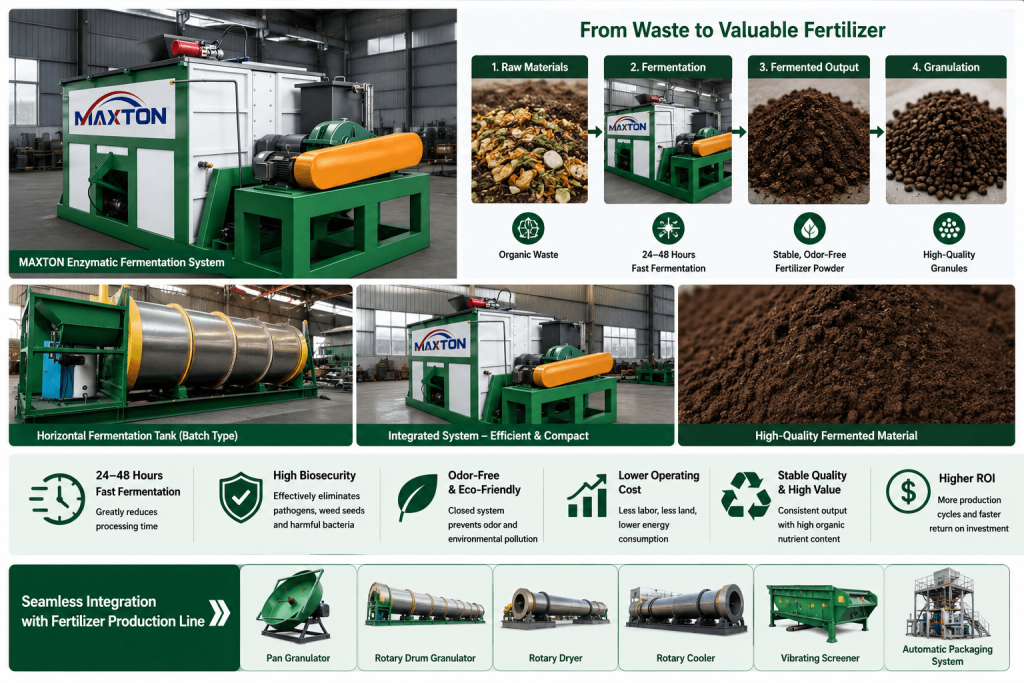
MAXTON Advantage: Our enzymatic fermenters integrate precisely controlled enzyme dosing, temperature, and aeration, guaranteeing consistent, market-ready fertilizer batches every day.
2. Space, Environmental, and Biosecurity Footprint
| Feature | Traditional Composting | MAXTON Enzymatic Fermentation |
|---|---|---|
| Land Required | Large windrows or piles; significant acreage | Compact, modular units; ~75% less land required |
| Odor Control | High; ammonia & methane emissions | Closed-system; odor-free, GHG capture included |
| Pest Attraction | Flies, rodents, birds | Fully sealed; pest-free |
| Leaching Risk | Rainwater can wash nutrients away | Closed, dry process; zero leaching |
| Pathogen & Weed Seeds | Cold spots; E. coli, Salmonella may survive | Thermophilic conditions above 70°C ensure sterilization; weed seeds are eliminated |
Research published by the Food and Agriculture Organization (FAO) highlights the importance of controlled biological treatment processes for improving nutrient recycling and reducing environmental risks associated with organic waste.
Reference: FAO – Food and Agriculture Organization
3. Operational Efficiency & Automation
Traditional Composting:
- Labor-intensive: manual pile turning, moisture monitoring
- Time-consuming: capital tied up for months
- Inconsistent nutrient content and NPK levels
Enzymatic Fermentation (MAXTON):
- Automated feeding, turning, and aeration
- Moisture and temperature are precisely controlled
- Rapid processing allows on-demand fertilizer production
- Consistent NPK output suitable for industrial and commercial use
MAXTON Patented Features:
- Heavy-duty scraper systems prevent material from sticking
- Automated atomization ensures uniform moisture
- Reinforced frame for long-term reliability
- Integration with downstream granulation, drying, and packaging lines
4. Economic Efficiency & ROI
| Metric | Traditional Composting | MAXTON Enzymatic Fermentation |
|---|---|---|
| Equipment Cost | Low | Moderate |
| Labor Cost | High | Low (automated) |
| Processing Time | 30–90 days | 24–48 hours (full stabilization) |
| Land Footprint | Large | Compact |
| Consistency | Variable | Guaranteed |
| Payback Period | 18–24 months | 12–18 months |
MAXTON Advantage: Higher throughput, lower labor costs, and reliable product quality shorten ROI and increase revenue potential.
5. Fermentation Quality: The Foundation of Premium Fertilizer Granules
The quality of the fermentation process directly determines the performance of the entire fertilizer production line.
Regardless of whether the final product is organic fertilizer granules, bio-organic fertilizer, or compound fertilizer, high-quality fermented material is the foundation for achieving stable granulation results.
Poorly fermented raw materials often lead to:
- Excessive moisture fluctuations
- Material sticking during granulation
- Low pellet strength
- High dust generation
- Increased recycling rates
- Inconsistent nutrient content
By contrast, properly stabilized organic material provides uniform particle size, balanced moisture content, and improved biological activity, creating ideal conditions for downstream processing.
How MAXTON Improves Downstream Granulation Performance
MAXTON enzymatic fermentation systems are designed not only to accelerate decomposition but also to prepare materials for efficient fertilizer manufacturing.
The system delivers:
- Uniformly fermented organic material
- Stable moisture content
- Reduced fiber entanglement
- Improved material flowability
- Consistent nutrient distribution
These characteristics significantly improve the performance of downstream equipment, such as:
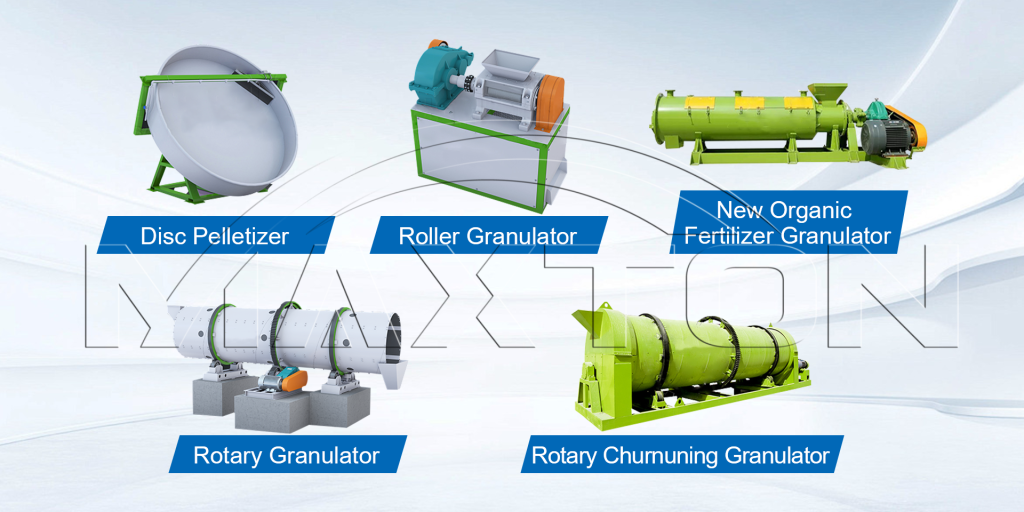
- Pan Granulators
- Rotary Drum Granulators
- Fertilizer Dryers
- Rotary Coolers
- Screening Machines
- Automatic Packaging Systems
The result is higher granulation efficiency, stronger fertilizer granules, reduced dust generation, and a more stable production process from fermentation through final packaging.
6. MAXTON vs Competitors: Pain Points → Selling Points
| Pain Point | Competitor Solutions | MAXTON Advantage |
|---|---|---|
| Material sticking | Occasional scrapers | Patented continuous scraper, wear-resistant alloys |
| Moisture fluctuations | Manual adjustment | Automated atomization for precise layer-by-layer control |
| Pathogen survival | Cold spots, open piles | Thermophilic conditions above 70°C; weed seeds eliminated |
| Labor-intensive | Manual turning, weeks-long cycles | Fully automated, rapid processing in 24–48 hours |
7. High-Frequency B2B FAQ: Enzymatic Fermentation
Q1: What types of organic waste can the enzymatic fermentation process process?
MAXTON systems handle poultry manure, cow manure, pig manure, crop residues, food waste, and other biodegradable materials. Custom enzyme formulations ensure fast, uniform decomposition.
Q2: How long does enzymatic fermentation take?
Initial pathogen inactivation and rapid decomposition can be completed in 8–12 hours, while full stabilization and maturation typically take 24–48 hours, depending on raw material and system configuration.
Q3: Does enzymatic fermentation eliminate pathogens and weed seeds?
Yes. Thermophilic conditions above 70°C, combined with closed-system aeration, ensure pathogen elimination and deactivate dormant weed seeds.
Q4: Is enzymatic fermentation suitable for commercial fertilizer plants?
Absolutely. MAXTON systems are designed for industrial scale and can integrate with drying, screening, and packaging lines for fully automated production.
Q5: What is the expected ROI of an industrial enzymatic fermentation system?
Payback periods typically range from 12 to 18 months, thanks to reduced labor, faster processing, and higher-quality output.
8. Conclusion
While traditional composting remains viable for small-scale or hobby operations, enzymatic fermentation is the clear winner for industrial fertilizer plants:
- Faster production cycles
- Consistent nutrient quality
- Reduced labor and space requirements
- Pathogen-free, market-ready fertilizer
- Shorter ROI and higher profitability
Switching to MAXTON enzymatic fermentation systems transforms organic waste management from a slow, labor-intensive process into a precision, high-speed fertilizer production operation.
Contact MAXTON for a Customized Enzymatic Fermentation Solution
Email: svip@maxtonorg.com
Website: MAXTON Fertilizer Solutions
Whatsapp:+86-18237180035
Related Posts
9 月 15, 2026
Fertilizer Plant Cost in 2026: Real Budget Ranges for Organic, Liquid, and NPK Production
Quick answer: A small organic fertilizer plant can start under $50,000. A commercial granular fertil...
8 月 24, 2026
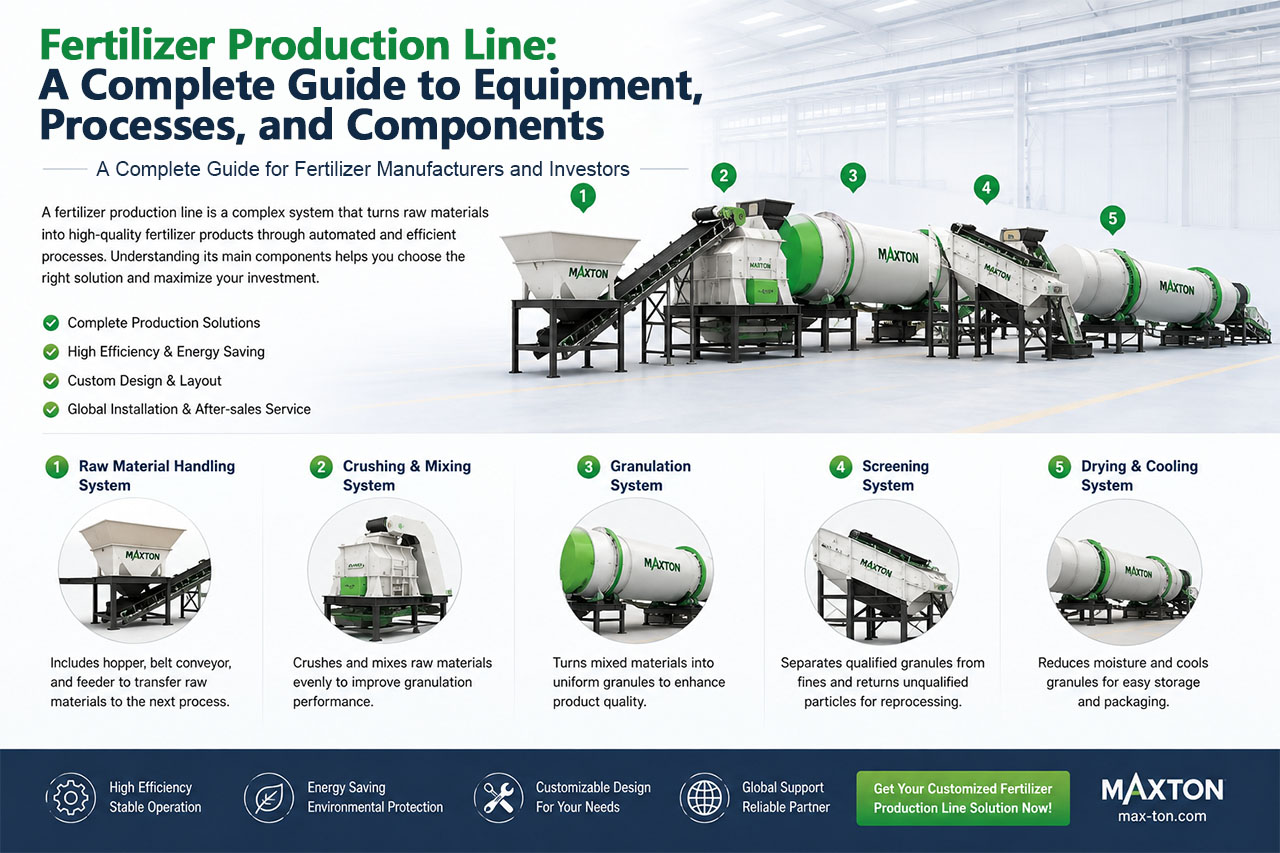
Fertilizer Production Line: A Complete Guide to Equipment, Processes, and Components
What Are the Main Components of a Fertilizer Production Line? A complete fertilizer production line ...
Give us a call or Simply Complete the Form
Address:Zhengzhou City, Henan Province, ChinaPhone:+86-18237180035Email:svip@maxtonorg.com