Rotary Drum Granulator for High-Capacity NPK & DAP Fertilizer Production
Welcome to the Rotary Drum Granulator Technical Zone of Maxton. We not only provide reliable mechanical equipment but also prioritize offering you scientific process design and professional material testing support.
Quick Specs: Drum diameter Φ0.8–Φ4.5 m | Drum speed 8–20 rpm | Capacity 0.5–90+ t/h | Motor power 1.1–280 kW | Weight 1.12–180 t | Granule size 1–6 mm | Retention time 30 sec–60 min | Methods: wet granulation & reaction granulation (DAP/MAP)
★ Limited Offer: Free material testing and custom engineering proposal for qualified inquiries. We respond within 24 hours.
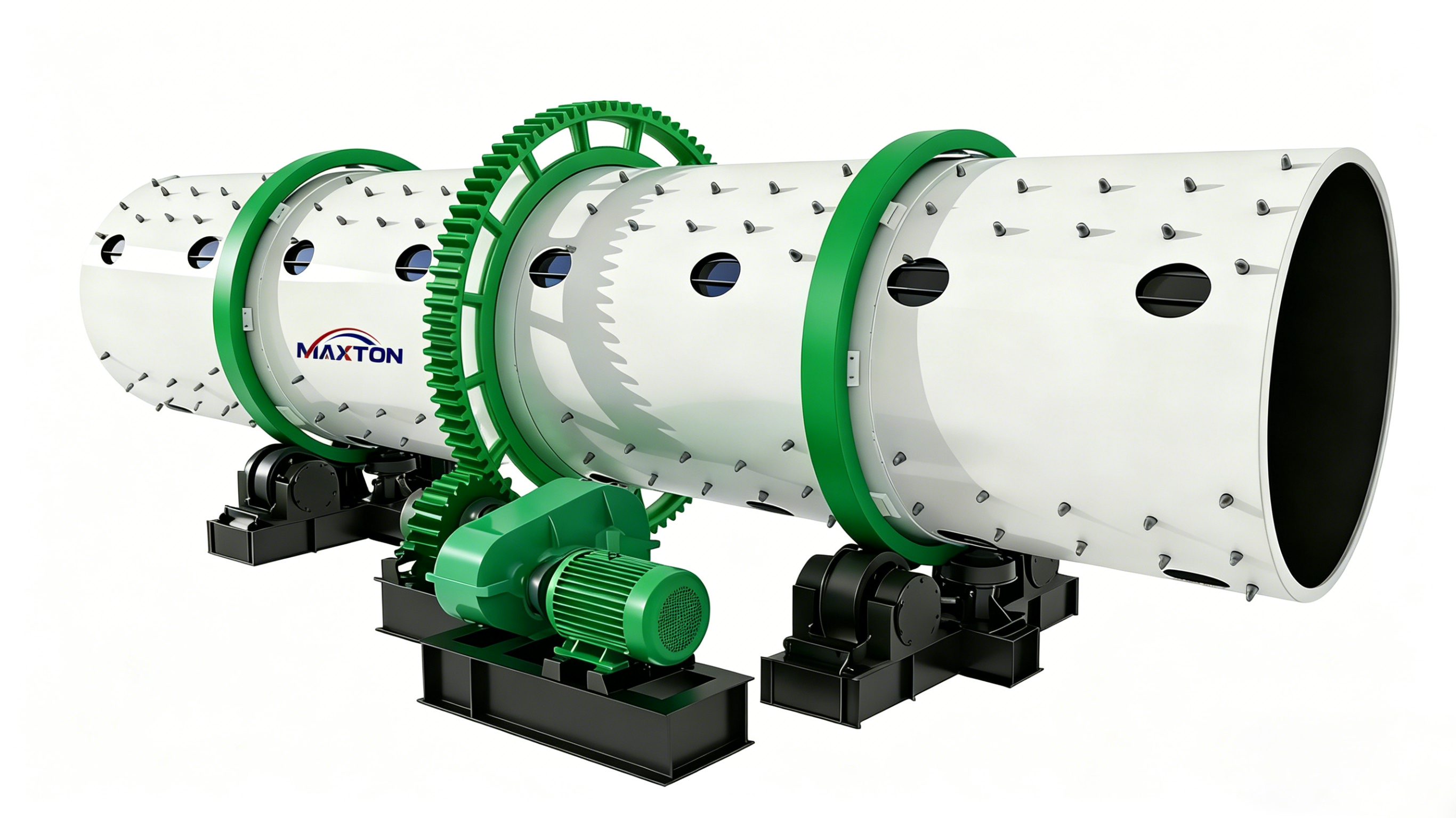
Rotary Drum Granulator Overview
The Rotary Drum Granulator is a core piece of agglomeration equipment widely used in the fertilizer, feed, mining, and chemical industries. By utilizing the tumbling action of a rotating cylinder, it efficiently converts powdered raw materials into uniform, dense, and spherical granules, making it the premier choice for large-scale granulation lines.
High Granulation Rate
Produces highly spherical, uniform, and aesthetically pleasing granules. Steam granulation achieves >90% granulation rate.
Energy Efficient
Delivers lower energy consumption per ton compared to alternative granulation methods. Steam granulation drastically reduces downstream drying costs.
Unmatched Versatility
Handles a vast array of materials; excels in both wet granulation and chemical reaction granulation (DAP/MAP).
Simplified Maintenance
Smooth operation, high automation compatibility, robust structure, and minimal wear parts for maximum uptime.
Scalable Capacity
From 0.5 TPH lab-scale R&D to over 90 TPH industrial mass production. Precision-engineered scaling to match your requirements.
Custom Engineering
Full-parameter custom designs: drum speed, inclination, spray systems, PLC automation, custom liners and internal baffles.
Applicable Materials & Fertilizer Types
MAXTON Rotary Drum Granulators flawlessly process a variety of materials across multiple industries.
Inorganic Fertilizers
- NPK Compound Fertilizer
- Diammonium Phosphate (DAP)
- Monoammonium Phosphate (MAP)
- Superphosphate (SSP / TSP)
- Potassium Chloride (MOP)
- Potassium Sulfate (SOP)
- Urea-based compound fertilizers
Organic & Other Materials
- Humic acid
- Bio-organic fertilizers
- Fermented livestock and poultry manure
- Mineral powders
- Chemical raw materials
- Metallurgical dust & by-products
- Feed additives & premixes
Production Capacity Range: Minimum 0.5 TPH (lab / R&D scale) — Maximum 90+ TPH (industrial mass production). Custom precision-engineered scaling available to match any production line requirement.
🚀 Ready to scale up your fertilizer production?
Get a Custom Quote for Your Capacity NeedsWorking Principle & How Granules Are Formed
Powdered materials enter the inclined, rotating drum through a feeding device. As the drum rotates at a constant speed, the material tumbles and creates a rolling bed. With the addition of a liquid binder (water, steam, or chemical slurry) sprayed onto the bed, the particles agglomerate into granules. Under the combined forces of gravity and centrifugal force, the formed granules move down the drum's slope and are discharged.
NPK Compound Fertilizer
Nitrogen, Phosphorus, and Potassium powders are fed into the drum and agglomerated directly using liquid binders — or granulated separately and bulk-blended later.
DAP / MAP Reaction Granulation
In DAP/MAP production, the drum acts as a dynamic chemical reactor. A pre-neutralized phosphoric acid slurry is sparged with ammonia gas inside the drum bed, simultaneously completing the chemical reaction and the physical granulation.
Value-Added Fertilizers
Using specialty binders or surface coatings, producers can manufacture slow-release fertilizers or multi-layered, nutrient-rich granules with enhanced agronomic performance.
The Physics of Design: Optimal Parameters
Optimal Inclination Angle
Carefully calculated to ensure the material bed forms a perfect "cascading" state, which is crucial for uniform granule growth and consistent product quality.
Rotational Speed (RPM)
If the RPM is too low, the material slumps and fails to granulate; if too high, centrifugal force pins the material to the drum wall (centrifuging), halting granulation entirely. Maxton engineers calculate the precise operating window for each application.
⚠ Risk Mitigation: Why Material Testing is Critical
Every material responds differently to moisture, binders, and tumbling. Designing a high-performance granulator without understanding the material is a gamble.
- Confirms process feasibility and identifies scale-up issues early
- Determines optimal binder feed rates and spray nozzle configuration
- Establishes equipment fill percentage and retention time (30 sec – 60 min)
- Eliminates investment risks and prevents costly plant downtime
Maxton's Custom Engineering Capabilities
No two materials are exactly alike. Maxton provides full-parameter custom designs based on your unique process requirements. Our 50+ member engineering team supports every project from initial concept through commissioning.
Precision Adjustable Mechanics
Precision-adjustable drum speed and inclination mechanisms to optimize cascading bed behavior for your specific material and target granule specifications.
Advanced Binder Spray Systems
Multi-point distribution and precise atomization control for uniform binder application. Supports water, steam, and chemical slurry as binders.
Full PLC Automation
Seamless integration with your entire production line. Remote monitoring, automated parameter adjustment, and real-time performance logging.
Customized Drum Liners
UHMW-PE, anti-corrosive rubber, or stainless steel liners to prevent sticking, reduce caking, and extend service life in harsh chemical environments.
Internal Baffle Configurations
Optional internal baffle arrays to enhance mixing and agglomeration efficiency, achieving more uniform granule growth across the entire drum length.
Steam vs. Water Granulation
Steam granulation: >90% granulation rate, hard granules, lower drying costs — ideal for large NPK plants. Water granulation: lower CAPEX, simpler setup — ideal for organic or mid-scale lines.
Technical Specifications
Standard Model Range
| Model | Inner Diameter (mm) | Drum Speed (r/min) | Capacity (t/h) | Motor Power (kW) | Weight (t) |
|---|---|---|---|---|---|
| Φ0.8×3.0 | 800 | 20.0 | 0.5 – 1.5 | 1.1 | 2 |
| Φ1.0×3.0 | 1000 | 17.0 | 1.0 – 3.0 | 3 | 4 |
| Φ1.2×4.0 | 1200 | 16.0 | 2.0 – 5.0 | 5.5 | 7 |
| Φ1.5×5.0 | 1500 | 15.0 | 5.0 – 10.0 | 11 | 14 |
| Φ1.8×6.0 | 1800 | 14.0 | 8.0 – 15.0 | 18.5 | 26 |
| Φ2.4×6.0 | 2400 | 13.0 | 15.0 – 25.0 | 45 | 58 |
| Φ3.0×7.0 | 3000 | 11.0 | 25.0 – 45.0 | 90 | 95 |
| Φ3.6×8.0 | 3600 | 10.0 | 40.0 – 65.0 | 160 | 135 |
| Φ4.5×8.0 | 4500 | 8.0 | 30.0 – 90.0 | 280 | 180 |
Complete Drum Granulation Production Line
A standard turnkey fertilizer production plant includes the following core stages — from raw material batching through to finished product packaging.
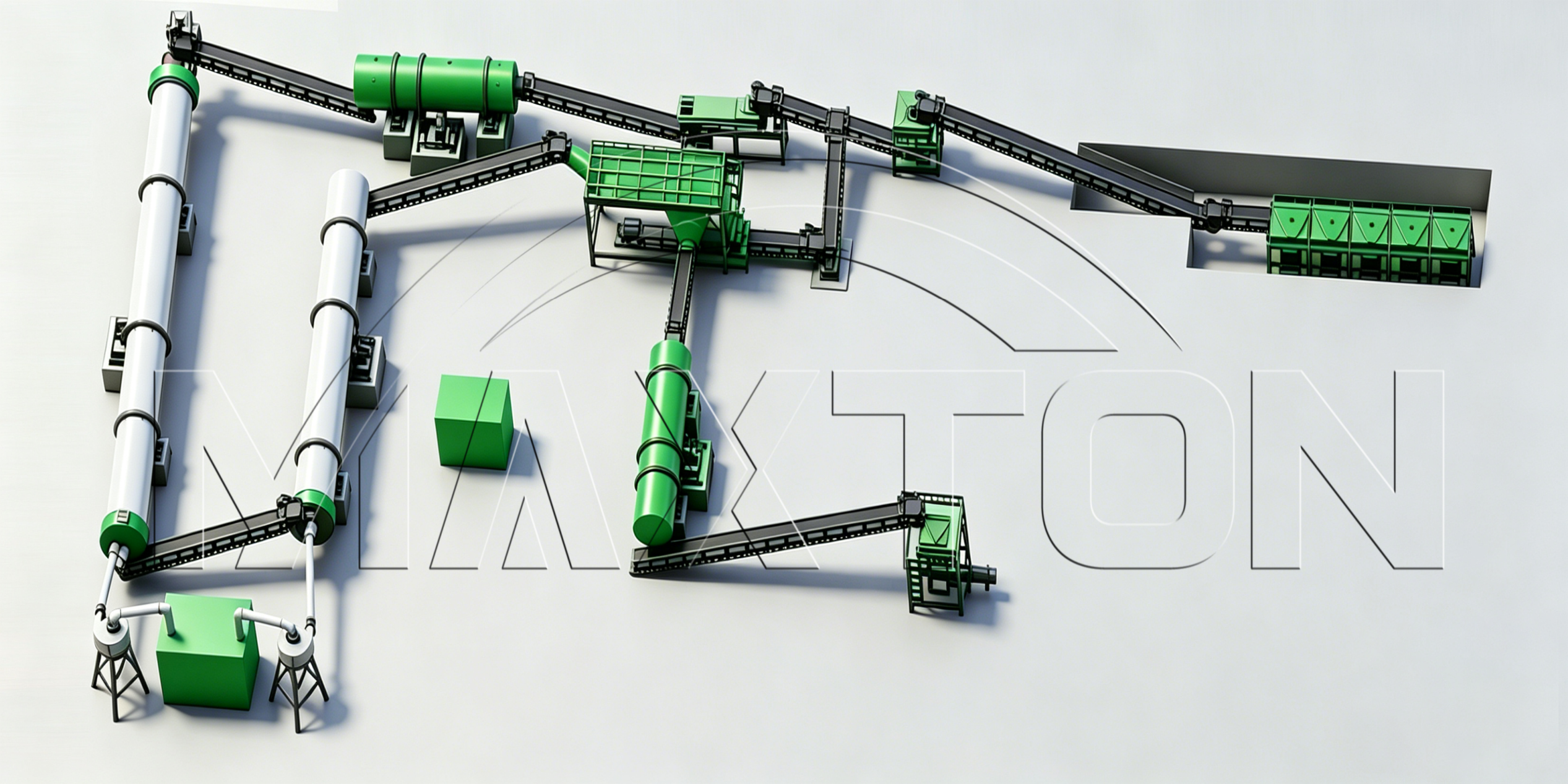
General Process Flow
🔎 Need a complete turnkey solution? View our 3D production line designs.
View 3D Designs at fertifactory.com ↗Technical Deep Dive: The Engineering Behind the Granule
The MAXTON rotary drum granulator is a high-capacity agglomeration system that converts powdered fertilizer materials into uniform 1–6 mm spherical granules via tumble-growth wet granulation or chemical reaction granulation (DAP/MAP). Operating parameters — drum inclination, rotation speed, binder spray rate, and retention time — are precision-engineered through material testing to achieve >90% granulation rates. Standard capacity range: 0.5–90 t/h.
1. Why Choose Rotary Drum Granulation for Fertilizer?
Granulation is the critical technology that transforms dusty, hard-to-handle powders into multi-nutrient pellets. This process prevents nutrient segregation during transport, eliminates dust emissions, and drastically improves field application efficiency. With its robust structural integrity and high tolerance for feedstock variations, the rotary drum granulator is the undisputed workhorse of the global fertilizer industry.
2. How Are High-Quality Granules Formed?
A qualified granule is typically a solid, spherical pellet ranging from 1–6 mm in diameter.
- NPK Compound Fertilizer: N, P, K powders are fed and agglomerated using liquid binders, or granulated separately and bulk-blended later.
- DAP / MAP Reaction Granulation: The drum acts as a dynamic chemical reactor — phosphoric acid slurry is sparged with ammonia gas, simultaneously completing the chemical reaction and physical granulation.
- Value-Added Fertilizers: Specialty binders or surface coatings produce slow-release fertilizers or multi-layered, nutrient-rich granules.
3. The Physics of Design: From Standard to Custom
Achieving stable, high-capacity production requires mastering material dynamics. Maxton engineers focus on:
- Optimal Inclination Angle: Carefully calculated to ensure the material bed forms a perfect "cascading" state, crucial for uniform granule growth.
- Rotational Speed (RPM): Too low = material slumps; too high = centrifuging effect pins material to drum wall, halting granulation entirely.
- Binder Distribution: Multi-point spray nozzle systems ensure uniform moisture distribution across the rolling bed for consistent balling rate.
- Drum Length / Diameter Ratio (L/D): Governs retention time and directly determines granule density and reaction completion rate.
Expert Engineering FAQ — Troubleshooting & Diagnostics
In-depth questions from plant engineers and procurement teams worldwide — optimized for voice search and AI generative answers.
Q1: What core data is required to engineer a custom rotary drum granulator?
Engineering a drum granulator is not guesswork. We require comprehensive raw material data (chemical composition, moisture content, temperature, bulk density, particle size distribution, abrasiveness, and corrosivity), target product data (granule size distribution, finished product density), and process / site parameters (material of construction requirements, electrical control standards, ambient temperature, humidity, and even altitude). Most critical design data must be obtained through front-end material testing at our Innovation Center.
Q2: How is retention time inside a rotary drum granulator determined?
Retention time typically ranges from 30 seconds to 60 minutes, depending on the process objective. It not only determines the drum's length-to-diameter (L/D) ratio but also directly governs granule densification and reaction completeness. MAXTON determines the optimal retention time threshold through pilot-scale front-end testing that accounts for material flow behavior, binder reactivity, and target granule hardness.
Q3: What are the high-frequency wear parts, and how do you perform predictive maintenance?
Core wear parts include the internal anti-corrosive liner, lifter flights (louver plates), trunnion rollers, riding rings (tires), and thrust rollers. During maintenance, drum alignment (筒体同轴度) is absolutely critical. Any deviation from the centerline introduces extreme eccentric shear forces on the trunnions and riding rings, causing catastrophic and accelerated wear on these heavy cast components. MAXTON provides precision laser-alignment services during installation and scheduled inspection protocols to extend service life.
Q4: How do you fundamentally solve caking and material build-up on drum walls?
Caking is typically caused by excess moisture, improper temperature, or process parameter deviations. Engineering-level solutions include: (1) installing UHMW self-cleaning liners or mechanical scrapers for forced de-scaling; (2) precisely reducing the binder spray volume; (3) increasing the dry recycle ratio to dilute feed moisture; (4) dynamically adjusting rotation speed and inclination angle to optimize material trajectories; and (5) when necessary, applying anti-caking agents in the downstream coating process.
Q5: Steam granulation vs. water granulation — which process should I choose?
These are two distinct thermodynamic pathways. Steam Granulation (Hot Method) leverages both heat and moisture from high-temperature steam, producing extremely hard granules with granulation rates exceeding 90% and significantly reducing downstream drying loads. It is ideal for large-scale, high-concentration NPK production — but requires upfront investment in a boiler system. Water Granulation (Cold Method) has a lower initial CAPEX and simpler setup, making it suitable for small-to-mid-scale lines or organic fertilizer projects sensitive to high temperatures — though at the cost of higher drying energy consumption.
Q6: Why do large-scale projects prefer rotary drum granulators over disc granulators?
Beyond its far superior single-machine throughput capacity, the rotary drum granulator's greatest competitive advantage is its closed system design. When handling high-dust or chemically irritating fertilizer raw materials (such as ammonia during DAP reaction granulation), the enclosed drum minimizes dust and harmful gas emissions to the greatest extent possible — making it significantly more competitive under modern stringent environmental and safety regulations.
Related Fertilizer Granulation Equipment
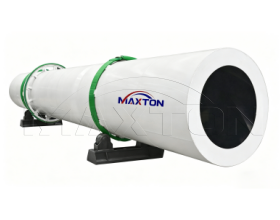
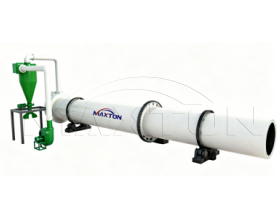
MAXTON provides complete fertilizer production line equipment including granulators, dryers, coolers, screening machines and coating equipment.
Why Partner with Maxton?
Key reasons why fertilizer manufacturers worldwide choose MAXTON granulation equipment. Visit fertifactory.com for complete 3D layouts and case studies.
Decades of Process Expertise
We specialize exclusively in the agglomeration, drying, cooling, and handling of bulk solids — providing science-backed process design, not just standard machinery.
100+ Global Success Cases
Standardized service procedures and comprehensive after-sales support ensure smooth project execution across Southeast Asia, Africa, Middle East and South America.
Heavy-Duty Manufacturing
Integrated steel plate rolling, advanced heat treatment for transmission components — machines designed to run 24/7 in harsh chemical environments. Max drum diameter up to 4.5 m.
Turnkey Lifecycle Services
From initial process consulting, 3D plant layout, and equipment manufacturing, to on-site commissioning and operator training — Maxton guarantees your ROI.
Free Material Testing
Material trials at our Innovation Center confirm process feasibility, identify scale-up issues early, and gather critical design parameters — eliminating investment risks before you commit.
Optimized ROI
Tailored solutions that maximize return on investment through efficient process design, energy optimization, minimal waste generation, and precise capacity matching.