1. Seed Nucleation
Dry powder meets metered liquid binder on an inclined rotating disc. Capillary adhesion between fine powder particles forms dense seed nuclei — the foundation of every high-quality spherical granule.
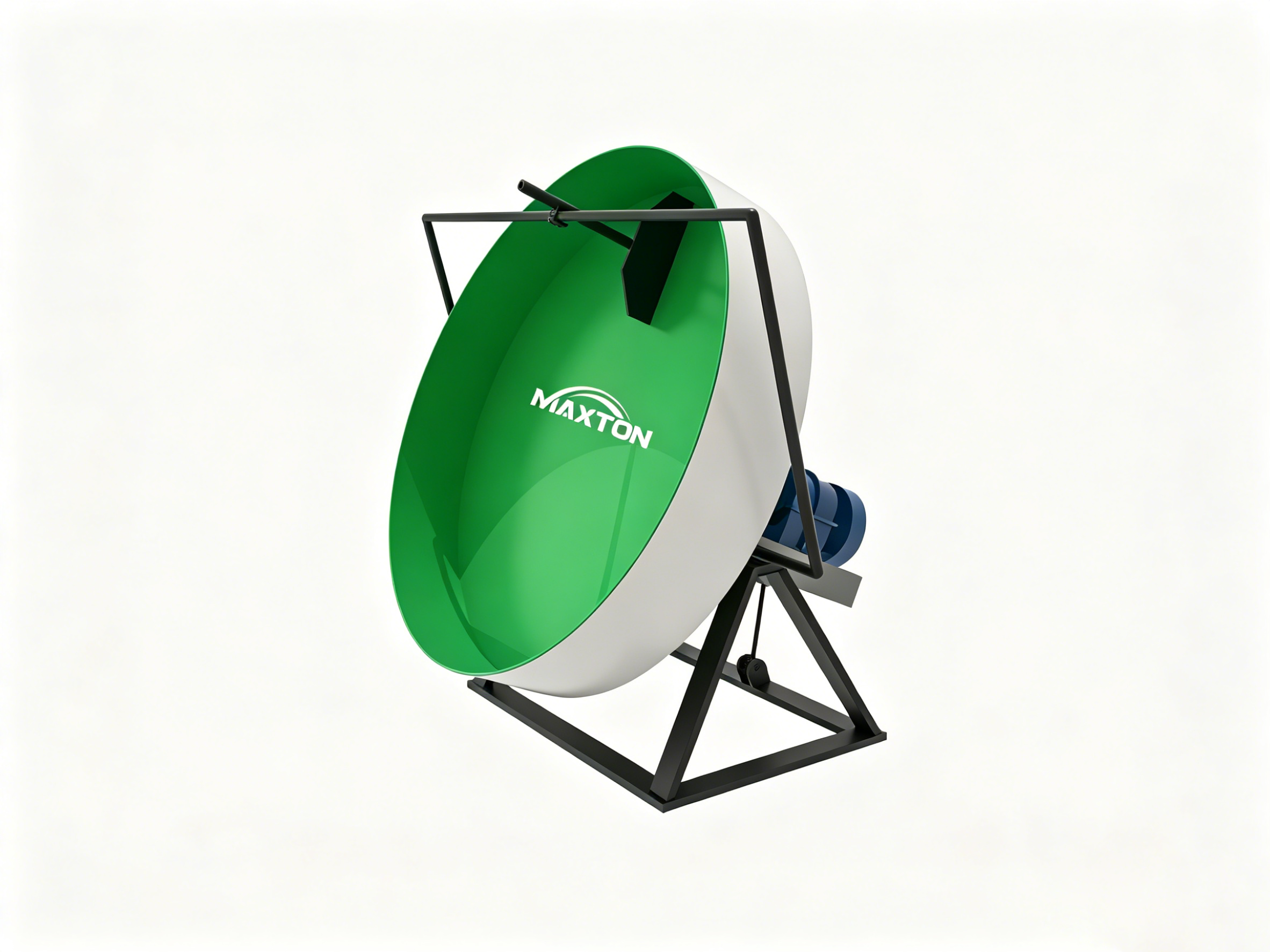
The MAXTON Disc Granulator (pan pelletizer) is a robust wet granulation system that converts fine powders into uniform, spherical granules using an inclined rotating disc with integrated spray system.
Quick Specs: Disc diameter 800–5000 mm | Inclination 45°–55° | Speed 10–30 rpm | Balling rate 80–95% | Materials: wear-resistant steel, 304/316L SS, anti-stick polymer | Granule size: 1–6 mm | Capacity: 0.2–20 t/h | Motor power: 1.1–30 kW | Weight: 0.3–15 t | Retention time: 30 sec–20 min | Moisture range: 15–30% | Wet agglomeration (tumble-growth) method.
★ Limited Offer: Free material testing and custom engineering proposal for qualified inquiries. We respond within 24 hours.
A complete fertilizer disc granulation line covers every stage from raw material batching to finished product packaging.
The MAXTON disc granulator uses wet agglomeration (tumble-growth) to convert fine powder into 1–6 mm spherical granules for NPK, humic acid, and chemical fertilizers. Dry powder meets metered liquid binder on an inclined rotating disc for precise granule formation.
The machine features a precision-inclined disc, heavy-duty drive system, rigid support bracket and integrated multi-point spraying system. Material options include wear-resistant steel, 304/316L stainless steel and non-stick polymer lining.
Achieves 80–95% balling efficiency with only 10–25% return ratio. Built-in automatic classification via disc inclination (45°–55°) and frictional segregation ensures on-spec 1–6 mm pellets overflow while fines remain for further growth.
NPK compound fertilizer, diammonium phosphate (DAP), monoammonium phosphate (MAP), superphosphate, potassium chloride (KCl), potassium sulfate (K₂SO₄) and other inorganic fertilizer formulations.
Humic acid, bio-organic fertilizer, livestock and poultry manure fermentation products. High-organic, clay-rich formulations supported with anti-stick coating options.
Mining powders (limestone, gypsum, coal fines, cement kiln dust, pond tailings), chemical raw materials and industrial mineral powders.
Capacity Range: 0.2 t/h to 20 t/h
From laboratory-scale testing (model ZL800, 800 mm disc) to industrial mass production (model ZL5000, 5000 mm disc). MAXTON covers every scale.
Whether you need a small-scale pilot system for product development or a full industrial production line, MAXTON offers disc granulators with capacity ranging from 0.2 tons per hour to 20 tons per hour.
The MAXTON Disc Granulator uses wet agglomeration (tumble-growth) to convert fine powder into 1–6 mm spherical granules for NPK, humic acid, and chemical fertilizers through three sequential mechanisms:
Dry powder meets metered liquid binder on an inclined rotating disc. Capillary adhesion between fine powder particles forms dense seed nuclei — the foundation of every high-quality spherical granule.
Centrifugal force combined with gravitational tumbling rolls seed nuclei through dry feedstock. This onion-skin layering process progressively builds granule size and boosts crush strength while maintaining nutrient uniformity throughout each pellet.
Disc inclination (45°–55°) and frictional drag segregate granules by size. Qualified 1–6 mm pellets overflow the disc edge, while undersized fines remain on the disc for extended residence time and continued growth. No external screening required during granulation.
High-throughput wet granulation with 10–25% return ratio. Cost-effective operation with minimal material waste and maximum first-pass yield.
Built-in auto-classification ensures on-spec granule overflow. Consistent sphericity ideal for fertilizer coating, blending and precise nutrient delivery.
45°–55° stepless incline adjustment and 10–30 rpm speed control for rapid tuning of NPK, organic, and humic acid formulations. Full control over granule density, strength and residence time.
Intuitive real-time monitoring of material bed, cascading trajectory and granule formation. Fast recipe changeover for facilities producing multiple fertilizer formulations.
Corrosion-resistant construction for organic and chemical applications. Non-stick polymer lining and anti-stick coating available for high-organic, clay-rich formulations.
| Parameter | Typical Setting | Quality Impact |
|---|---|---|
| Diameter & Edge Height | 800–5000 mm disc diameter | Capacity, bed depth, retention time |
| Inclination | 45°–55° | Cascading velocity, sphericity, auto-classification |
| Rotation Speed | 10–30 rpm | Centrifugal hold vs. gravity flow balance |
| Feed Position & Rate | Multi-point feed system | Material distribution, granule uniformity |
| Scraper Clearance | 2–3 mm | Clean disc, prevents buildup |
| Spray System | Multi-point atomization | Moisture homogeneity (15–30%) |
Rotation speed 10–30 rpm and inclination 45°–55° tailored to material flowability and bulk density for precise 1–6 mm granule control.
Custom scraper layout with 2–3 mm clearance for bed depth and residence time control. Disc edge height matched to target capacity and material characteristics.
Wear-resistant steel for standard use, 304/316L stainless steel for corrosive chemical feeds, non-stick polymer lining for high-organic formulations.
Multi-point atomization for homogeneous moisture distribution. Anti-stick coating and self-cleaning scraper design for materials prone to disc buildup.
High granulation efficiency with 10–25% return ratio minimizes waste and maximizes first-pass yield for cost-effective fertilizer production.
Built-in automatic classification via disc inclination and frictional segregation ensures 1–6 mm pellets overflow while fines remain for continued growth.
Real-time monitoring of material bed, cascading trajectory and granule formation enables fast recipe changeover for multiple fertilizer formulations.
Multi-point spray system enables precise binder injection, micronutrient addition and liquid nutrient coating for customized fertilizer products.
High-quality disc granulation requires attention to multiple process parameters:
Adjust retention time by flattening inclination by 1°–2° or reducing speed to increase pellet density and crush strength. Staged binder and powder addition enables multi-layer granules.
N, P, K powders directly granulated into homogeneous compound fertilizer. Alternatively, each nutrient separately granulated then dry-blended for precise NPK formulations.
During DAP/MAP production, the disc functions as both granulator and reactor. Phosphoric acid slurry reacts with ammonia within the tumbling bed with neutralization heat accelerating hardening.
Staged binder and mineral powder addition enables slow/controlled-release fertilizers via polymer or sulfur coatings, and multi-layer granules with zoned nutrient release.
Every MAXTON disc granulator is engineered to match your specific application requirements. Design parameters are determined through material testing and custom engineering.
Material composition, particle size distribution (target 80% passing 80-mesh), bulk density, and chemical properties determine disc material and surface treatment.
Target NPK ratios, organic matter content, and nutrient release profile influence spray system design, retention time settings, and layering strategy.
Water, organic binders, or acid/alkaline solutions require different spray configurations, material of construction, and process parameters.
Critical parameters determined through material testing: Disc diameter, edge height, rotation speed, inclination angle, fill percentage, retention time, spray system configuration, scraper design, and drive power.
Raw material variability — in particle size, bulk density, moisture and plasticity — makes empirical testing essential before commercial-scale disc granulator specification. A comprehensive testing program at the MAXTON Innovation Center delivers the process design data required to mitigate scale-up risk.
Material variability makes testing essential for every custom application. Testing confirms feasibility, collects design data, and identifies scale-up risks before equipment fabrication.
| Testing Outcome | Business Impact |
|---|---|
| Confirm process feasibility | Validates wet agglomeration for target raw material blends |
| Collect critical design data | Quantifies binder/feed ratios, fill %, retention time, moisture, speed/inclination, spray design |
| Identify scale-up risks early | Detects disc sticking, excessive fines, high recycle ratios before fabrication |
| Reduce project risk | Prevents post-installation modifications, downtime and yield losses |
| Material Property | Design Implication |
|---|---|
| Particle Size Distribution | Affects packing density and seed nucleation |
| Bulk Density | Determines disc load and drive torque |
| Moisture Content | Dictates binder addition and pre-drying needs |
| Chemical Composition | Guides material of construction (e.g., 304/316L SS for corrosive feeds) |
| Abrasiveness / Corrosivity | Specifies wear protection and maintenance intervals |
| Temperature / Heat Sensitivity | Defines containment and dust collection strategy |
Testing also confirms preconditioning requirements — crushing, drying, or blending — prior to wet agglomeration.
Bench-scale success does not guarantee continuous pilot performance. Pilot-scale testing at the MAXTON Innovation Center identifies these issues before equipment fabrication — enabling low-cost design adjustments. Operators also gain hands-on familiarity, accelerating future troubleshooting of raw material variations.
Watch the working process of the MAXTON disc granulator for NPK compound fertilizer, humic acid organic fertilizer and chemical granulation production. The video demonstrates seed nucleation, layered growth and automatic classification on the inclined rotating disc.
| Model | Disc Diameter (mm) | Rotation Speed (r/min) | Capacity (t/h) | Motor Power (kW) | Weight (t) |
|---|---|---|---|---|---|
| ZL800 (Min) | 800 | 26.59 | 0.2–0.3 | 1.1 | 0.3 |
| ZL1000 | 1,000 | 22–24 | 0.5–0.8 | 2.2 | |
| ZL1500 | 1,500 | 18–20 | 1–2 | 5.5 | |
| ZL2000 | 2,000 | 16–18 | 2–4 | 7.5 | |
| ZL2500 | 2,500 | 14–16 | 3–6 | 11 | |
| ZL3000 | 3,000 | 12–14 | 5–8 | 15 | |
| ZL3500 | 3,500 | 11–13 | 8–12 | 18.5 | |
| ZL4000 | 4,000 | 10–12 | 10–15 | 22 | |
| ZL4500 | 4,500 | 10–11 | 12–18 | 30 | |
| ZL5000 (Max) | 5,000 | 10 | 15–20 | 30 | 15 |
| Parameter | Typical Setting |
|---|---|
| Binder & Feed Rates | Multi-point controlled injection |
| Percent Fill | 10–20% |
| Retention Time | 30 seconds – 20 minutes |
| Material Moisture | 15–30% |
| Disc Speed | 10–30 rpm |
| Disc Inclination | 45°–55° |
| Spray System | Multi-point atomization (hydraulic/air) |
| Pretreatment | Crushing to 80% passing 80-mesh |
| Process Parameter | Functional Impact | Typical Range |
|---|---|---|
| Binder & Feed Rates | Governs granule growth rate and uniformity | Test-determined |
| Percent Fill | Establishes bed depth and residence capacity | 10% – 20% |
| Retention Time | Correlates with pellet density and crush strength | 30 sec – 20 min |
| Material Moisture | Critical for capillary adhesion and layering | 15% – 30% (Organic: 25–30%; NPK: 8–15%) |
| Disc Rotation Speed | Balances centrifugal carry vs. gravitational cascading | 10 – 30 rpm |
| Disc Inclination | Defines cascading bed velocity and auto-classification | 45° – 55° |
| Spray System Design | Ensures homogeneous binder distribution | Multi-point atomization |
| Pretreatment Needs | Identifies upstream crushers, mixers, or dryers | Project-specific |
| Property | Adjustment Method |
|---|---|
| Size & Sphericity | Disc inclination and speed control auto-classification |
| Density & Strength | Retention time adjustment via inclination/speed |
| Nutrient Profile | Staged binder and mineral powder addition |
| Release Profile | Polymer/sulfur coating in downstream process |
Technical parameters are for reference only. Final configuration depends on raw material type, granule specifications and project requirements. Contact MAXTON engineering team for a customized proposal.
How does a disc granulator compare with a rotary drum granulator for fertilizer production?
| Comparison Item | Disc Granulator | Rotary Drum Granulator |
|---|---|---|
| Capacity Range | 0.2–20 t/h | 1–100+ t/h |
| Granule Sphericity | Superior (auto-classification) | Good |
| Formulation Flexibility | Excellent (open pan, visual monitoring) | Moderate (closed system) |
| Dust Emission | Moderate | Low (sealed design) |
| Investment Cost | Lower | Higher |
| Best For | Small batches, frequent formula changes, high sphericity, organic fertilizer | High-capacity single-line production (>30 t/h), sealed processes |
Bottom Line: If your production capacity is under 20 t/h and you need superior sphericity, flexible formulation changes, and lower investment cost, a disc granulator is the most cost-effective choice. Contact MAXTON for a free comparison analysis tailored to your specific requirements.
Five key steps to select the correct disc granulator for your fertilizer granulation project:
Identify material type, particle size, bulk density, moisture and chemical composition. Target 80% passing 80-mesh.
Calculate target output in t/h. Select model with 20–30% margin above daily requirements.
Define granule size (1–6 mm), crush strength, sphericity and nutrient profile requirements.
Pilot-scale testing validates feasibility, collects design data and identifies scale-up risks.
Receive customized engineering proposal with disc specs, line integration and layout design.
Common questions about the disc granulator (pan pelletizer) for fertilizer and chemical granulation.
Disc Granulator Summary: A disc granulator (also called pan pelletizer or pan granulator) is a wet granulation machine that uses an inclined rotating disc to convert fine powder into 1–6 mm spherical granules. It is widely used in NPK compound fertilizer, humic acid organic fertilizer, DAP/MAP, and chemical granulation production. A typical disc granulator achieves an 80–95% balling rate with capacity ranging from 0.2 to 20 tons per hour. Key parameters include disc diameter (800–5000 mm), inclination angle (45°–55°), rotation speed (10–30 rpm), and material moisture content (15–30%). MAXTON is a disc granulator manufacturer based in Zhengzhou, China, offering custom engineering, material testing and complete production line integration.
Required data includes: raw material data (composition, moisture content, bulk density, temperature), product data (target particle size 1–6 mm, pellet density, crush strength), and process data (construction materials, electrical controls, ambient temperature and humidity). Most data is obtained through material testing. MAXTON provides complete process data collection at the Innovation Center.
A disc granulator is ideal for: wet granulation of fine powders (80% passing 80-mesh), capacity range 0.2–20 t/h, producing 1–6 mm spherical granules with 80–95% balling rate, applications requiring superior sphericity and visual monitoring, frequent formula changes, and organic/inorganic fertilizers. For sealed reaction granulation or capacities above 30 t/h, consider a rotary drum granulator.
Retention time (30 seconds to 20 minutes) directly impacts pellet quality. Longer time means more revolutions, resulting in higher density and crush strength but lower throughput. Shorter time produces loose pellets below 8 N/pellet that are prone to breakage. To increase strength, extend retention time by flattening inclination by 1°–2° or reducing rotation speed.
Pre-dry incoming material to standardize moisture content. Back-mix dry product with fresh feed to dilute variability. Optimize upstream mixing for binder-powder contact. Test moisture, fineness (80% passing 80-mesh) and bulk density per batch. Adjust spray rate and inclination accordingly. Implement batch tracking and statistical process control.
Disc granulation relies on liquid bridges between fine powders for seed nucleation and layering. Too coarse (>20% oversize) results in insufficient binder contact and a 20–25% drop in granulation rate. Too fine (>30% dust) causes over-saturation, paste formation and disc sticking. Optimal particle size ensures stable classifying motion and onion-skin layering.
A complete disc granulation line requires: crushing and mixing equipment (upstream), feed and discharge systems, screening and recycle system for off-spec fines, a downstream rotary dryer (removes 15–30% moisture), a cooling machine, a coating machine, a packaging system, and supporting equipment such as elevators, belt conveyors, pulse dust collectors and spray towers.
PLC automation with MCC and HMI can control: online moisture monitoring, coordinated feed and spray control, start/stop sequencing, and safety interlocks. Operator-dependent monitoring includes spray pattern uniformity, cascading bed trajectory, and pellet sphericity and finish assessment.
A high-quality process design involves: 1) Material testing to validate feasibility and collect design data, 2) Determining optimal parameters (fill %, retention time, moisture, speed, inclination), 3) Scale-up calculation based on pilot data, 4) Custom engineering of disc diameter, edge height, drive power, scraper design, and spray system, 5) Integration with upstream and downstream equipment.
Yes. Wet agglomeration adds liquid binder, leaving granules with 15–30% moisture. A downstream rotary dryer is required to remove moisture while rounding and polishing the granules. The complete line also typically includes cooling, screening and coating stages.
Typical wear parts include: disc lining and surface plates (subject to abrasion from fine powder), scraper blades (require periodic replacement due to wear), spray nozzles (can clog or wear out over time), bearings and seals, and drive belt/torque limiter components. MAXTON uses wear-resistant materials and offers wear part kits for easy maintenance.
A disc granulator typically operates in continuous mode for 24-hour industrial fertilizer production. Continuous operation provides consistent output, automatic classification, and efficient granulation. Batch operation is possible for R&D and pilot-scale material testing at the MAXTON Innovation Center.
Prevent caking by: using self-cleaning scrapers with 2–3 mm clearance, reducing spray volume and increasing recycle rate, adjusting speed (10–30 rpm) and inclination (45°–55°), enhancing cooling of feed material, and applying anti-caking agents if needed. Critical: ensure spray nozzles hit the cascading material bed, not the bare disc surface.
Persistent buildup despite clean scrapers indicates: excessive moisture (>30%), off-spec particle size (too fine or too coarse), inadequate disc inclination causing poor material flow, incorrect spray pattern hitting disc surface instead of material bed, or material temperature issues causing adhesion. Root cause analysis of material properties and process parameters is required.
Disc Granulator: capacity 0.2–20 t/h, superior sphericity due to auto-classification, excellent formulation flexibility with open pan design, moderate dust, lower investment cost. Rotary Drum Granulator: capacity 1–100+ t/h, good sphericity, moderate flexibility with closed system, low dust due to sealed design, higher investment cost. Choose disc for small batches, frequent formula changes and high sphericity. Choose drum for high-capacity single-line production above 30 t/h.
Best maintenance practices: 1) Daily visual inspection of material bed and cascading trajectory, 2) Weekly scraper clearance check and adjustment (2–3 mm), 3) Monthly bearing lubrication and belt tension check, 4) Quarterly spray nozzle inspection and cleaning, 5) Annual wear part replacement (disc lining, scrapers), 6) Keep process logs for trend analysis and predictive maintenance scheduling.
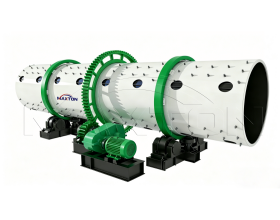
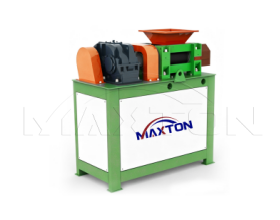
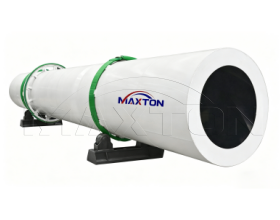
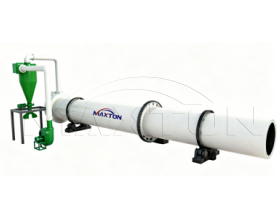
MAXTON provides complete fertilizer production line equipment including granulators, dryers, coolers, screening machines and coating equipment.
Key reasons why fertilizer manufacturers worldwide choose MAXTON granulation equipment.
Dedicated to providing granulation, drying, cooling and conveying solutions for various raw materials including NPK, organic and chemical fertilizers.
Standardized service procedures and comprehensive after-sales support ensure smooth project execution across Southeast Asia, Africa, Middle East and South America.
Full-service support from consultation, design and equipment manufacturing through installation, training, on-site guidance, spare parts and daily maintenance.
Tailored solutions that maximize return on investment through efficient process design, energy optimization, and minimal waste generation.
Max. drum-type equipment processing diameter up to 4.5 m. Robust structure and high-quality components extend service life and reduce downtime.