Vertical Fermentation Tank for Organic Waste Treatment
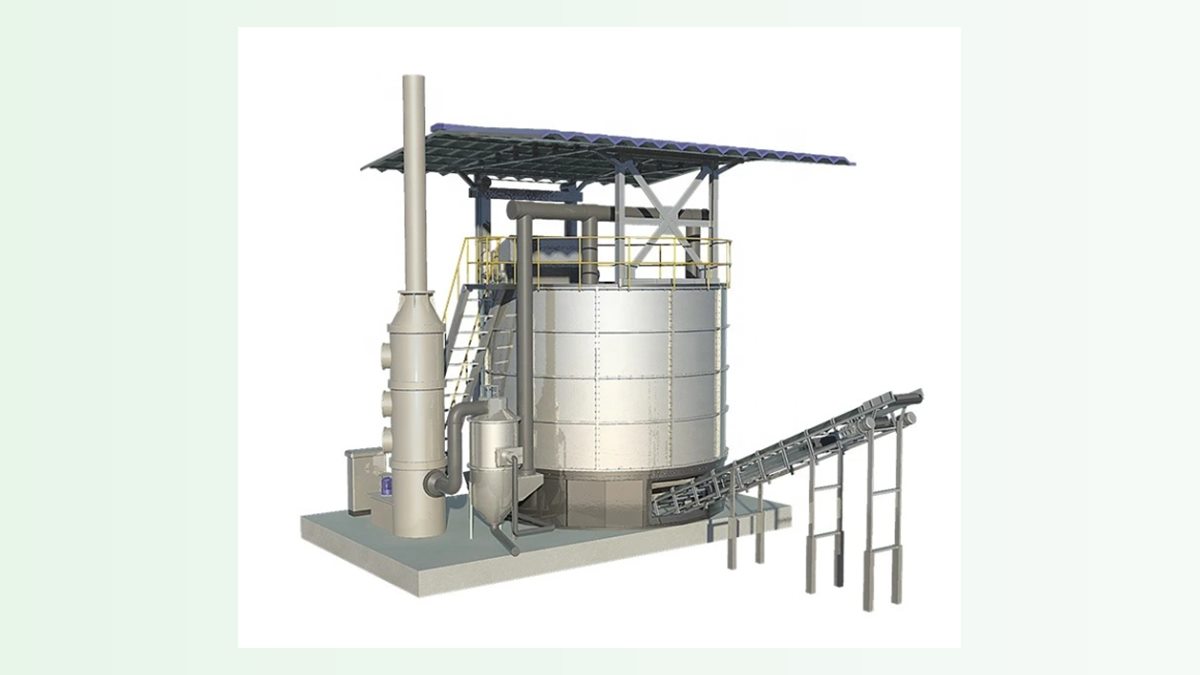
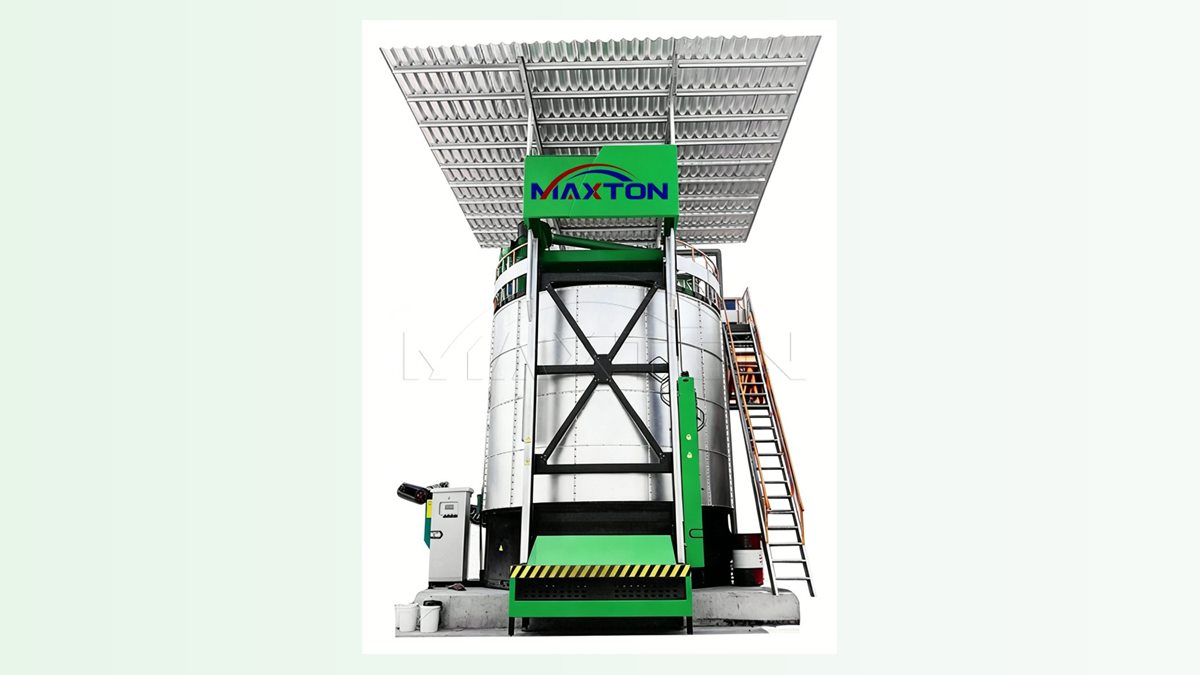
The vertical fermentation tank is designed for high-temperature aerobic fermentation of livestock manure, kitchen waste, domestic sludge and other organic waste.
As an organic fertilizer fermentation tank and aerobic composting system, it helps achieve harmless, stabilized, reduced and resource-based treatment for soil improvement, landscaping and landfill cover soil.
Product Introduction
High-Temperature Aerobic Fermentation
The vertical fermentation tank uses microbial activity to biologically decompose organic matter in livestock manure, kitchen waste and domestic sludge under aerobic fermentation conditions. It is suitable for organic fertilizer production and in-vessel composting projects.
Integrated Waste Treatment Solution
The equipment supports harmless treatment, stabilization, volume reduction and resource utilization, making the final material suitable for soil amendment, landscaping, landfill cover applications and compost fertilizer processing.
Main Features
Compact and Integrated Design
The vertical structure makes full use of space, reduces the footprint and helps lower project investment costs.
Aerobic Fermentation Technology
Microbial aerobic fermentation degrades and matures organic waste with low energy consumption and reduced operating cost, making it a practical compost fermentation tank for manure treatment projects.
Centralized Odor Treatment
Odor generated during fermentation can be collected and treated centrally through the odor control system to support compliant exhaust emission and reduce impact on the surrounding environment.
Automated Operation
The system offers a high level of automation and mechanization, allowing one operator to complete the fermentation process while reducing direct contact with materials.
Insulated and Corrosion-Resistant Body
The tank body adopts insulation, auxiliary heating and stainless steel special materials to support low-temperature operation and extend service life.
Working Process
Feeding and Aerobic Fermentation: Organic waste such as manure, kitchen waste or sludge is fed into the tank for controlled high-temperature aerobic fermentation.
Decomposition and Resource Utilization: Microorganisms decompose organic matter, reduce waste volume and convert the material into a reusable resource for soil or landscaping applications.
Applications of Vertical Fermentation Tank
Poultry Manure Treatment
Used as poultry manure treatment equipment for chicken manure, pig manure, cow manure and other livestock waste.
Kitchen Waste Fermentation
Supports kitchen waste fermentation projects that require enclosed aerobic composting and odor control.
Domestic Sludge Treatment
Works as a sludge treatment fermenter for domestic sludge stabilization, reduction and resource utilization.
Organic Fertilizer Composting
Suitable for organic fertilizer fermentation tank projects that convert biodegradable waste into reusable compost material.
Product Specifications
Equipment Structure
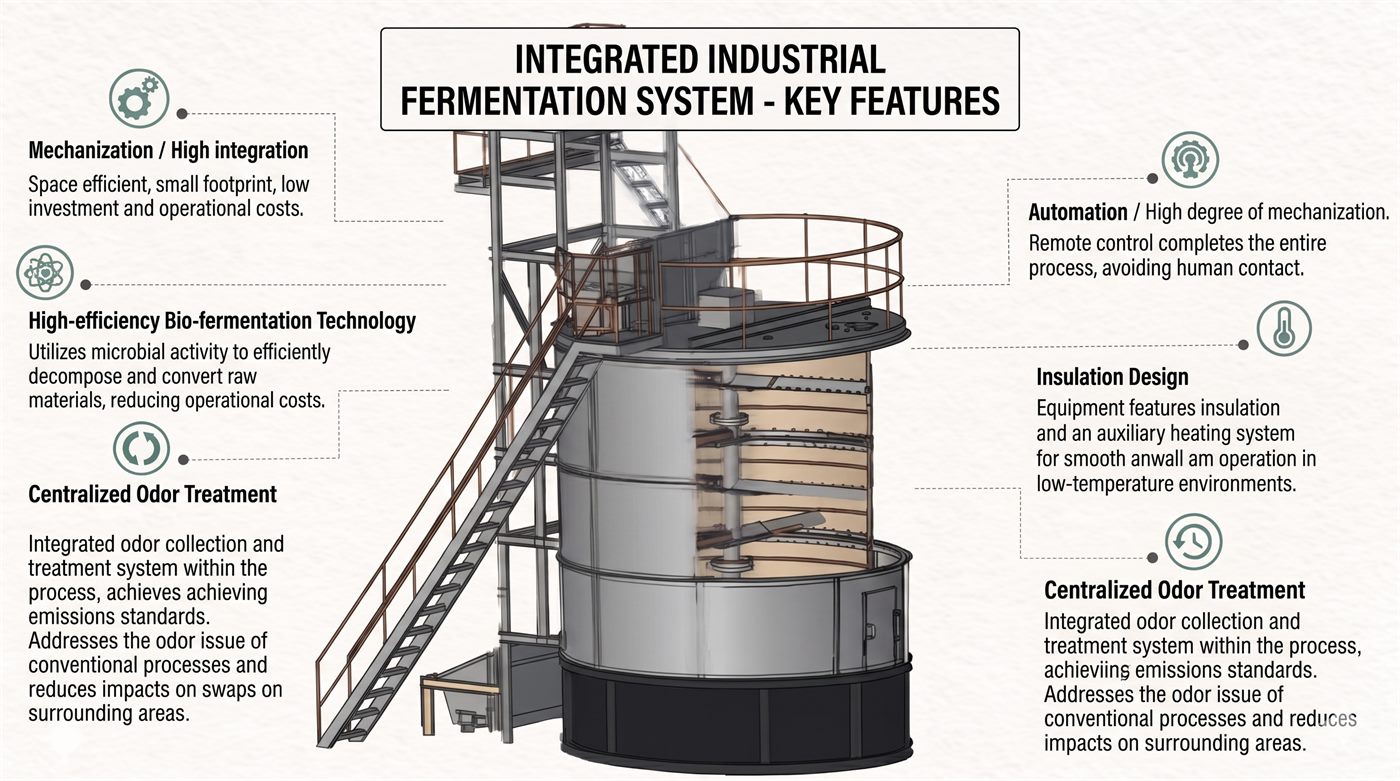
- Vertical Tank Body: A compact vertical structure improves space utilization and helps reduce the required installation footprint.
- Insulation and Auxiliary Heating: The insulated body and auxiliary heating system help maintain stable fermentation performance in low-temperature environments.
- Stainless Steel Contact Parts: Stainless steel special materials resist corrosion from organic waste and help extend the equipment service life.
| Model | Equipment Size | Tank Capacity | Total Power |
|---|---|---|---|
| FJLG-20 | 5500x2600x3300mm | 20m³ | 13.7kw |
| FJLG-30 | 6000x2900x3500mm | 30m³ | 22kw |
| FJLG-50 | 6800x2900x8000mm | 50m³ | 32kw |
| FJLG-100 | 8000x7000x9600mm | 100m³ | 52kw |
Parameters are for reference only. Final configuration can be adjusted according to project requirements.
Typical Treatment Flow
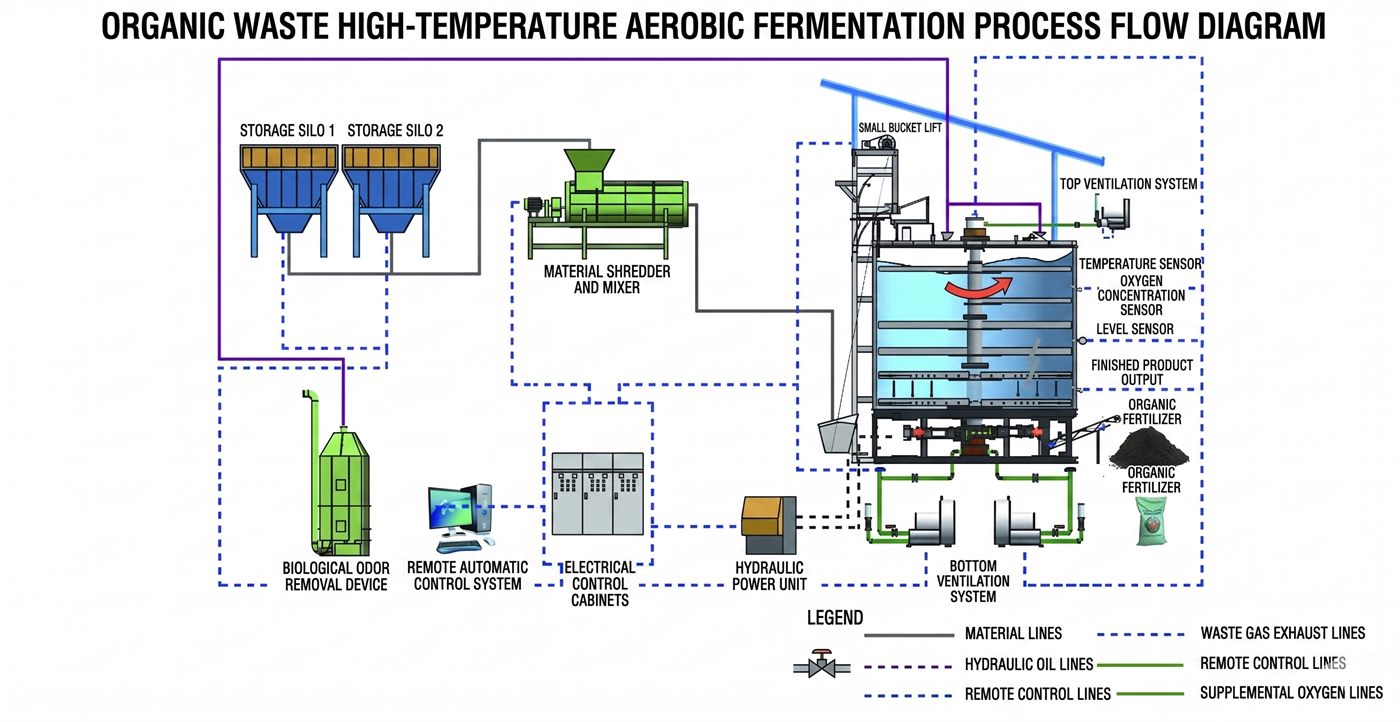
The vertical fermentation tank provides an integrated process for high-temperature aerobic treatment of livestock manure, kitchen waste, domestic sludge and similar organic waste.
Through microbial decomposition, odor collection, insulation and automated control, the system supports harmless, stable, reduced and resource-oriented disposal.
1. Raw Material Feeding
Load livestock manure, kitchen waste, sludge or other organic waste into the tank according to the project requirements.
2. Aerobic Fermentation
Maintain suitable aerobic and temperature conditions so microorganisms can decompose organic matter efficiently.
3. Odor Collection and Treatment
Collect fermentation odor centrally and treat the gas to reduce environmental impact and support compliant emission.
4. Output and Reuse
Discharge stabilized material for soil improvement, landscaping, landfill cover soil or organic fertilizer-related applications.
FAQ
What materials can the vertical fermentation tank process?
It can process livestock and poultry manure, kitchen waste, domestic sludge and other biodegradable organic waste.
What is the main fermentation method?
The equipment uses high-temperature aerobic fermentation and microbial activity to decompose organic matter.
What can the treated material be used for?
The treated material can be used for soil improvement, landscaping, landfill cover soil and organic fertilizer-related applications.
Does the equipment help reduce odor?
Yes. Odor generated during fermentation can be collected and treated centrally to reduce environmental impact.
Is the system suitable for compact project sites?
Yes. The vertical structure makes full use of space and helps reduce the installation footprint.
Can one person operate the system?
The system is designed with a high level of automation and mechanization, so one operator can complete the fermentation process in many projects.
How does the equipment reduce direct contact with waste?
Automated feeding, fermentation control and discharge processes reduce the need for direct human contact with materials.
Can the tank work in low-temperature environments?
The tank body uses insulation and can be equipped with auxiliary heating to support stable operation in low-temperature conditions.
What material is used for corrosion resistance?
The equipment body adopts stainless steel special materials to resist corrosion from organic waste and extend service life.
What models are available?
Available models in the product information include FJLG-20, FJLG-30, FJLG-50 and FJLG-100.
What capacities are available?
The listed capacities are 20m³, 30m³, 50m³ and 100m³.
What is the total power range?
The listed total power range is from 13.7kw to 52kw, depending on the model.
Is this equipment only for manure treatment?
No. In addition to manure, it can also treat kitchen waste, domestic sludge and similar organic waste.
Can the final configuration be customized?
The final configuration can be adjusted according to project capacity, material type, site conditions and treatment requirements.
What information is needed for a quotation?
Please provide the raw material type, daily processing capacity, site conditions, required model or capacity and destination country.
Related Products
Why Choose MAXTON?
Contact Our Technical Team >Compact Project Footprint
The vertical layout improves space utilization and is suitable for projects that need efficient organic waste treatment in limited space.
Low Operating Cost
Aerobic microbial fermentation helps reduce energy consumption and operating costs during waste decomposition and maturation.
Environmental Odor Control
Centralized odor collection and treatment reduce the influence of fermentation gas on the surrounding environment.
Automated and Labor-Saving
Automated control and mechanical operation reduce manual workload and improve operating safety.
Low-Temperature Adaptability
Insulation and auxiliary heating support reliable operation even when ambient temperature is low.
Durable Equipment Body
Stainless steel special materials improve corrosion resistance and help extend the equipment service life.