Industrial Composting Equipment & Fermentation Tanks
Compare factory-direct industrial composting equipment and fermentation tanks from MAXTON, a composting equipment manufacturer in China. This B2B supplier lineup covers drum composters, horizontal fermentors, and vertical tanks for manure, food waste, sludge, and organic fertilizer projects.
Compare MAXTON Composting Equipment Manufacturer China Solutions
Select a MAXTON model below to compare factory-direct composting equipment, industrial fermentation tank price factors, automation levels, installation requirements, and B2B organic waste treatment applications.
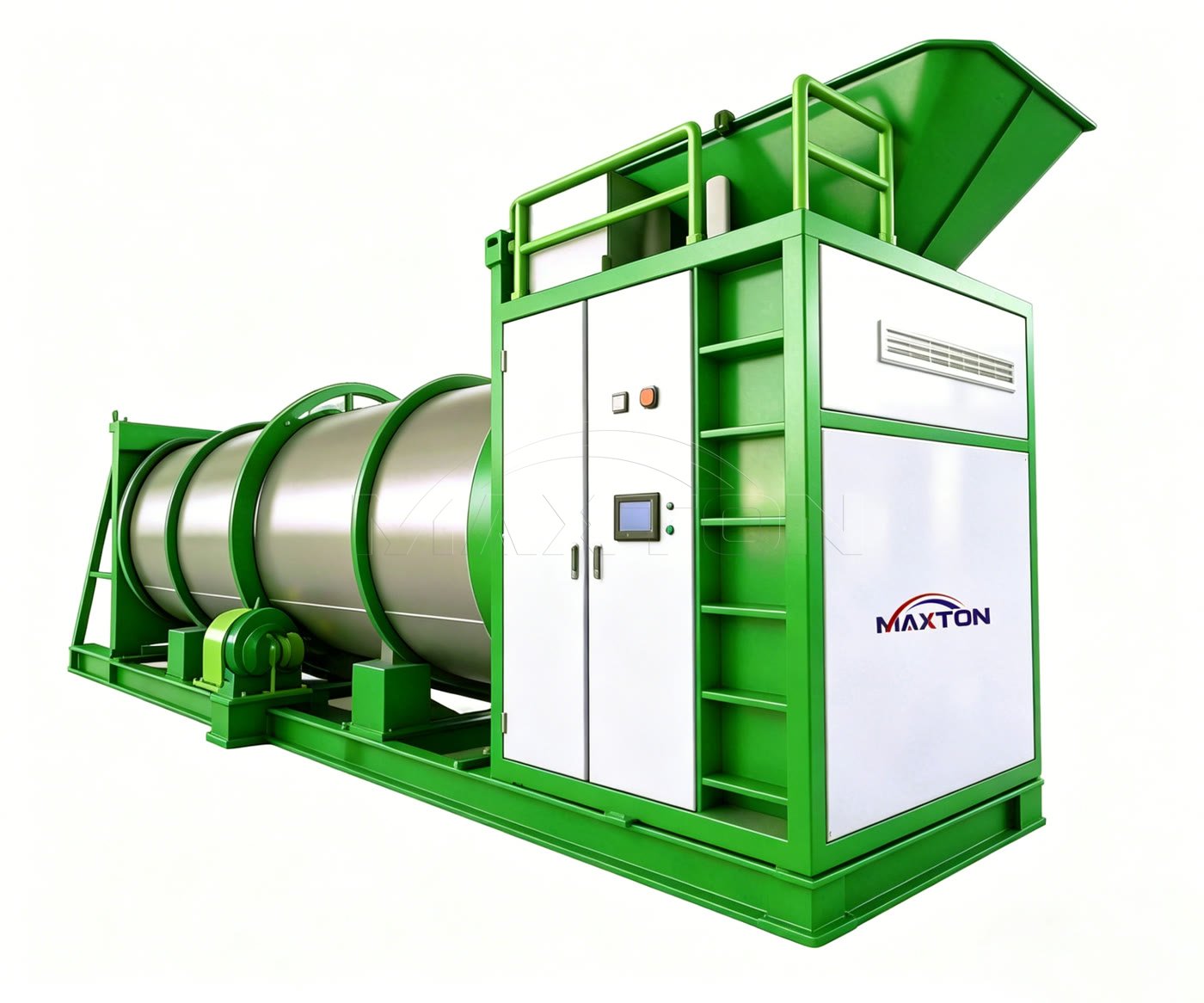
Drum Composting Machine
Flexible installation for diverse organic waste composting
A MAXTON drum composting machine designed for mixing, turning, and aerobic composting of diverse organic waste. Its aerobic drum composting system specifications support fast deployment and flexible feedstock handling for manure, food waste, agricultural residue, wood waste, and mixed organic waste. For buyers comparing composting machine cost, factory price, and organic waste treatment machine for sale options, this model suits medium- to long-term organic fertilizer projects.
- Model Range: MHT-500 to MHT-2800
- Drum Volume: 10 – 200 m³
- Loading Volume: 7 – 140 m³
- Daily Processing: 2 – 46 m³/day
- Daily Production: 1 – 22 t/day
- Motor Power: 0.55×2 – 11×2 kW
- Easy installation and quick startup
- Low site requirements
- Space-saving compared with traditional systems
- Reduces odor, leachate, pests, and greenhouse gases
- Broad feedstock adaptability (manure, agri-waste, food waste, wood waste, MSW)
- Support custom capacity, footprint, automation level, and corrosion-resistant material options
Organic fertilizer pre-treatment, chicken manure composting for poultry farms, agricultural waste to organic fertilizer projects, food waste recycling equipment for commercial use, wood waste processing, and mixed organic waste treatment.
- Pros: Flexible installation, wide material range, quick deployment, space-saving
- Cons: Not fully sealed, moderate automation level
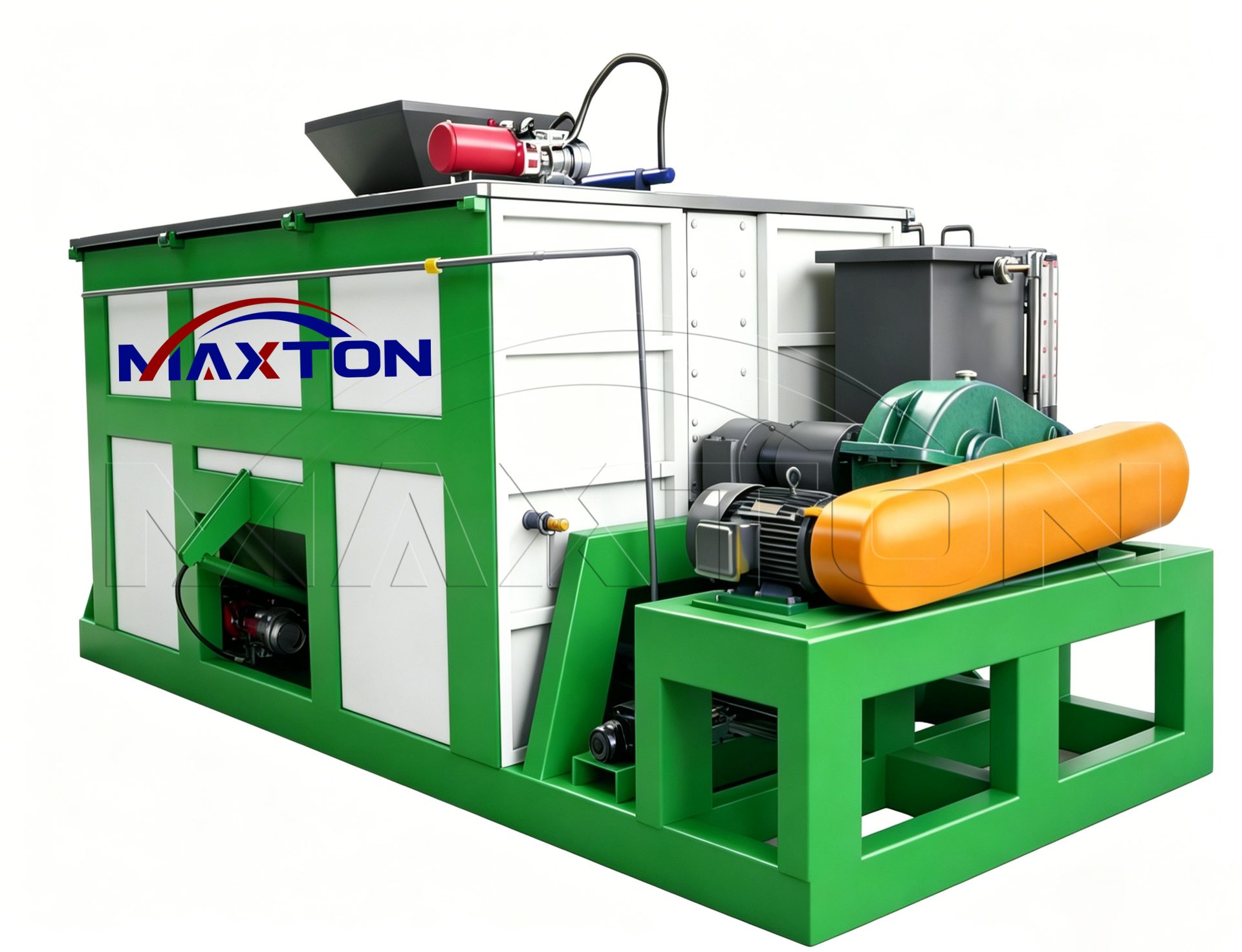
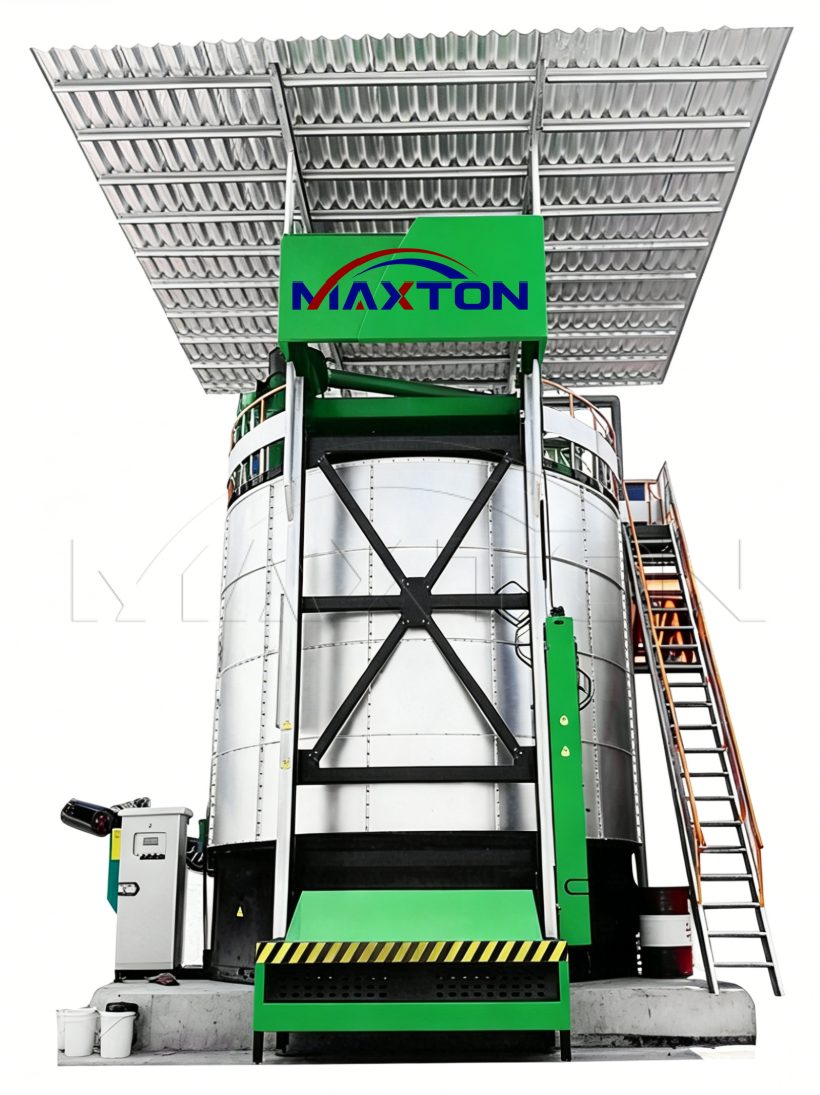
Composting Equipment Specifications, Factory Price, and B2B Quote Comparison
Each table below presents the main specifications for a MAXTON composting equipment model. Use these details to compare capacity, installation, industrial fermentation tank price drivers, and B2B quote requirements.
Quick Selection Guide
Use this decision matrix to identify which MAXTON equipment best fits your project before reviewing the detailed specification tables below.
| Decision Factor | Drum Composting Machine | Horizontal Fermentor | Vertical Fermentation Tank |
|---|---|---|---|
| Best For | Mixed organic waste and flexible projects | Standardized batch treatment with odor control | Space-limited projects needing sealed automation |
| Process Type | Aerobic turning, mixing, and composting | Sealed horizontal batch fermentation | Sealed vertical fermentation with heat recovery |
| Feedstock Flexibility | High: manure, agri-waste, food waste, MSW | Medium-high: controlled input, stable batches | Medium-high: standardized organics and sludge |
| Footprint | Moderate | Larger floor-space requirement | Small footprint, vertical layout |
| Sealing / Odor Control | Moderate, not fully sealed | High, fully sealed design | High, fully enclosed tank body |
| Automation Level | Moderate | High | High |
| Installation Requirement | Fast installation, low site requirement | Structured installation, larger footprint | Concrete foundation, outdoor-ready |
| Customization Focus | Capacity, footprint, automation, feedstock fit | Capacity, layout, controls, corrosion resistance | Footprint, voltage, automation, discharge design |
Drum Composting Machine Specifications and Factory Quote (Recommended)
| Feature | Value |
|---|---|
| Model Range | MHT-500 to MHT-2800 |
| Daily Processing | 2 – 46 m³/day |
| Daily Production | 1 – 22 t/day |
| Motor Power | 0.55×2 – 11×2 kW |
| Installation | Easy, low site requirements |
| Feedstock | Manure, agri-waste, food waste, wood waste, MSW |
| Emission Control | Reduced odor, leachate, pests, GHG |
| Action |
Horizontal Fermentor Specifications and Factory Quote (Recommended)
| Feature | Value |
|---|---|
| Model Range | MHF-3F to MHF-30F |
| Fermentation Volume | 3.1 – 30 m³ |
| Motor Power | 3 – 15 kW |
| Heating Power | 3 – 30 kW |
| Fermentation Cycle | 7 – 10 days |
| Temp Range | 60 – 100°C (adjustable) |
| Sanitization Time | ~10 hours |
| Treatment Capacity | 7 – 16 t/day (30–85% moisture) |
| Action |
Vertical Fermentation Tank Specifications and Factory Quote (Recommended)
| Feature | Value |
|---|---|
| Model Range | MHF-86F to MHF-120F |
| Fermentation Volume | 86 – 120 m³ |
| Blower Power | 11 – 15 kW |
| Motor Power | 7.5 – 10 kW |
| Temp Range | 60 – 100°C (adjustable) |
| Sanitization Time | ~10 hours |
| Treatment Capacity | 8 – 16 t/day (30–85% moisture) |
| Installation | Outdoor supported, concrete foundation |
| Action |
Why Choose Us
Request a free consultation >20+ Years Experience
Decades of engineering expertise in bioprocessing equipment design and manufacturing.
Global Certifications
CE, FDA, and GMP certified products trusted by labs and factories in over 40 countries.
Custom Engineering
Tailored vessel sizes, controls, and integrations to fit your exact process requirements.
24/7 Technical Support
Dedicated engineers available around the clock for remote diagnostics and on-site service.
Fast Lead Times
Standard models ship within 2–4 weeks. Custom builds delivered on agreed timelines.
Training Included
Complimentary operator training and process optimization guidance with every purchase.
Frequently Asked Questions
Can MAXTON customize composting and fermentation equipment for my project?
Yes. MAXTON supports custom engineering for capacity, footprint, feeding and discharge design, automation level, voltage standard, corrosion-resistant materials, and installation requirements. This helps B2B buyers match equipment to site conditions, feedstock characteristics, and project goals.
How much does industrial composting equipment or a fermentation tank price usually depend on?
Industrial composting equipment price depends on daily treatment capacity, automation level, installation conditions, corrosion-resistance requirements, and feedstock type. MAXTON provides factory-direct pricing for drum composters, horizontal fermentors, and vertical fermentation tanks based on your project specifications.
What is the primary purpose of an industrial Drum Composting Machine?
A MAXTON Drum Composting Machine is a professional-grade equipment designed for the turning, mixing, and aerobic fermentation of organic waste. It uses drum rotation to ensure uniform material blending, significantly reducing odors, leachate, and greenhouse gas emissions. It is well suited to organic fertilizer projects that require rapid deployment and high feedstock flexibility.
What types of waste can the MAXTON Drum Composter process?
The equipment offers strong adaptability and can process a wide range of organic materials, including animal manure, agri-waste, food waste, wood waste, and municipal solid waste (MSW).
What defines a Horizontal Fermentor?
A Horizontal Fermentor is an enclosed, horizontally oriented organic waste treatment system designed for harmless processing and batch fermentation. It emphasizes thermal control and processing efficiency, typically featuring an adjustable temperature range of 60-100°C to eliminate pathogens and insect eggs within about 10 hours.
What is the typical treatment cycle for an MHF-series Horizontal Fermentor?
According to MAXTON technical specifications, the typical fermentation cycle for a horizontal fermentor is 7-10 days. Depending on the model, ranging from MHF-3F to MHF-30F, the daily treatment capacity for raw materials with 30%-85% moisture content varies from 7 to 16 tons.
What are the core advantages of a Vertical Fermentation Tank?
The primary value of a Vertical Fermentation Tank lies in its high space efficiency, superior thermal insulation, and advanced automation. Its vertical structure minimizes the footprint, while the polyurethane insulation layer and heat exchange design support stable, energy-efficient operation year-round, including outdoor installations.
How does the Vertical Fermentation Tank achieve energy-efficient operation?
The MAXTON Vertical Fermentation Tank reduces energy consumption through an integrated heat exchange and hot-air circulation system that recovers waste heat during the process. The polyurethane insulation layer also helps maintain stable fermentation temperatures in winter or other cold environments.
What is the difference between a Drum Composter and a Sealed Fermentor (Horizontal/Vertical)?
A Drum Composter focuses on turning, mixing, and aerobic composting for projects that require installation flexibility and diverse feedstock handling. In contrast, sealed fermentors prioritize precise temperature control, sanitization efficiency, and environmental containment, making them better suited to standardized projects with strict odor control and process stability requirements.
Which equipment is best suited for livestock farms with limited space?
For projects with restricted site area, the Vertical Fermentation Tank is usually the optimal choice because of its minimal footprint. For example, the MHF-120F model provides a fermentation volume of 120 m3 while requiring a base area of only about 7500 x 8000 mm.
What are the moisture content requirements for MAXTON fermentation equipment?
MAXTON equipment is highly compatible with varying moisture levels. Both horizontal and vertical units maintain stable processing capabilities for materials with 30%-85% moisture content, producing organic fertilizer raw materials with a final moisture content of 50%-70%.
Do these composting and fermentation systems support automated management?
Yes. The vertical and horizontal fermentors are equipped with control electrical cabinets and hydraulic driving systems for a high level of automation. This reduces manual labor while helping standardize core parameters such as temperature and ventilation.