SINO MAXTON GROUP Co.,Ltd
News Details
Best Organic Fertilizer Fermentation Equipment: Tanks vs. Drums | Maxton
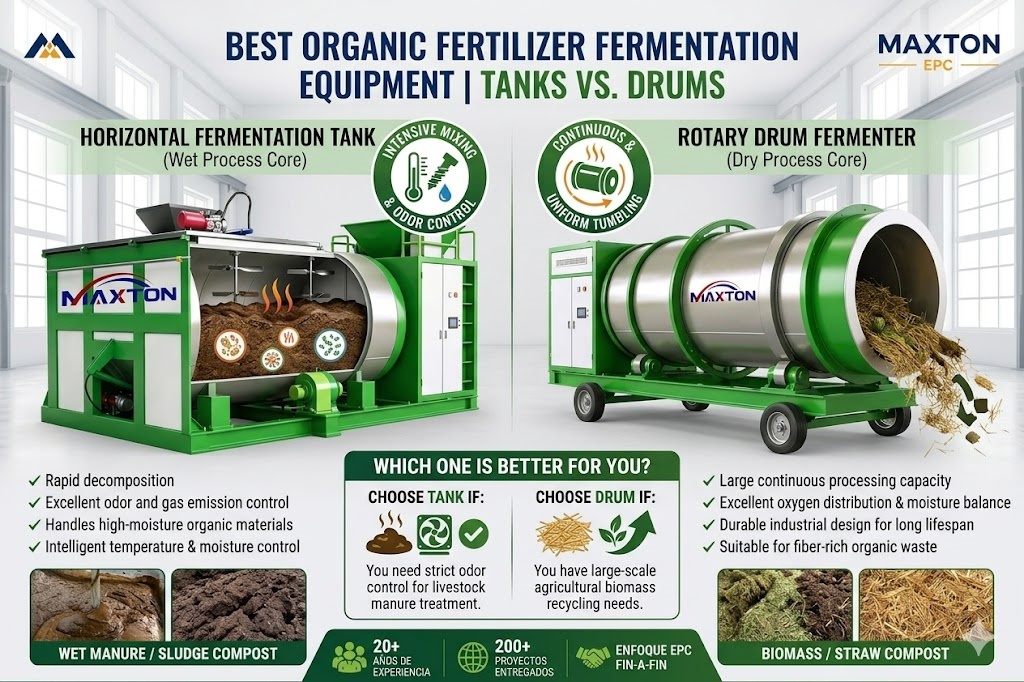
Best Organic Fertilizer Fermentation Equipment for Commercial Composting Systems
Modern organic fertilizer plants require advanced organic fertilizer fermentation equipment to improve composting efficiency, accelerate aerobic fermentation, and reduce environmental pollution. Among industrial composting technologies, the Horizontal Fermentation Tank and the Rotary Drum Fermenter are the two most widely used systems for livestock manure treatment, agricultural waste recycling, and commercial bio-organic fertilizer production.
As a professional organic fertilizer equipment manufacturer, Henan Maxton Machinery Co., Ltd. provides industrial composting solutions, complete fertilizer plant EPC services, and customized fermentation equipment for global projects.
Quick Conclusion:
-
Horizontal Fermentation Tanks are the most efficient choice for high-moisture livestock manure composting, offering rapid aerobic fermentation and superior odor control in a compact footprint.
-
Rotary Drum Fermenters are the ideal continuous composting machines for large-scale biomass recycling and fiber-rich organic waste due to their massive processing capacity and stable operation.
What Is a Horizontal Fermentation Tank?
A Horizontal Fermentation Tank is a fully enclosed aerobic composting system widely utilized in modern organic fertilizer production. It integrates internal agitator shafts, forced aeration systems, and intelligent temperature control to dramatically accelerate the compost fermentation process.
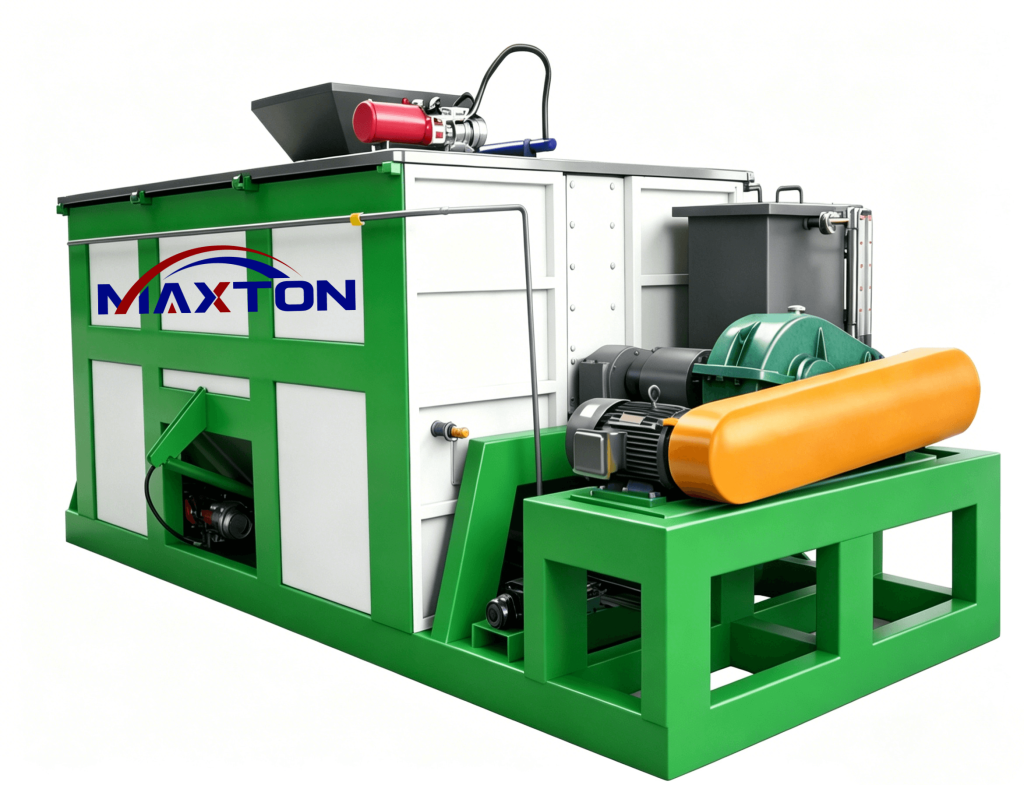
This industrial composting machine retains organic materials inside a fixed, insulated tank while powerful mixing blades continuously stir and oxygenate the batch, significantly improving microbial decomposition efficiency.
Core Features
-
Fully Enclosed System: Guarantees zero odor leakage and excellent gas emission control.
-
Rapid Aerobic Fermentation: Reduces the traditional composting cycle down to just days.
-
Intelligent PLC Control: Automated temperature and aeration management.
-
Compact Footprint: Saves valuable factory floor space compared to windrow composting.
Best Suited Raw Materials
-
Chicken, pig, and cow manure (Livestock waste)
-
Municipal and industrial sludge
-
Food waste and organic municipal solid waste
-
High-moisture organic materials
The Maxton Advantage: Horizontal fermentation tanks are especially suited for projects facing strict environmental assessments (EIA) and urban livestock manure treatment facilities where space and odor control are paramount.
What Is a Rotary Drum Fermenter?
A Rotary Drum Fermenter is a continuous, heavy-duty composting machine favored for large-scale biomass processing and agricultural waste recycling.
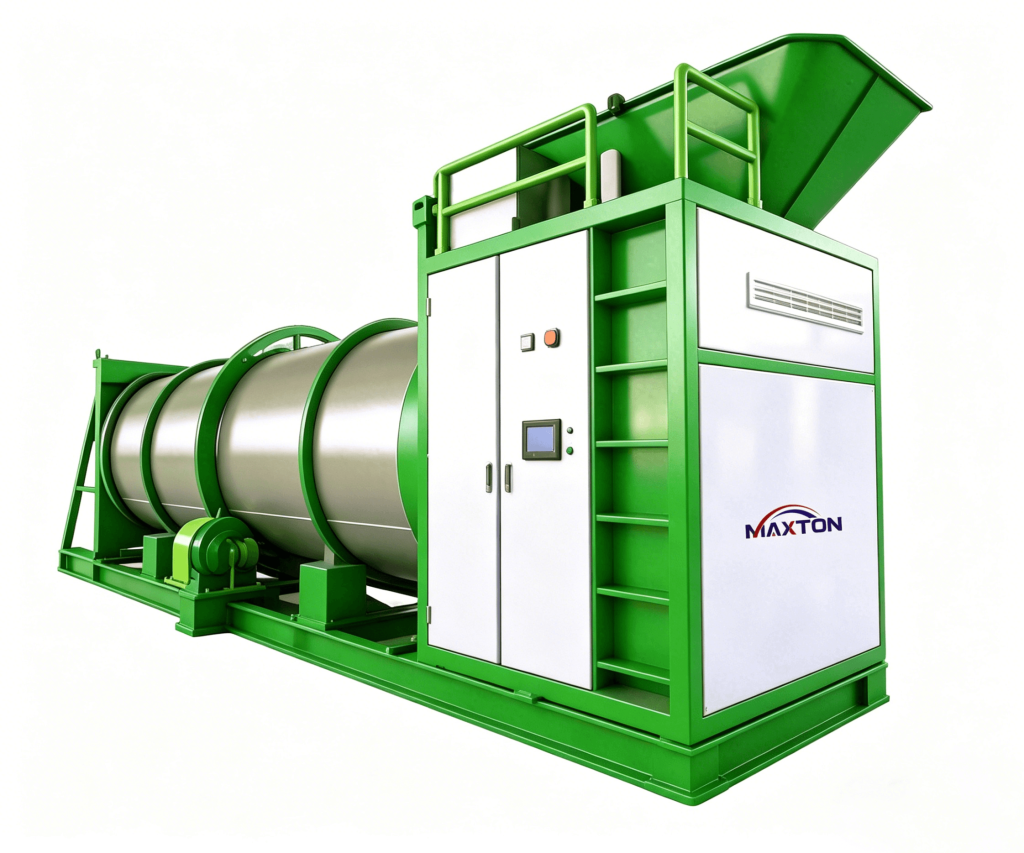
Instead of internal blades, the entire rotary drum slowly rotates to tumble, mix, and aerate the organic materials. This continuous aerobic composting process ensures uniform oxygen distribution and moisture balance, making it a highly stable node in a high-capacity fertilizer production line.
Core Features
-
Continuous Operation: Designed for massive, uninterrupted organic waste treatment.
-
Uniform Mixing: The tumbling action ensures highly consistent compost maturity.
-
Robust Stability: Lower operational complexity with fewer internal moving parts.
-
Heavy-Duty Build: Ideal for continuous industrial fertilizer production lines.
Best Suited Raw Materials
-
Crop straw and agricultural biomass
-
Mushroom residue and coconut coir
-
Garden waste and fiber-rich organic matter
The Maxton Advantage: Rotary drum fermenters are the workhorses of large-scale bio-organic fertilizer manufacturing, excelling in agricultural hubs where continuous, high-volume biomass recycling is required.
Horizontal Tank vs. Rotary Drum: A Technical Comparison
| Specification | Horizontal Fermentation Tank | Rotary Drum Fermenter |
| Composting Method | Internal agitator mixing | Rotary drum tumbling |
| Fermentation Technology | Forced enclosed aerobic fermentation | Continuous rotary aerobic composting |
| Fermentation Speed | Exceptionally Fast (7-15 days) | Fast |
| Moisture Adaptability | Excellent (Handles wet sludge/manure) | Good |
| Odor Control | Excellent (Fully enclosed) | Good |
| Automation Level | High (PLC Integrated) | High |
| Installation Footprint | Compact / Smaller | Larger |
| Primary Application | Livestock manure & sludge treatment | Agricultural biomass & straw recycling |
Which Organic Fertilizer Fermentation Equipment Is Better?
The optimal choice for your plant depends heavily on your specific raw materials, moisture content, capacity requirements, and local environmental standards.
Choose a Horizontal Fermentation Tank if your project requires:
-
Rapid aerobic composting for high-moisture materials (like wet poultry manure).
-
A fully enclosed system to meet strict local odor and emissions regulations.
-
Smart, PLC-driven composting technology for eco-friendly fertilizer production in spatially limited areas.
Choose a Rotary Drum Fermenter if your project requires:
-
Large-scale, continuous composting for massive daily throughputs.
-
Efficient processing of fiber-rich agricultural waste and biomass.
-
A highly durable system with lower maintenance complexity for industrial-scale bio-organic fertilizer lines.
Global Applications of Maxton Composting Equipment
Maxton organic fertilizer fermentation equipment is trusted worldwide across various sectors, including commercial compost fertilizer production, municipal sludge treatment, and sustainable agriculture projects.
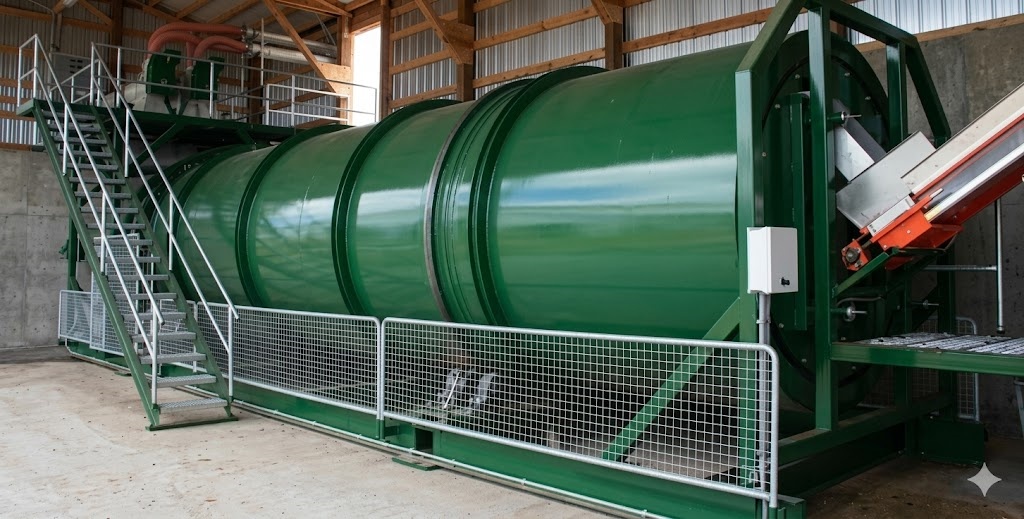
Our complete EPC fertilizer plant solutions and composting systems have been successfully exported and commissioned globally, with active installations in Brazil, Mexico, Indonesia, Nigeria, South Africa, Uzbekistan, and Russia.
Frequently Asked Questions (FAQ)
Q: Which organic fertilizer fermentation equipment is best for chicken manure composting?
A: Horizontal fermentation tanks are generally superior for chicken manure. They provide the aggressive mixing required for high-moisture, sticky materials, ensure a faster temperature rise to kill pathogens, and offer the stringent odor control necessary for manure processing.
Q: What is the main mechanical difference between the two systems?
A: A horizontal fermentation tank remains stationary while internal agitator shafts aggressively mix the material via forced aeration. A rotary drum fermenter lacks internal mixing shafts; instead, the entire cylinder rotates to tumble and aerate the materials continuously.
Q: How long does the organic fertilizer compost fermentation process take?
A: When utilizing modern industrial aerobic fermentation equipment, the primary composting phase is typically accelerated and completed within 7 to 15 days, depending on the raw material’s initial moisture and carbon-to-nitrogen (C: N) ratio.
Q: Can these compost fermentation systems be fully automated?
A: Yes. Maxton’s modern organic fertilizer fermentation equipment is equipped with intelligent PLC control systems that automate temperature monitoring, aeration rates, moisture control, and continuous feeding/discharging.
Related Organic Fertilizer Equipment
To complete your production line, Maxton also manufactures:
-
Organic Fertilizer Granulators (Disc Pelletizers & Rotary Drum Granulators)
-
Compost Turner Machines
-
Rotary Dryers & Coolers
-
Rotary Screening Machines
-
Automated Fertilizer Packing Machines
Get a Customized Composting Solution
Are you looking for the best organic fertilizer fermentation equipment for your next commercial project? Henan Maxton Machinery Co., Ltd. provides end-to-end EPC fertilizer plant solutions, from equipment selection and capacity planning to 3D plant layout design and global installation support.
Contact the Maxton Engineering Team Today:
-
Email: svip@maxtonorg.com
-
Services: Compost equipment selection | EPC plant solutions | Technical consulting
Related Posts
9 月 15, 2026
Fertilizer Plant Cost in 2026: Real Budget Ranges for Organic, Liquid, and NPK Production
Quick answer: A small organic fertilizer plant can start under $50,000. A commercial granular fertil...
8 月 24, 2026
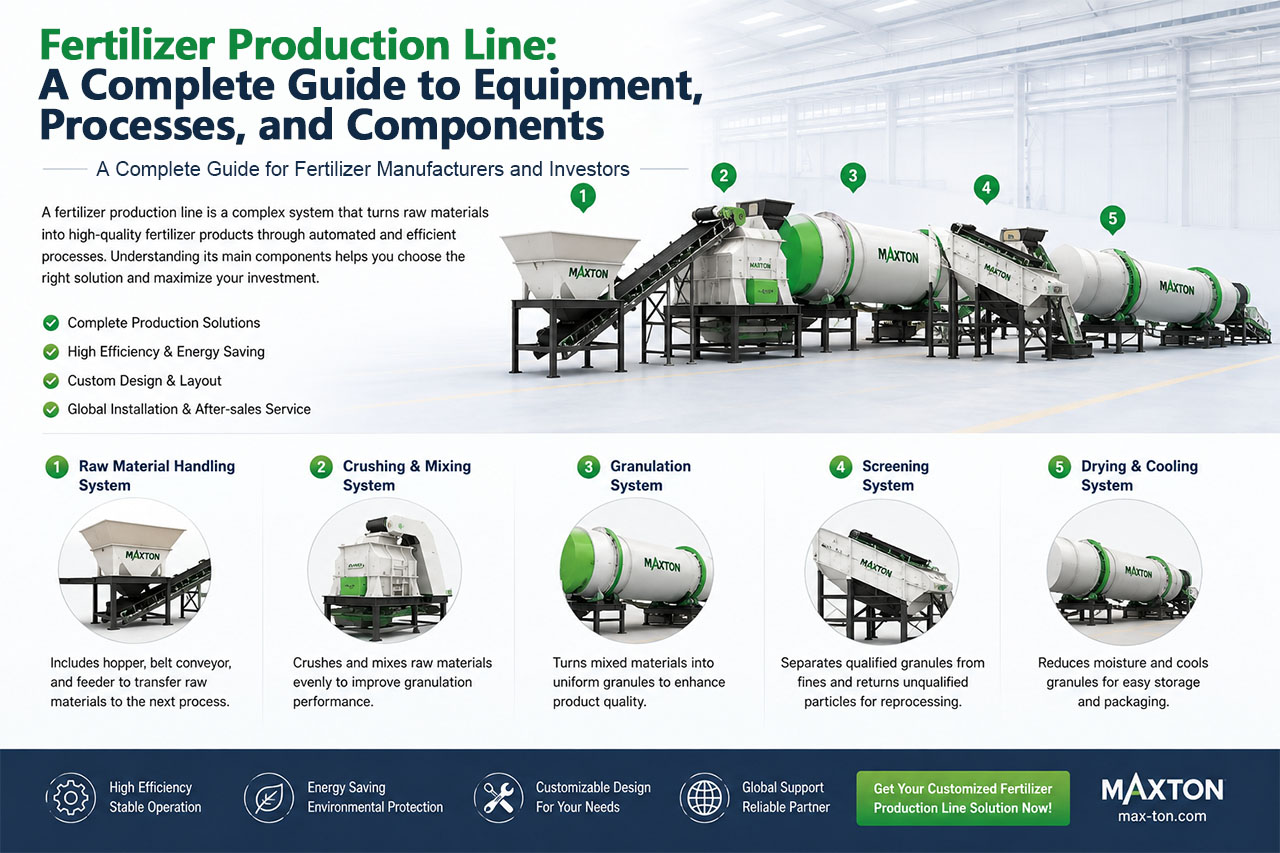
Fertilizer Production Line: A Complete Guide to Equipment, Processes, and Components
What Are the Main Components of a Fertilizer Production Line? A complete fertilizer production line ...
Give us a call or Simply Complete the Form
Address:Zhengzhou City, Henan Province, ChinaPhone:+86-18237180035Email:svip@maxtonorg.com