SINO MAXTON GROUP Co.,Ltd
News Details
TSP Production Process & Market Trends 2026: How Triple Superphosphate is Made
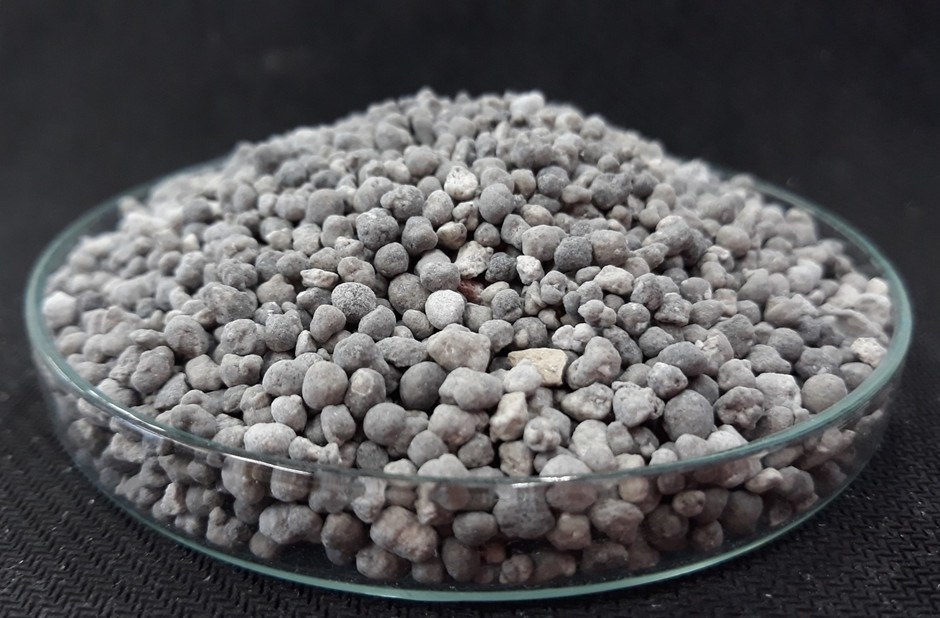
Table of Contents
-
What is Triple Superphosphate (TSP)?
-
TSP vs. SSP vs. DAP: Key Differences
-
Complete TSP Production Process (5 Stages)
-
TSP Manufacturing Equipment List – What We Supply
-
Market Trends Driving TSP Demand (2026-2030)
-
Regional Demand Analysis: Africa, South Asia & Latin America
-
TSP Plant Cost & Investment (CAPEX)
-
Turnkey TSP Plant Solutions from Maxton
-
Environmental & Safety Considerations
-
Frequently Asked Questions
1. What is Triple Superphosphate (TSP)?
The global agricultural sector is rapidly changing due to rising food security demands, population growth, and the push towards more sustainable agricultural practices. Phosphorus fertilizers, especially superphosphate, remain crucial for increasing crop yields and maintaining soil fertility. Among these, triple superphosphate (TSP) stands out as a highly concentrated phosphate fertilizer, providing approximately 46% water-soluble P₂O₅—nearly three times the phosphorus content of single superphosphate (SSP), which contains only 16-20% P₂O₅.
Key Characteristics of TSP
| Property | Specification |
|---|---|
| Phosphorus content (P₂O₅) | 44-48% (typically 46%) |
| Form | Granular (2-4 mm) or powder |
| Solubility | Water-soluble, readily absorbed by plants |
| pH (in water) | 1.5-2.5 (acidic) |
| Hygroscopicity | Moderate (requires anti-caking coating) |
Why TSP Matters for Modern Agriculture
-
Higher nutrient density = lower shipping cost per unit of phosphorus
-
Ideal for long-distance transport to Africa, South Asia, and Latin America
-
Effective for: Grains (wheat, rice, corn), legumes (soybeans, pulses), oilseeds (canola, sunflower), and cash crops (cotton, sugarcane, coffee)
-
Economical for large farms due to reduced application frequency
For long-distance transportation, TSP is one of the best and most cost-effective options because it contains a very high concentration of nutrients per unit of fertilizer and is very economical to use.
2. TSP vs. SSP vs. DAP vs. MAP: Key Differences
Understanding how triple superphosphate compares to other phosphate fertilizers helps buyers make informed decisions about which product to manufacture or use.
| Fertilizer | P₂O₅ Content | Nitrogen Content | Water Solubility | Typical Use Case |
|---|---|---|---|---|
| TSP | 44-48% | 0% | High | Phosphorus-deficient soils, direct application |
| SSP | 16-20% | 0% | Moderate | Low-cost option, sulfur-deficient soils |
| DAP | 46% | 18% | High | Balanced N+P starter fertilizer |
| MAP | 52% | 11% | High | Acidic soils, precision agriculture |
When TSP is the right choice:
-
Soil has adequate nitrogen but is phosphorus-deficient
-
Long-distance shipping cost is a major factor
-
Farmers want simple, single-nutrient application
-
Blending with urea or potash for custom NPK mixes
3. Complete TSP Production Process (5 Stages)
How is triple superphosphate (TSP) made? The TSP production process is a combination of chemical and mechanical processes. Understanding each stage is critical for selecting the right equipment.

Stage 1: Raw Material Preparation (Phosphate Rock Grinding)
The raw materials are phosphate rock (70-75% BPL purity) and phosphoric acid (50-54% P₂O₅ concentration).
Critical quality parameters:
| Parameter | Specification | Why It Matters |
|---|---|---|
| Phosphate rock fineness | 80-85% passing 100 mesh | Finer particles = higher reactivity |
| Phosphate rock moisture | < 3% | Prevents reaction issues |
| Phosphoric acid concentration | 50-54% P₂O₅ | Optimal reaction stoichiometry |
Equipment we supply for this stage:
-
Jaw crusher / Hammer crusher (primary crushing)
-
Ball mill / Raymond mill (fine grinding to 100 mesh)
-
Disc feeder / Belt feeder (controlled feed rate)
Stage 2: Reaction Process (Acidulation)
Chemical reaction:
Ca₃(PO₄)₂ + 4H₃PO₄ → 3Ca(H₂PO₄)₂
(Phosphate rock) + (Phosphoric acid) → (Calcium dihydrogen phosphate / TSP)
Process details:
-
In a continuous den reactor or mixer-reactor, phosphoric acid reacts with phosphate rock powder
-
Reaction temperature: 95-105°C
-
Retention time: 20-30 minutes
-
Phosphorus recovery rate: 95-98%
Equipment we supply for this stage:
-
Phosphoric acid storage tank (lined or stainless steel)
-
Acid dilution/metering system
-
Continuous den / mixer-reactor (custom-designed for your capacity)
Stage 3: Granulation (TSP Granulation Process)
Purpose: Transform the reactive slurry into uniform, free-flowing granules (2-4 mm).
Equipment we supply for this stage:
-
Rotary drum granulator – Most common for TSP, 5-50 t/h capacity
-
Disc (pan) granulator – For smaller plants, 1-10 t/h capacity
Stage 4: Drying and Curing (Solidification)
Step A: Drying – Rotary drum dryer removes moisture from 12-18% down to 3-5%
Step B: Curing – 4-6 weeks in curing silo to complete reactions and harden granules
Equipment we supply for this stage:
-
Rotary drum dryer (with temperature controls)
-
Cyclone dust collector + wet scrubber (for dust and fluoride gas capture)
-
Curing silo/curing building (designed for proper airflow)
Stage 5: Screening, Coating, and Packaging
Equipment we supply for this stage:
-
Vibrating screen / Rotary screener (2-4 mm on-spec separation)
-
Coating machine (anti-caking or slow-release coating)
-
Automatic packing scale (600-1,200 bags/hour)
-
Bag sewing machine
-
Belt conveyors and bucket elevators (for material transport)
This completes the TSP production process, yielding high-quality triple superphosphate fertilizer with 46% P₂O₅ content.
4. TSP Manufacturing Equipment List – What We Supply
As a specialized TSP production equipment supplier, Maxton (Henan Maxton Industrial Co., Ltd.) designs, fabricates, and integrates complete TSP production lines. Below is our TSP production line equipment list by function.
Core Process Equipment (Manufactured In-House)
| Equipment | Function | Capacity Range |
|---|---|---|
| Jaw crusher / Hammer crusher | Primary crushing of phosphate rock | 5-100 t/h |
| Ball mill / Raymond mill | Fine grinding to 100 mesh | 2-50 t/h |
| Disc feeder / Belt feeder | Controlled feed of ground rock | 1-30 t/h |
| Phosphoric acid storage tank | Acid storage (lined or stainless steel) | 50-500 m³ |
| Acid dilution/metering system | Precise acid flow control | 1-30 t/h |
| Den / Mixer-reactor (continuous) | Main TSP reaction vessel | 5-50 t/h |
| Rotary drum granulator | Granule formation | 5-50 t/h |
| Rotary drum dryer | Moisture removal | 5-50 t/h |
| Cyclone + wet scrubber | Dust and fluoride gas capture | Matched to the dryer |
Finishing Equipment
| Equipment | Function | Capacity Range |
|---|---|---|
| Curing silo/building | 4-6 week reaction completion | Custom designed |
| Vibrating screen / Rotary screener | Size separation (2-4 mm product) | 5-50 t/h |
| Coating machine | Anti-caking or slow-release coating | 5-50 t/h |
| Automatic packing scale | 50 kg bag filling | 600-1,200 bags/hour |
| Belt conveyor / Bucket elevator | Material transport | Matched to capacity |
| Bag sewing machine | Bag closure | 600-1,200 bags/hour |
Why Choose Maxton for TSP Equipment?
-
In-house fabrication – We weld, cut, and form our own rotary drums and reactors
-
Complete integration – We supply everything from the crusher to the packer
-
Turnkey service – Design, manufacturing, shipping, installation, commissioning
-
75+ countries – Proven export experience
-
Customization – We don’t sell “standard lines”; we engineer for your specific raw materials
5. Market Trends Driving TSP Demand (2026-2030)
Understanding TSP market trends is essential for anyone investing in triple superphosphate manufacturing. Here are the key trends driving demand.
Trend 1: Rising Food Security Concerns
-
Global population reaches 8.2 billion in 2026, projected to be 9.7 billion by 2050
-
Grain demand is increasing 1.5-2% annually
-
Phosphorus is non-substitutable—no crop grows without it
Trend 2: Soil Phosphorus Depletion
-
Africa: 75% of arable land is phosphorus-deficient
-
Latin America: Widespread P deficiency in tropical soils
-
South Asia: Green Revolution crops exhausted native soil P
Trend 3: Shift Toward High-Analysis Fertilizers
-
Logistics costs continue rising
-
TSP vs DAP vs SSP comparison favors TSP for long-distance shipping
-
TSP has the highest P₂O₅ concentration per tonne
Trend 4: Africa’s Agricultural Transformation
-
African Development Bank’s “Feed Africa” initiative
-
Many countries are waiving fertilizer import tariffs
-
TSP demand in Africa is growing at 6-8% annually
Trend 5: Local Production Replacing Imports
-
Governments want fertilizer self-sufficiency
-
Local TSP plants reduce import dependence
-
Creates opportunity for medium-scale TSP plants (50,000-150,000 t/year)
Global TSP Market Outlook
| Year | Global TSP Demand (million tonnes) | Growth Rate |
|---|---|---|
| 2024 | 9.1 | 2.7% |
| 2026 (est.) | 9.8 | 3.8% |
| 2028 (projected) | 10.7 | 4.5% |
| 2030 (projected) | 11.9 | 5.2% |
6. Regional Demand Analysis: Africa, South Asia & Latin America
These three regions represent the highest growth potential for TSP production and the best markets for TSP plant equipment suppliers.
Africa
Current market:
-
TSP consumption: ~1.4 million tonnes/year (growing 6-8% annually)
-
Major importers: Nigeria, Kenya, Ethiopia, Ghana, Tanzania
-
Local production is limited outside Morocco and South Africa
Opportunity: Significant potential for medium-scale TSP plants (50,000-150,000 t/year) serving regional markets. Maxton has supplied TSP equipment to multiple African countries.
South Asia
Current market:
-
TSP consumption: ~2.6 million tonnes/year (growing 4-5% annually)
-
Major consumers: India, Pakistan, Bangladesh
Opportunity: Government fertilizer subsidies support phosphate fertilizer demand. Local production is growing as import dependence is seen as a strategic risk.
Latin America
Current market:
-
TSP consumption: ~1.9 million tonnes/year (growing 3-4% annually)
-
Major consumers: Brazil, Argentina, Colombia, Paraguay
Opportunity: Brazil is the world’s largest fertilizer importer. Soybean and corn expansion drives phosphorus demand.
Regional TSP Demand Forecast Summary
| Region | 2024 Demand | 2030 Demand | CAGR |
|---|---|---|---|
| Africa | 1.4 Mt | 2.2 Mt | 7.8% |
| South Asia | 2.6 Mt | 3.5 Mt | 5.1% |
| Latin America | 1.9 Mt | 2.4 Mt | 4.0% |
| Global | 9.1 Mt | 11.9 Mt | 4.6% |
7. TSP Plant Cost & Investment (CAPEX)
One of the most common questions we receive is about the TSP plant cost. Below are realistic CAPEX ranges for TSP production lines supplied by Maxton.
TSP Plant CAPEX by Capacity Tier
| Plant Capacity (t/year) | Equipment Cost (USD) | Total Plant Investment* (USD) | Typical Configuration |
|---|---|---|---|
| 10,000-30,000 | 150,000−400,000 | 500,000−1,200,000 | Disc granulation, bagging, basic dust control |
| 30,000-100,000 | 400,000−1,200,000 | 1,500,000−4,000,000 | Drum granulation, drying, scrubbing, PLC control |
| 100,000-300,000 | 1,200,000−3,500,000 | 5,000,000−15,000,000 | Continuous den, full environmental controls |
| 300,000-500,000+ | 3,500,000−8,000,000+ | 15,000,000−40,000,000+ | Industrial-scale, DCS automation |
*Total Plant Investment includes equipment, engineering, shipping, installation, civil works, utilities, and commissioning. Does NOT include land purchase or working capital.
TSP Plant Operating Costs (Estimate)
| Cost Category | Typical Range (USD/tonne TSP) |
|---|---|
| Phosphate rock (70-75 BPL) | $80 – 130 |
| Phosphoric acid (52% P₂O₅) | $200 – 350 |
| Energy (fuel + electricity) | $15 – 30 |
| Labor | $10 – 25 |
| Packaging (50 kg bags) | $12 – 20 |
| Maintenance & consumables | $5 – 12 |
| Environmental compliance | $3 – 8 |
| Total Operating Cost | $335 – 575 |
Factors That Affect TSP Plant Cost
| Factor | Impact on Cost |
|---|---|
| Granulation method (drum vs. disc) | Drum lines cost 30-50% more but handle higher capacity |
| Automation level | PLC/DCS adds 15-40% to equipment cost but reduces labor costs |
| Environmental equipment | Wet scrubbers add $50,000-200,000, depending on capacity |
| Turnkey vs. piecemeal | Turnkey has a higher upfront but lower total project risk |
| Location | Civil works and installation vary dramatically by country |
8. Turnkey TSP Plant Solutions from Maxton
We are not just an equipment seller—we are a TSP plant turnkey supplier. This means we take responsibility for the entire project, not just shipping machines.
What Maxton Delivers
| Service | Description |
|---|---|
| Process design | We engineer the line based on your raw materials and target output |
| Equipment fabrication | All core equipment is manufactured in-house (not resold) |
| Integration | We ensure every component works together |
| Shipping | Sea freight coordination to your port |
| Installation supervision | Our engineers guide local installation teams |
| Commissioning | We start up the line and verify performance |
| Training | Your operators learn to run and maintain the line |
| Spare parts | Ongoing support for wear parts |
Why Turnkey Matters for TSP Production
The piecemeal trap: Buying a granulator from one supplier, a dryer from another, and a scrubbing system from a third leaves YOU responsible for making them work together. When something fails, suppliers point fingers at each other.
The turnkey advantage: One contract. One point of contact. One guarantee. Maxton owns the integration risk, not you.
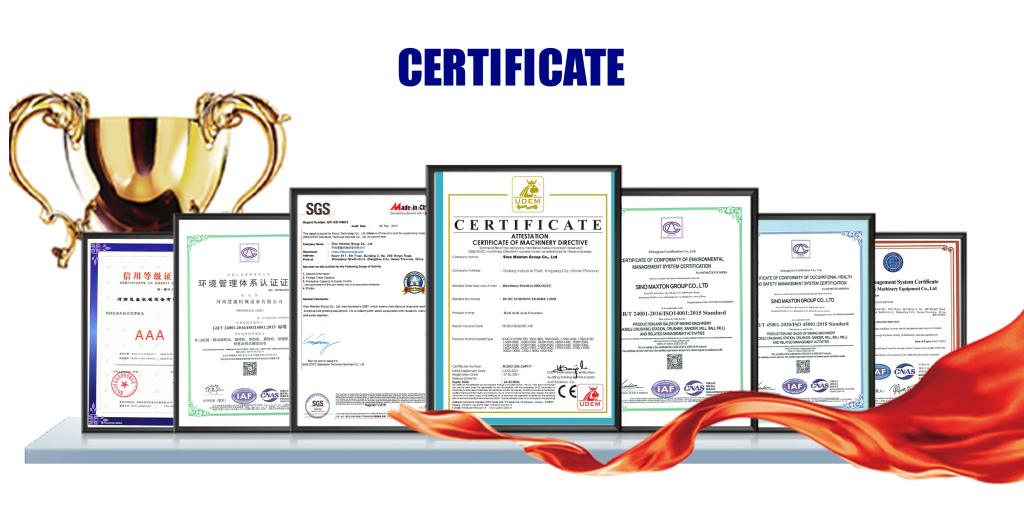
Our TSP Equipment Manufacturing Capabilities
-
In-house steel drum fabrication up to Ø4.5 m diameter
-
In-house welding, cutting, and forming – no outsourcing
-
Quality control from raw material to finished machine
-
Custom engineering for your specific phosphate rock and acid
Maxton TSP Plant Clients
We have supplied TSP production equipment to clients in 75+ countries, including:
-
Africa: Nigeria, Kenya, Ethiopia, Tanzania, Ghana
-
Asia: India, Pakistan, Bangladesh, Indonesia
-
Latin America: Brazil, Argentina, Colombia, Peru
-
Middle East: Jordan, Egypt, Saudi Arabia
Contact Maxton for Your TSP Plant
If you are planning a TSP production plant, we want to hear from you. Please provide the following information for a preliminary proposal:
-
Target capacity (tonnes per year or tonnes per hour)
-
Raw material sources (phosphate rock origin, phosphoric acid availability)
-
Location (country and site conditions)
-
Budget range (if established)
Contact us:
-
Website: https://fertifactory.com/
-
Email: svip@maxtonorg.com
-
WhatsApp: +86-18237180035
9. Environmental & Safety Considerations
TSP production involves handling strong acid and generating fluoride-containing gases. Compliance is mandatory in most markets. Maxton integrates environmental equipment into every TSP line we supply.
Key Environmental Challenges & Solutions
| Issue | Source | Maxton Solution |
|---|---|---|
| Fluoride gases (HF, SiF₄) | Reactor and dryer | Wet scrubber (venturi + packed tower) |
| Dust | Crushing, grinding, screening | Cyclone dust collector + baghouse filter |
| Acid spills | Acid storage/handling | Secondary containment, acid-resistant flooring |
Compliance Standards
| Standard | Region | Key Requirements |
|---|---|---|
| EPA 40 CFR 60 | USA | Fluoride emissions <0.45 kg/tonne P₂O₅ |
| World Bank EHS | International | Particulate <50 mg/Nm³, fluoride <5 mg/Nm³ |
Note for plant planners: Environmental controls represent 15-25% of total equipment CAPEX. Skimping on emissions control is unwise—most regions are tightening standards.
10. Frequently Asked Questions
Q1: What is the TSP production process in simple terms?
Phosphate rock is ground to a fine powder (100 mesh), then reacted with phosphoric acid in a den reactor to form calcium dihydrogen phosphate slurry. The slurry is granulated (2-4 mm), dried, cured for 4-6 weeks, screened, coated, and bagged. Maxton supplies complete TSP production lines for this process.
Q2: What is the difference between TSP and DAP?
TSP contains 46% P₂O₅ and 0% nitrogen. DAP contains 46% P₂O₅ and 18% nitrogen. Choose TSP when the soil has adequate nitrogen but is phosphorus-deficient. Choose DAP when both N and P are needed.
Q3: How much does a TSP plant cost?
TSP plant cost ranges from 150,000forasmall10,000t/year line to over 8,000,000 for a 500,000 t/year industrial line. Contact Maxton for a quote specific to your capacity and location.
Q4: Why is the TSP curing time 4-6 weeks?
Fresh TSP granules are too soft for bagging and shipping. The 4-6 week curing period allows residual chemical reactions to complete, free acid content to decrease from 5-8% to 2-4%, and granules to harden. Maxton can advise on accelerated curing options.
Q5: Where is TSP demand growing fastest?
Africa (6-8% annual growth), South Asia (4-5%), and Latin America (3-4%). These regions have phosphorus-deficient soils and growing agricultural production.
Q6: Do you supply turnkey TSP plants or just equipment?
Both. We supply individual equipment OR complete turnkey TSP production lines, including design, fabrication, installation, commissioning, and training. Most clients choose turnkey for single-point responsibility.
Q7: What granulation method is best for TSP?
Rotary drum granulation is most common for TSP production lines above 30,000 t/year. Disc granulation works well for smaller plants (10,000-30,000 t/year). Maxton supplies both and can recommend based on your scale.
Summary: Key Takeaways
| Question | Answer |
|---|---|
| What is TSP? | Concentrated phosphate fertilizer, 46% P₂O₅ |
| How is TSP made? | Phosphate rock + phosphoric acid → reaction → granulation → drying → curing → screening → packaging |
| What equipment is needed? | Crusher, mill, den reactor, granulator, dryer, screener, coating machine, packer, scrubber |
| What is the investment cost? | 150,000−8,000,000+, depending on scale |
| Where is demand growing fastest? | Africa (6-8%/year), South Asia (4-5%/year) |
| Who supplies TSP equipment? | Maxton – in-house fabrication, turnkey service, 75+ countries |
About Maxton
Maxton (Henan Maxton Industrial Co., Ltd.) is a specialized supplier of TSP production equipment and complete turnkey TSP plants.
Our TSP capabilities include:
-
Continuous den / mixer-reactor design
-
Rotary drum granulators for TSP slurry
-
Rotary dryers with fluoride-resistant materials
-
Wet scrubber systems for HF/SiF₄ capture
-
Complete TSP production lines from 10,000 to 500,000 t/year
-
Turnkey installation and commissioning
Contact Maxton to discuss your TSP production project:
- Website: https://fertifactory.com/
- Email: svip@maxtonorg.com
- WhatsApp: +86-18237180035
Related Posts
9 月 15, 2026
Fertilizer Plant Cost in 2026: Real Budget Ranges for Organic, Liquid, and NPK Production
Quick answer: A small organic fertilizer plant can start under $50,000. A commercial granular fertil...
8 月 24, 2026
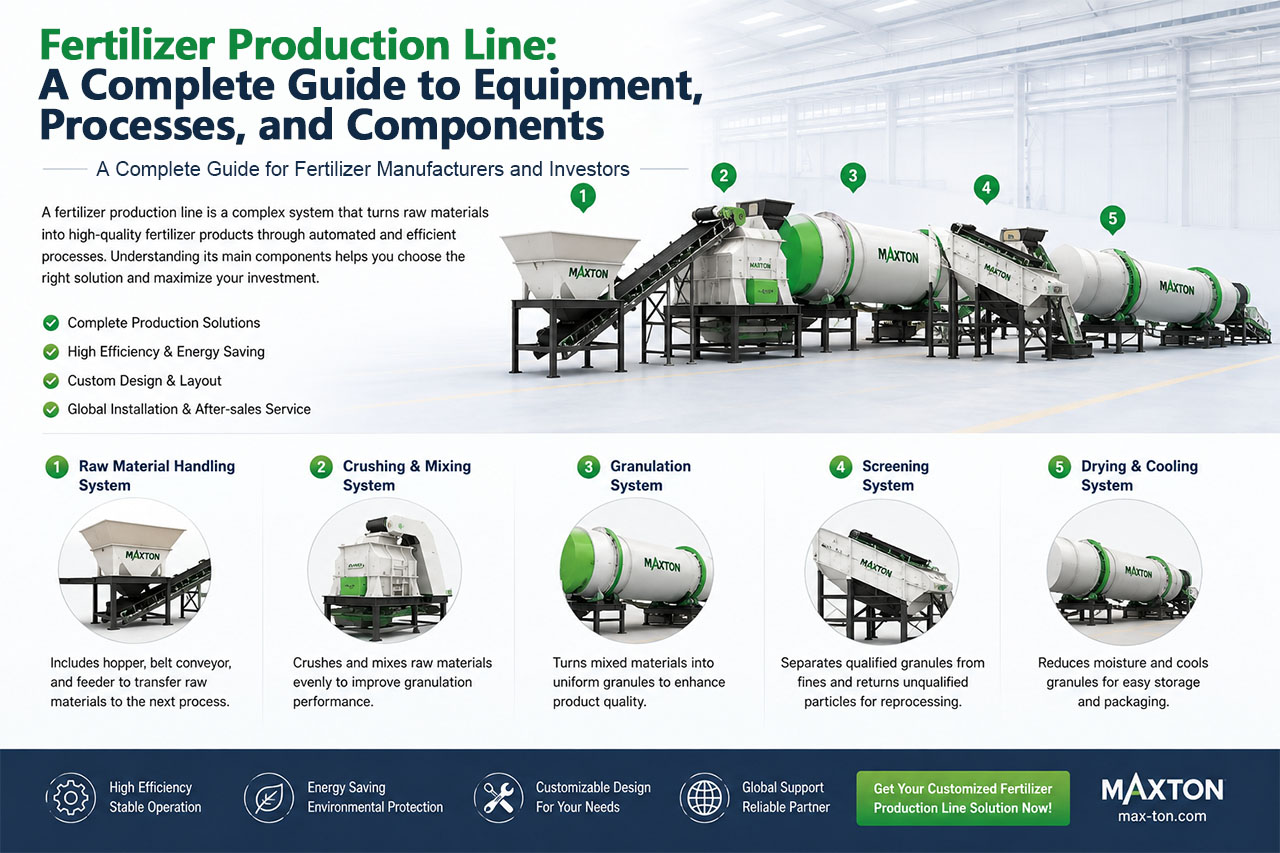
Fertilizer Production Line: A Complete Guide to Equipment, Processes, and Components
What Are the Main Components of a Fertilizer Production Line? A complete fertilizer production line ...
Give us a call or Simply Complete the Form
Address:Zhengzhou City, Henan Province, ChinaPhone:+86-18237180035Email:svip@maxtonorg.com