SINO MAXTON GROUP Co.,Ltd
News Details
Phosphate Processing Plant Libya Egypt | MAXTON Turnkey EPC
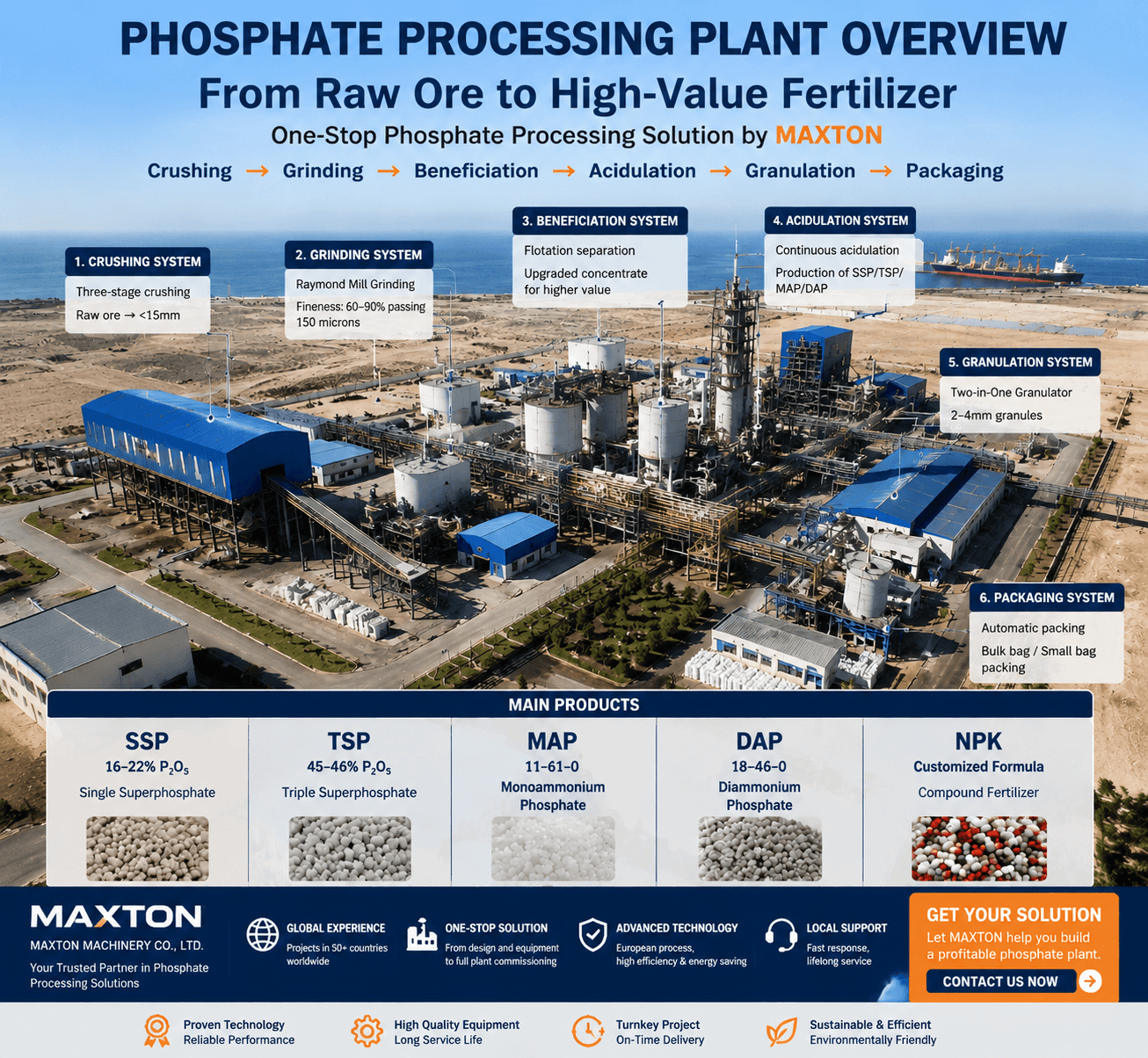
MAXTON turnkey phosphate processing plant for Libya and Egypt — a complete phosphate processing plant, Libya, Egypt, EPC solution from raw ore to international commodity.
Introduction: North Africa’s “White Gold” & a Historical Inflection Point in the Global Phosphate Market
North Africa is emerging as a core node in the global phosphate fertilizer supply chain. For investors and mining-rights holders planning a phosphate processing plant in Libya or Egypt, the timing has never been better. Libya holds over 1 billion tonnes of phosphate reserves, predominantly in the Murzuq Basin; Egypt ranks as the world’s third-largest phosphate holder with approximately 2.8 billion tonnes of proven reserves, trailing only Morocco and China. The combined resource base of both countries is sufficient to play a decisive role in the global phosphate supply landscape.
The global phosphate fertilizer market is undergoing a profound structural transformation. The global phosphate supply-demand gap is projected at approximately 12 million tonnes in 2026, potentially widening to 38 million tonnes by 2030. Meanwhile, China — the world’s largest phosphate fertilizer exporter — has announced a suspension of phosphate exports from March to August 2026. Brazil alone sourced 28% of its phosphate imports from China. Combined with energy and raw material cost increases driven by the Middle East conflict (sulphur FOB prices surging from USD 495/t to over USD 750/t), DAP/MAP prices have cumulatively risen 22–27% in core markets such as Brazil and India.
For Libya and Egypt, this is no longer a question of “whether to develop phosphate deep processing” — it is a fleeting strategic window that must be seized together. A well-timed phosphate processing plant in Libya or Egypt captures a 6–7× per-tonne value multiplier at a moment when competing Chinese supply has been structurally removed from the market.
MAXTON, together with two core technology partners in the global phosphate sector — Bradley Pulverizer (140 years of heritage in pendulum roller mills and continuous acidulation systems) and MAXTON Machinery (fertilizer granulation and turnkey plant integration expert covering 50+ countries) — provides a one-stop deep-processing solution for your phosphate processing plant in Libya and Egypt: from crushing, grinding, beneficiation, and acidulation to granulation, helping mine-right holders and investors in both countries achieve the value leap from “selling raw ore” to “selling international commodities.”
Locations covered: Murzuq Basin (Libya) · Abu Tartour Mine (Egypt) · Suez Canal Economic Zone (SCZONE) · Red Sea Export Terminals · Indorama–Misr Phosphate complex · WADICO operations (Egypt).
Egypt Phosphate Processing Plant Market: A Strategic Hub for Regional Synergy
While focusing on Libya’s industrial upgrading, the structural transformation underway in neighbouring Egypt cannot be overlooked. Egypt is not only the world’s third-largest phosphate reserve holder (approximately 2.8 billion tonnes), but its policy direction and capacity expansion pace are highly complementary to Libya’s ambitions — making the phosphate processing plant Libya-Egypt corridor a cohesive regional investment thesis.
1. Core Mining Areas & Production Status
- Abu Tartour Mine: One of the world’s largest single phosphate mining areas, covering 220 km², with exclusive mining rights held by Misr Phosphate Company.
- Red Sea Corridor Mines: Long-term supply to 12 countries, including Brazil, India, and Turkey. Egypt’s phosphate rock exports reached 3.5 million tonnes in 2022.
- Production Surge: From July 2024 to April 2025, Egypt’s phosphate rock output reached 16 million tonnes, a significant increase from 11 million tonnes in the previous fiscal year.
2. Strategic Transformation: Ban on Raw Ore Exports, Mandatory Local Value Addition
The Egyptian government is explicitly pursuing an “import substitution and value-added processing” strategy:
- Complete ban on new raw ore export contracts: Minister of Petroleum and Mineral Resources Karim Badawi announced that, apart from existing agreements, no new raw phosphate export contracts will be signed — export priority has been entirely ceded to local processing. This policy effectively mandates a phosphate processing plant in Egypt for every new mining concession.
- Institutional reform: The Mineral Resources Authority is being restructured into the “Egyptian Mineral Resources and Mining Industry Authority” (an economic entity), lowering investment barriers and attracting private and international capital into downstream processing.
3. Large-Scale Investment Influx
- Indorama–Misr Phosphate Fertilizer Complex (SCZONE): Phase 1 investment of USD 525 million, annual production of 600,000 tonnes of phosphate fertilizer, approximately 80% for export. Syndicate led by IFC and EBRD. This is the benchmark EPC scale for any phosphate processing plant in Egypt.
- Abu Tartour Phosphoric Acid Project: Total approximately USD 640 million, Phase 1 annual production of 250,000 tonnes of merchant-grade phosphoric acid (on 100% P₂O₅ basis), marking the shift from raw ore export to deep-processing manufacturing.
- Xingfa Group USD 2 Billion Integrated Phosphorus Chemical Complex (announced January 2025): Covering phosphate exploration, mining through to high-value phosphate products.
- WADICO–Xingfa Cooperation: WADICO’s 2025 phosphate rock output reached 3.5 million tonnes, net profit surged 195%, and a memorandum of understanding has been signed to study the construction of a phospho-silicate integrated complex.
4. Export Price Verification: Profit Margins Confirmed
Egypt DAP and TSP export transaction prices from March to May 2026:
- DAP FOB: approximately USD 750/tonne
- TSP FOB: NCIC tender price as high as USD 695/tonne
This data fully validates the commercial logic of extending the value chain from raw ore to fertilizer, providing a reliable investment return benchmark for similar phosphate processing plant Libya projects.
5. Libya–Egypt Synergy: Opportunity Over Competition
- Shared logistics: The Suez Canal Economic Zone (SCZONE) is the most convenient export gateway for Asia and Europe — products from both countries can share this corridor.
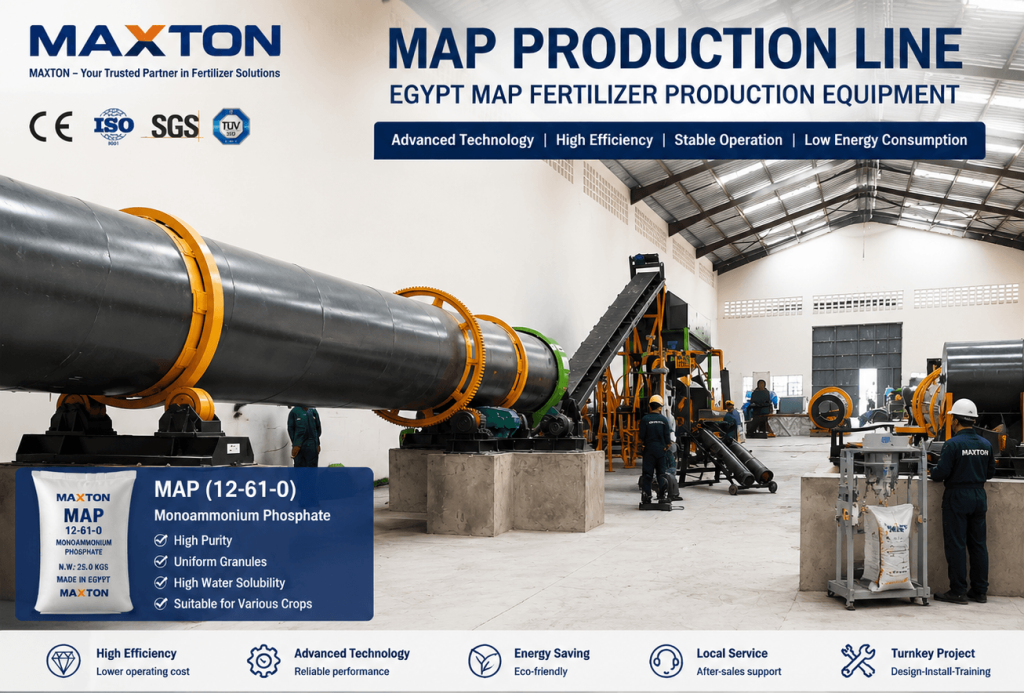
- Technology transfer: MAXTON has already commissioned a 15 t/h MAP production line in Egypt; Libya can draw on this project experience.
- Regional cooperation signal: Algeria, Egypt, and Libya have explicitly discussed the possibility of forming joint ventures in phosphate processing and fertilizer production at high-level mining summits.
For Egyptian clients searching for “phosphate processing,” this chapter directly addresses their policy environment and market opportunities. For Libyan clients, it demonstrates replicable success models and pathways for regional synergy in building a phosphate processing plant Libya Egypt corridor.
Stage 1: Crushing & Grinding at Your Phosphate Processing Plant, Libya, Egypt
The starting point of phosphate fertilizer production lies in physical transformation. In the sedimentary phosphate rock of Libya and Egypt, phosphorus is locked in insoluble fluorapatite crystal structures, commonly accompanied by silicate and carbonate impurities. Only through precisely controlled crushing and grinding can the foundation be laid for downstream acidulation and impurity removal at any phosphate processing plant in Libya or Egypt.
“The mill is the most critical upstream node in any phosphate production process. Grind quality directly determines the efficiency of subsequent acidulation reactions and the quality of the final product.” — Prof. Yang, MAXTON
Phosphate Rock Processing: Key Information
| Stage | Equipment & Process | Key Parameters | Purpose & Effect |
|---|---|---|---|
| High-Efficiency Three-Stage Crushing | Jaw crusher + cone/impact crusher in closed-circuit loop | Crushed to <15 mm | Ensure uniform feed size into the mill; extend grinding system service life |
| Precision Grinding | Bradley BM20 air-swept pendulum roller mill | Fineness adjustable by ore reactivity: • For phosphoric acid production: typically 60% passing 150 μm • For SSP/TSP production: sedimentary rock requires 90% passing 150 μm; igneous rock requires 90% passing 53 μm |
Optimize grinding efficiency; for highly abrasive ores, special wear-resistant alloy liners and rubber protection layers significantly extend equipment life |
| Beneficiation & Purification | Flotation system: • Silicate-type: reverse flotation process • Carbonate-type: fatty acid direct flotation |
For low-grade phosphate rock, beneficiated concentrate thickened and filtered to a moisture content below 12% | Enrich phosphate rock, remove impurities, and obtain high-quality phosphate concentrate powder |
Stage 2: Acidulation for Your Phosphate Processing Plant — SSP, TSP, MAP & DAP
Converting insoluble phosphate into plant-available water-soluble phosphorus is the core of deep processing at any phosphate processing plant in Libya or Egypt. MAXTON relies on the Bradley Broadfield continuous acidulation system — the authoritative process that has served as the global phosphate fertilizer industry’s “industrial standard” since 1936 — to flexibly produce multiple mainstream phosphate fertilizer products at your phosphate processing plant in Libya or Egypt.
The entire system is sourced from Bradley Pulverizer, covering phosphate rock grinding, acid dilution, exhaust gas scrubbing, and powder storage — eliminating multi-vendor interface risks. The Broadfield Den (>30 t/h) and Broadfield Belt Den (<30 t/h) accommodate different capacity requirements. Reaction gases (hydrogen fluoride, etc.) are purified through the scrubbing system, meeting EU and ISO 14001 environmental standards.
Fertilizer Products: Detailed Information
| Product | Nutrient Content (Typical P₂O₅) | Core Process & Application | Market Position |
|---|---|---|---|
| SSP (Single Superphosphate) | 16–22% | Sulphuric acid acidulation of rock powder. The most economical and mature basic phosphorus source, containing sulphur. In the context of high global phosphate fertilizer prices, markets such as Brazil are structurally returning to SSP. | Domestic and neighbouring African markets |
| TSP (Triple Superphosphate) | 45–46% | Direct phosphoric acid acidulation, avoiding calcium sulphate by-product. High phosphorus concentration — ideal for long-distance export and premium markets. | Europe and South America exports |
| MAP (Mono-Ammonium Phosphate) | 48–61% (11-52-0 to 12-61-0) | Ammoniation reaction. High phosphorus, low nitrogen — the fastest-growing phosphate fertilizer variety by demand. China’s export suspension has intensified global supply tightness. | Brazil, Southeast Asia, South Asia |
| DAP (Di-Ammonium Phosphate) | 46–53% (18-46-0) | Ammoniation reaction. The most widely traded phosphate fertilizer product globally. After the Middle East conflict, prices in core markets such as Brazil and India have risen 22–27%. | The most widely used high-concentration phosphate fertilizer worldwide |
| NPK Compound Fertilizer | Custom-blended by formula | Using MAP/DAP/TSP as phosphorus source, combined with nitrogen and potassium raw materials, produced via rotary drum granulation. The highest value-added form. | High value-added markets for end-users |
Stage 3: Granulation at Your Phosphate Processing Plant, Libya, Egypt
In the phosphate processing chain, granulation is the decisive watershed that determines whether a phosphate processing plant in Libya or Egypt produces an internationally tradeable commodity or an unsellable intermediate. Powder or crystalline phosphate fertilizer products, while chemically compliant, face three major bottlenecks in actual storage, transport, and application: dust generation causing cargo loss, hygroscopic caking preventing mechanized fertilization, and uneven particle size preventing precision spreading. Granulation technology, through physical agglomeration or chemical binding, transforms these defects entirely into market competitiveness.
1. Core Granulation Objectives: Meeting Dual Requirements of International Trade & Modern Agriculture
| Parameter | Technical Requirement | Trade Significance |
|---|---|---|
| Particle size distribution | 2–4 mm accounting for ≥ 90% | Compatible with mechanized spreading equipment; reduces application error |
| Particle compressive strength | Single particle ≥ 30 N (ocean shipping grade) | Withstands stacking pressure and vibration during container/bulk carrier transit |
| Anti-caking performance | No caking after 30 days of ambient storage | Ensures smooth unloading, blending, and spreading |
| Low dust content | Dust content ≤ 2% | Meets port environmental and worker health requirements |
MAXTON’s granulation system is designed to these export standards as the baseline, ensuring every batch of product can pass inspection by major importing countries worldwide.
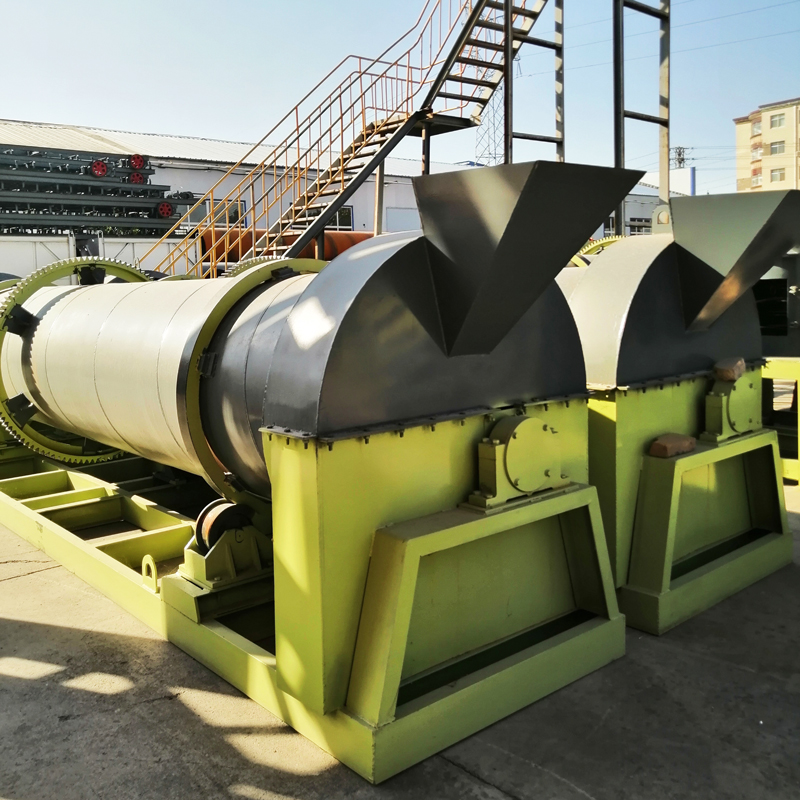
2. Core Equipment: Two-in-One Granulator (Rotary Drum + Paddle Composite)
MAXTON employs the Two-in-One Granulator, integrating rotary drum agglomeration and paddle coating principles in a single machine body — a critical advantage for the phosphate processing plant in Libya and Egypt markets:
- Rotary drum agglomeration mode: Material tumbles inside the rotating cylinder; binder (water, steam, or slurry) is added through a spray system, and fine particles grow layer by layer. Suitable for powder blend systems such as SSP, TSP, and NPK.
- Paddle coating mode: In MAP/DAP production, phosphoric acid–ammonia slurry is sprayed directly onto tumbling return-charge granules, achieving simultaneous reaction and granulation — more uniform nutrient distribution and higher particle roundness.
Both modes switch with one button, without equipment changeover. Compared to conventional separate systems, the Two-in-One Granulator reduces equipment investment by approximately 25% and footprint by 30%.
3. Complete Granulation Process Flow (Step-by-Step)
- Blending & Return-Charge Ratio: Powder/slurry feed material is blended with return charge (<1.5 mm and crushed oversized particles) at a 1:3–1:5 mass ratio.
- Granulation: Blended material enters the Two-in-One Granulator; binder (5–10%) is sprayed in; discharge moisture 6–12%.
- Drying: Wet granules pass through a rotary drum dryer (inlet 250–400°C, outlet 80–100°C); final moisture ≤ 2%. Tail gas dedusting and scrubbing.
- Screening: >4 mm crushed and returned; 2–4 mm on-specification; <2 mm returned. Screening efficiency ≥ 95%, anti-clogging design.
- Cooling & Coating: On-specification granules (70–90°C) cooled to ≤ 40°C; anti-caking agent sprayed at 0.5–1.5 kg/t.
- Packaging: Jumbo bags (20–30 bags/h) or 25/50 kg retail bags (800–1,200 bags/h); accuracy ± 0.2%.
4. Process Differentiation by Phosphate Fertilizer Product
| Product | Granulation Mode | Binder | Key Control Points |
|---|---|---|---|
| SSP | Rotary drum agglomeration | Water or steam | Avoid excessive free acid, causing granule moisture reabsorption |
| TSP | Rotary drum agglomeration | Water or dilute phosphoric acid | Higher granule strength requirement (≥ 35 N) |
| MAP | Slurry coating | Phosphoric acid–ammonia slurry | Neutralization degree controlled at 1.0–1.05 to prevent excessive stickiness |
| DAP | Slurry coating | Phosphoric acid–ammonia slurry | Ammoniation temperature control to avoid nitrogen loss |
| NPK | Drum + coating composite | Water, steam, or urea solution | Thorough equipment cleaning during formula changeover to prevent cross-contamination |
5. Export-Oriented Special Design (Ocean Shipping + Tropical Climate Adaptation)
Given that Libya and Egypt products are primarily exported to high-temperature, high-humidity regions such as Brazil, Southeast Asia, and India, MAXTON has incorporated specialized enhancements at the phosphate processing plant, Libya Egypt granulation system level:
- Granule strength enhancement: Three-stage temperature-profile drying (preheat → constant-rate drying → falling-rate stage) ensures a gentle moisture gradient inside and outside granules, preventing surface hardening with wet core — the “bursting” phenomenon. Final compressive strength reaches 40–50 N, far exceeding the 30 N ocean shipping standard.
- Anti-caking coating system: Dual-fluid spray nozzle with droplet size ≤ 50 μm, coverage uniformity > 95%. Optionally configured with plant-oil-based (EU biodegradable compliant) or mineral-oil-based coating agents.
- Drying thermal efficiency optimization: Waste heat recovery device; specific heat consumption ≤ 400,000 kcal/t — 15% lower than conventional systems.
- Anti-condensation design: Air knife installed at cooler discharge to prevent moisture in hot warehouse air from condensing on cold granule surfaces.
6. Granulation System: Technical & Economic Value Comparison
| Performance Indicator | Conventional Granulation System | MAXTON Two-in-One Granulation System |
|---|---|---|
| Equipment investment | Baseline | ~25% reduction |
| Plant footprint | Baseline | 30% reduction |
| On-spec granule fraction (2–4 mm) | 70–80% | ≥ 90% |
| Electricity consumption per tonne | 18–25 kWh | 15–18 kWh |
| Average compressive strength | 25–30 N | 40–50 N |
| Product changeover | Equipment module replacement required | One-button switch, no shutdown |
Why Build a Phosphate Processing Plant in Libya and Egypt in 2026?
Multiple factors are profoundly reshaping the global fertilizer supply chain. Libya and Egypt’s phosphate processing industry faces an unprecedented golden window:
- China’s export restrictions create a massive gap: China has suspended phosphate exports through August 2026. Its 28% share of Brazil’s imports and its dominant position in global DAP/MAP supply have been vacated. This represents a gap on the scale of tens of millions of tonnes.
- Geopolitical drivers and price surges: Middle East conflict has caused DAP/MAP prices to cumulatively rise 22–27%; key raw material sulphur prices have surged over 50%. Morocco’s DAP FOB has climbed to USD 704/tonne.
- Inelastic demand support: The World Bank warns that global fertilizer prices may rise 31% overall in 2026, and fertilizer shortages could push 45 million people into food insecurity. Phosphorus is a key element securing global crop yields — demand is inelastic.
- Long-term structural gap: As China’s high-grade phosphate mineable years shrink dramatically, the global market is rapidly seeking new reliable supply sources. Libya and Egypt’s combined reserves of over 3.8 billion tonnes and rapidly advancing mining reforms make North Africa a “rising force” deserving close attention in the global phosphate supply chain.
For any investor evaluating a phosphate processing plant in Libya or Egypt, these four converging forces create an unambiguous commercial signal: the time to act is now.
MAXTON Global Track Record: The Phosphate Landscape
MAXTON Machinery brings over 20 years of practical experience in the global fertilizer equipment sector, with over 2,000 equipment units delivered worldwide for the phosphate processing plant in Libya, Egypt market and beyond, and local engineering service teams established across Africa, the Middle East, and Southeast Asia.
| Country / Region | Project | Capacity / Specification | Core Value |
|---|---|---|---|
| Iraq | DAP Fertilizer Plant | 200,000 tpa | Full DAP production line supplying the Middle East market |
| Brazil | SSP Fertilizer Production Line | 20 tph | Meeting Brazil’s demand for a low-cost bulk phosphorus source in agriculture |
| Egypt | MAP Fertilizer Production Line | 15 tph | Covering North Africa’s domestic and European export markets |
| Ethiopia | DAP Fertilizer Production Line | 20 tph | Entering East Africa’s fastest-growing agricultural fertilizer market |
| Canada | NPK Compound Fertilizer Plant | 500,000 tpa | Top-tier large-scale project in North America |
| Indonesia | Compound Fertilizer Plant Retrofit | Retrofit: specific energy consumption reduced from 1.8 GJ to 1.2 GJ per tonne | Tropical climate adaptation retrofit; energy consumption reduced by 33% |
Why Choose MAXTON?
- Dual core technology synergy: Bradley Pulverizer’s century of grinding and acidulation expertise + LANE Machinery’s global granulation and turnkey plant integration experience — covering every stage of your phosphate processing plant in Libya and Egypt.
- End-to-end turnkey EPC solution: From raw ore crushing, grinding, beneficiation, acidulation to granulation, drying, screening, and coating — full EPC contracting that eliminates multi-vendor interface issues.
- Low-grade ore valorization: The Bradley BM20 mill with PLC automatic acid-to-rock ratio control handles feed quality fluctuations stably; flotation and calcination solutions for silicate and carbonate impurities.
- Significant cost reduction & environmental compliance: SSP production line achieves USD 12–18/tonne savings versus conventional solutions; acid fume recovery rate ≥ 95%; Broadfield exhaust gas scrubbing meets international environmental standards.
- High-durability export-grade granules: Anti-caking, high-strength granules adapted for ocean shipping and inspection standards in target markets such as Brazil, India, and Southeast Asia.
- Tropical & special-condition engineering: Enhanced drying insulation, air dehumidification, and wide voltage fluctuation tolerance for high-humidity, high-temperature markets — proven retrofit solutions.
- 5-year whole-machine warranty + remote IoT diagnostics: Industry-leading warranty significantly reduces total lifecycle maintenance costs for the phosphate processing plant in Libya or Egypt.
Value Leap of a Phosphate Processing Plant in Libya or Egypt
Building a phosphate processing plant in Libya or Egypt transforms the entire economics of your mining operation. Every tonne of raw ore converted into finished fertilizer inside a phosphate processing plant in Libya or Egypt captures a dramatically higher value. The following table compares raw ore export versus MAXTON deep-processing export:
| Comparison Item | Raw Ore Export Mode | MAXTON Deep Processing Export Mode |
|---|---|---|
| Product form | Bulk rock powder, P₂O₅ 20–28% | Granular SSP / TSP / MAP / DAP / NPK |
| Per-tonne price level | Subject to a single buyer, low pricing | Premium pricing; per-tonne differential can reach hundreds of dollars |
| Transport compatibility | Dust-prone, cake-prone; high shipping costs | Anti-caking, high-strength granules adapted for ocean freight |
| Market access | Regional primary commodity trade | Global commodity; access to multiple country markets |
| Supply chain bargaining power | Buyer-dominated | Seller can actively price; flexible export market switching |
Contact MAXTON
MAXTON — your phosphate value chain optimization expert for the phosphate processing plant in the Libya and Egypt market. In the strategic window of the 2026 global phosphate supply-demand restructuring, we transform Libya and Egypt’s phosphate resources into high-value international commodities through advanced grinding, beneficiation, acidulation, and granulation technology.
Contact us to receive:
- ✅ Custom production line feasibility assessment & capacity plan for your phosphate processing plant in Libya or Egypt
- ✅ Free laboratory granulation trial booking (validate process feasibility before equipment commitment)
- ✅ Global project site visit arrangement (including Egypt MAP production line)
MAXTON — From Raw Ore to International Commodity. Your deep-processing strategic engine for the phosphate processing plant, Libya, Egypt value chain.
Get a Free Consultation Today →
Related Posts
9 月 15, 2026
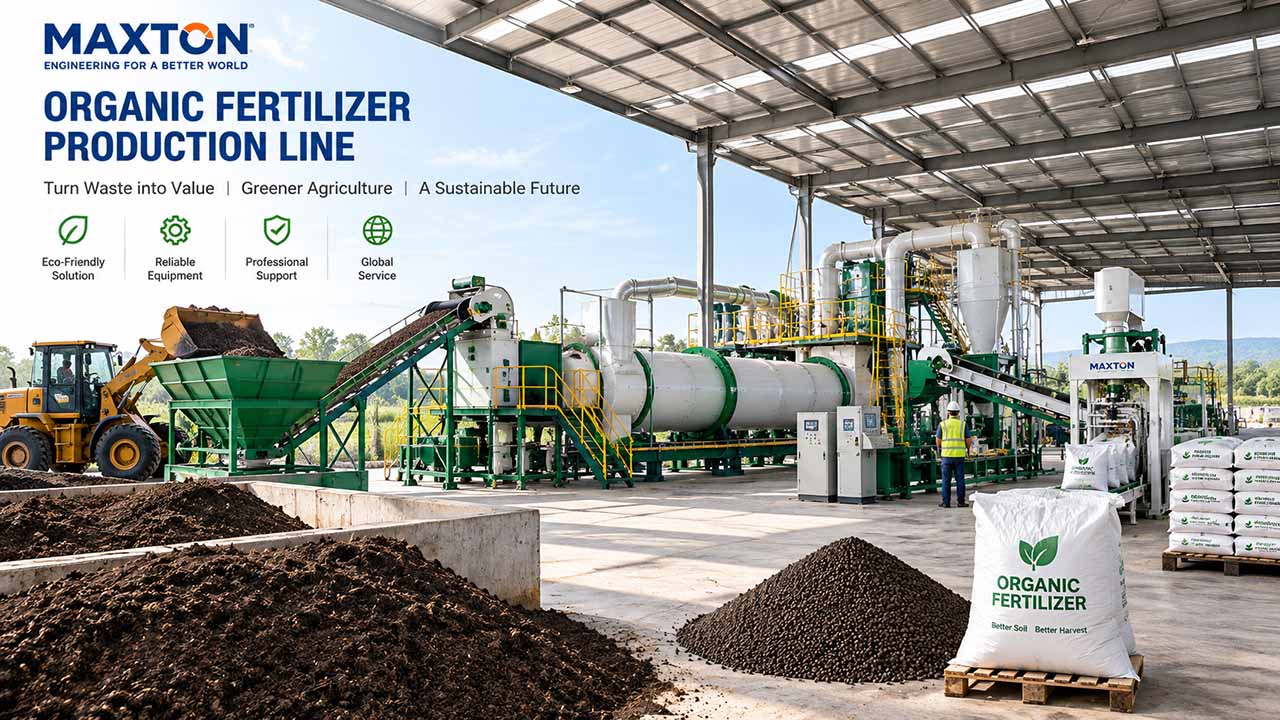
Fertilizer Plant Cost in 2026: Real Budget Ranges for Organic, Liquid, and NPK Production
Quick answer: A small organic fertilizer plant can start under $50,000. A commercial granular fertil...
8 月 24, 2026
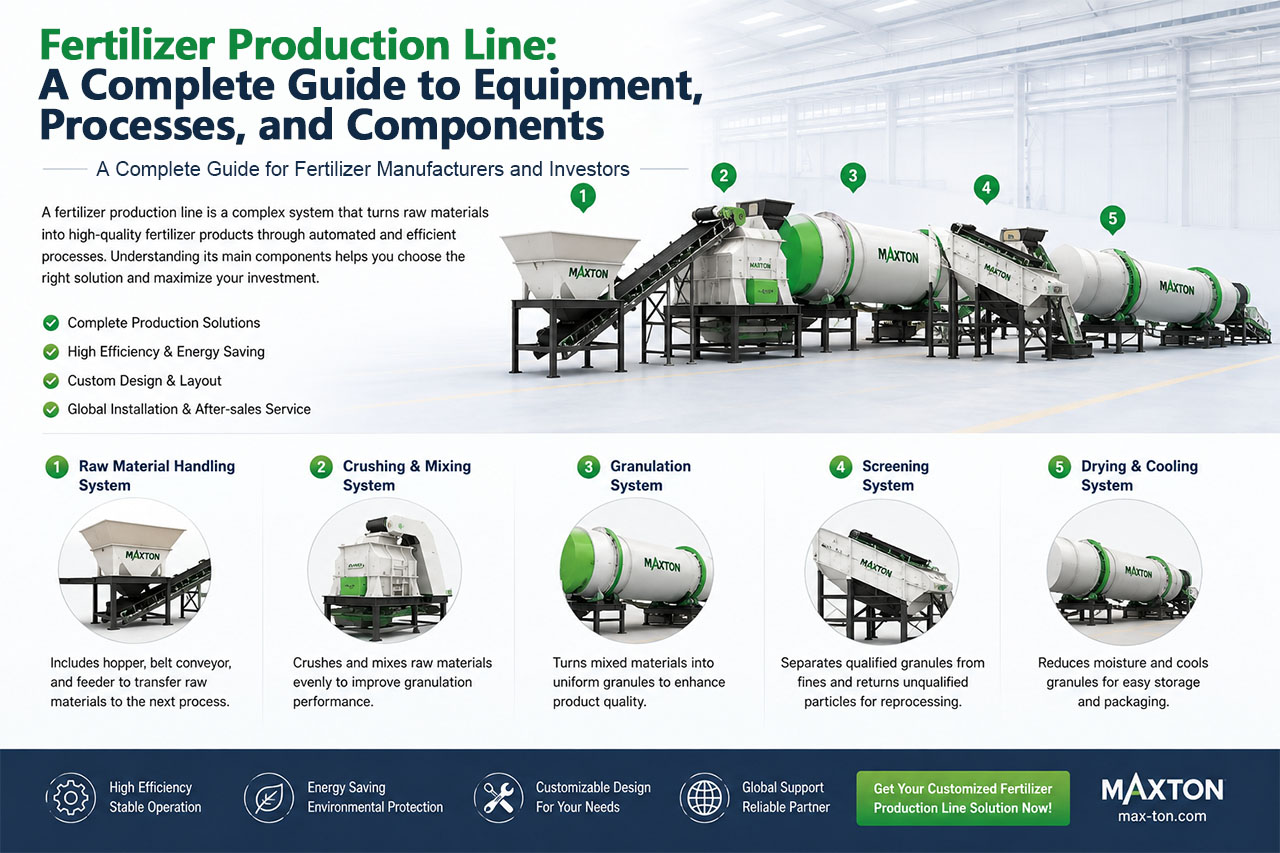
Fertilizer Production Line: A Complete Guide to Equipment, Processes, and Components
What Are the Main Components of a Fertilizer Production Line? A complete fertilizer production line ...
Give us a call or Simply Complete the Form
Address:Zhengzhou City, Henan Province, ChinaPhone:+86-18237180035Email:svip@maxtonorg.com