SINO MAXTON GROUP Co.,Ltd
News Details
How to Choose the Right Organic Fertilizer Granulator Machine for You?
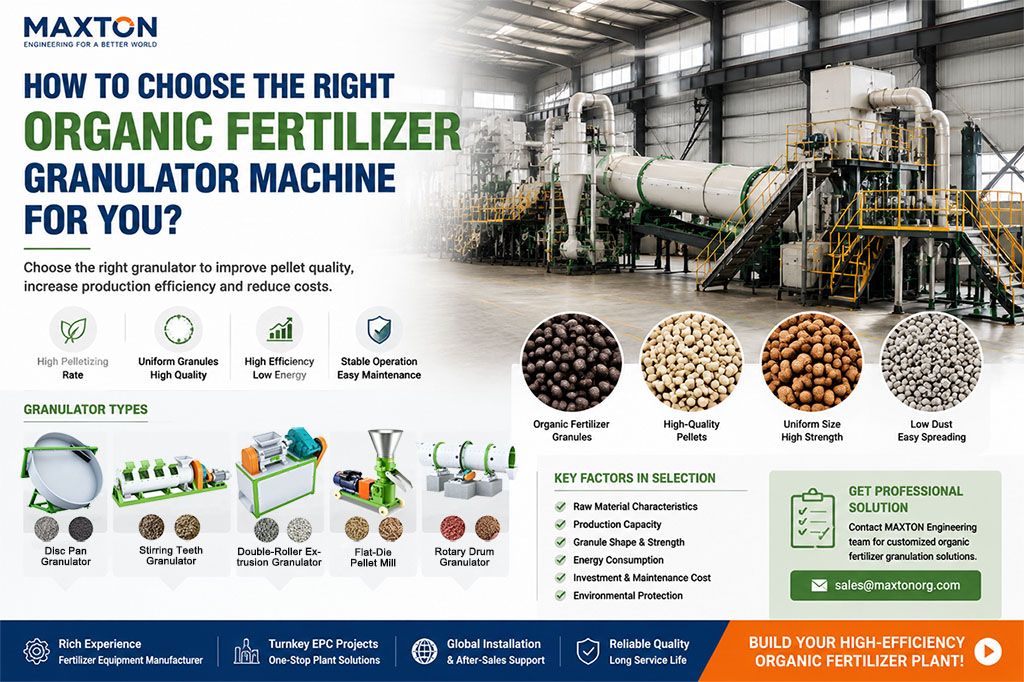
Organic Fertilizer Granulator Factory: MAXTON, Complete Manufacturing Solutions for Organic Fertilizer, Compound Fertilizer, BB Fertilizer, NPK, Liquid Fertilizer
The granulator is a core piece of equipment in an organic fertilizer production line, and its performance directly affects the quality of the finished granules, production efficiency, and production costs. Choosing the right Organic Fertilizer Granulator requires careful consideration of factors such as raw material characteristics, production scale, finished product requirements, and investment budget.
Below, MAXTON, an organic fertilizer granulator manufacturer, will detail the types of granulators, key selection points, and precautions to provide a reference for organic fertilizer production plants.
Types and Characteristics of Organic Fertilizer Granulator Machine
Based on different granulation principles, organic fertilizer granulators are mainly divided into the following categories:
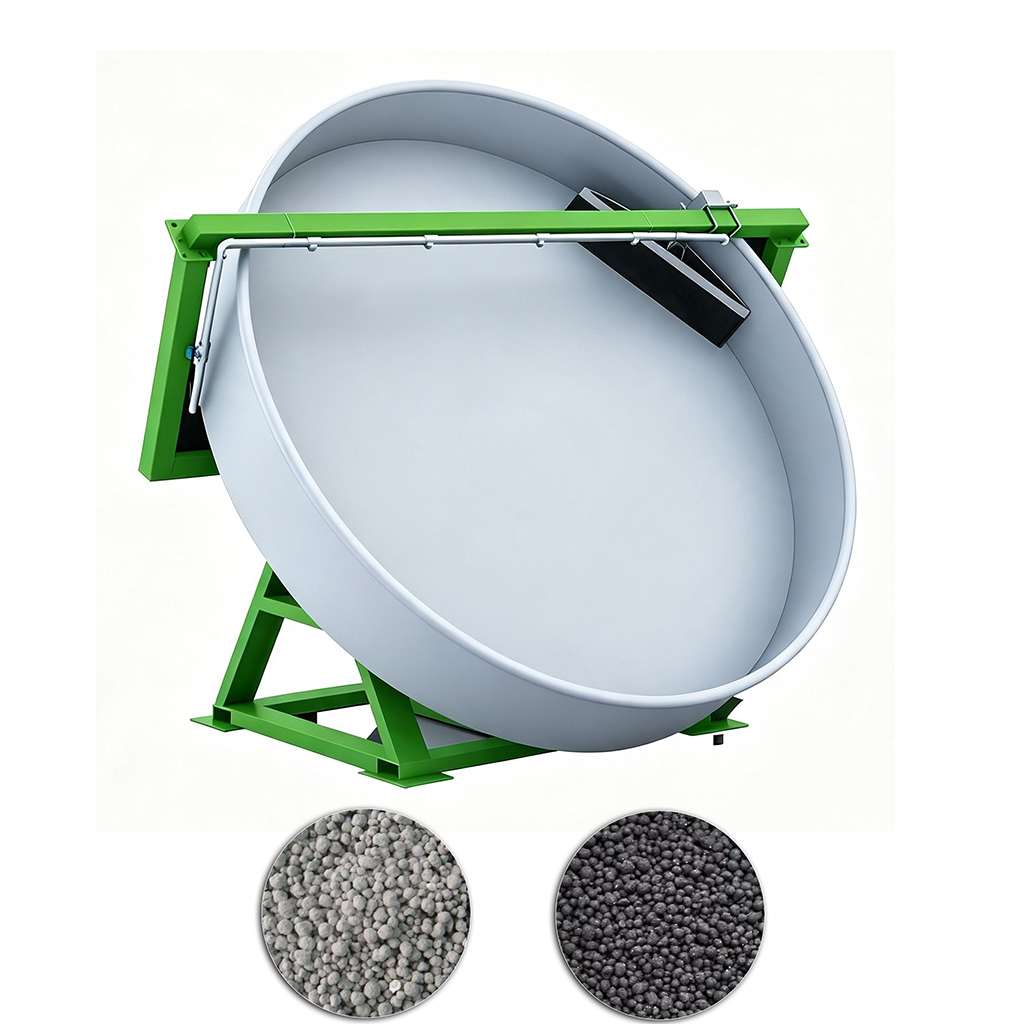
1. Disc Granulator (Pan Granulator)
- Principle: A tilting, rotating disc drives the material to roll, sprays a binder or water, and uses centrifugal force and gravity to form spherical granules.
- Advantages:
Granules are round and uniform, with a high yield (up to 90% or more). Suitable for materials with a moisture content of 15%–25% (such as livestock manure + straw mixture).
Simple structure, easy operation and maintenance.
Suitable for small and medium-sized production lines, with low investment cost.
- Disadvantages: Sensitive to raw material moisture content; requires pretreatment equipment (such as crushing and mixing).
- Applicable scenarios: Small to medium-scale production, where the raw material is powdery or requires the addition of binders for organic fertilizers (such as livestock manure and straw compost).
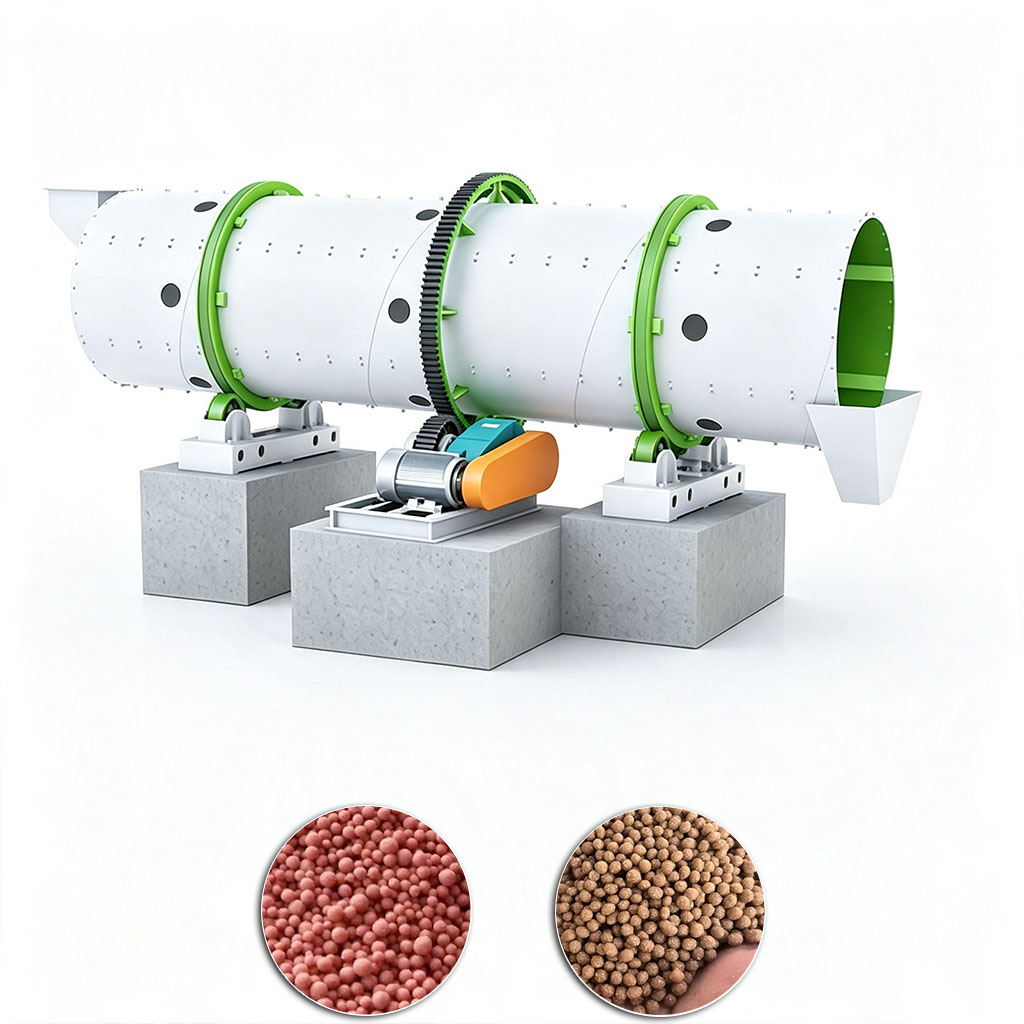
2. Rotary Drum Granulator
- Principle: Material is rolled, squeezed, and bound together within a rotating drum to form granules.
- Advantages:
Large processing capacity, suitable for continuous large-scale production.
Adjustable drum inclination and speed to adapt to different raw materials.
- Disadvantages: Large equipment size, higher energy consumption, and slightly inferior particle uniformity compared to disc granulators.
- Applicable scenarios: Large-scale production, especially for organic materials with high moisture content or requiring the addition of auxiliary materials.
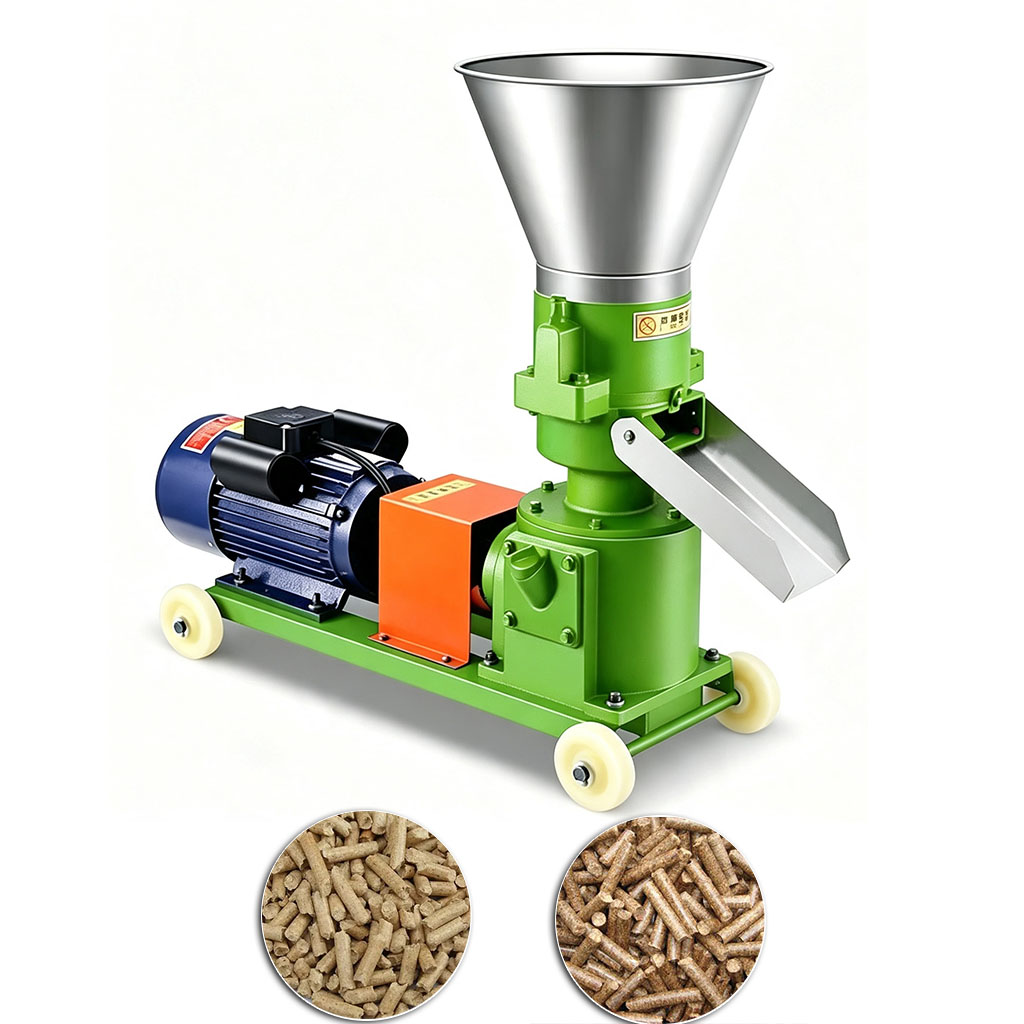
3. Extrusion Granulator (Flat Die/Ring Die Granulator)
- Principle: Powdered raw materials are directly compressed into cylindrical granules through the powerful extrusion of a die and pressure rollers.
- Advantages:
No need to add moisture or binders; suitable for dry raw materials.
High granule density, good strength, and not easily broken.
- Disadvantages: High energy consumption, easy die wear, and high maintenance costs.
- Applicable Scenarios: Organic fertilizer production mainly using dry processes (such as biochar-based fertilizer and humic acid fertilizer).
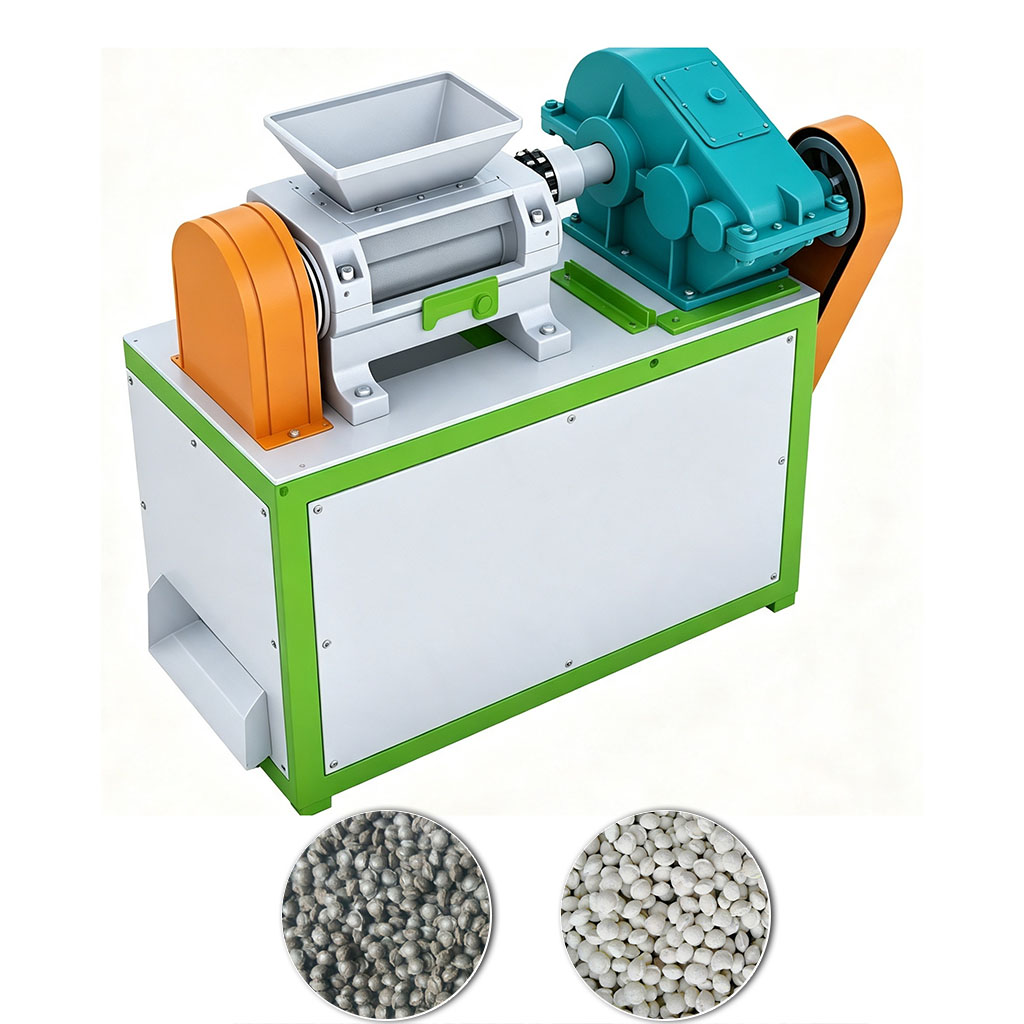
4. Double Roller Granulator (Twin Roller Extrusion Granulator)
- Principle: Two opposing rotating rollers compress materials into flakes or strips under high pressure, then crush them into granules.
- Advantages:
No need to add binders; regular granule shape and high density (hardness up to 30N/granule).
Suitable for high-fiber or difficult-to-shape raw materials (such as mushroom residue and sawdust) and dry materials with a moisture content of 10%–15% (such as well-rotted compost).
- Disadvantages: Poor uniformity of finished granules, requiring supporting crushing and screening equipment.
- Applicable Scenarios: Granulation of special raw materials (such as high-fiber waste).
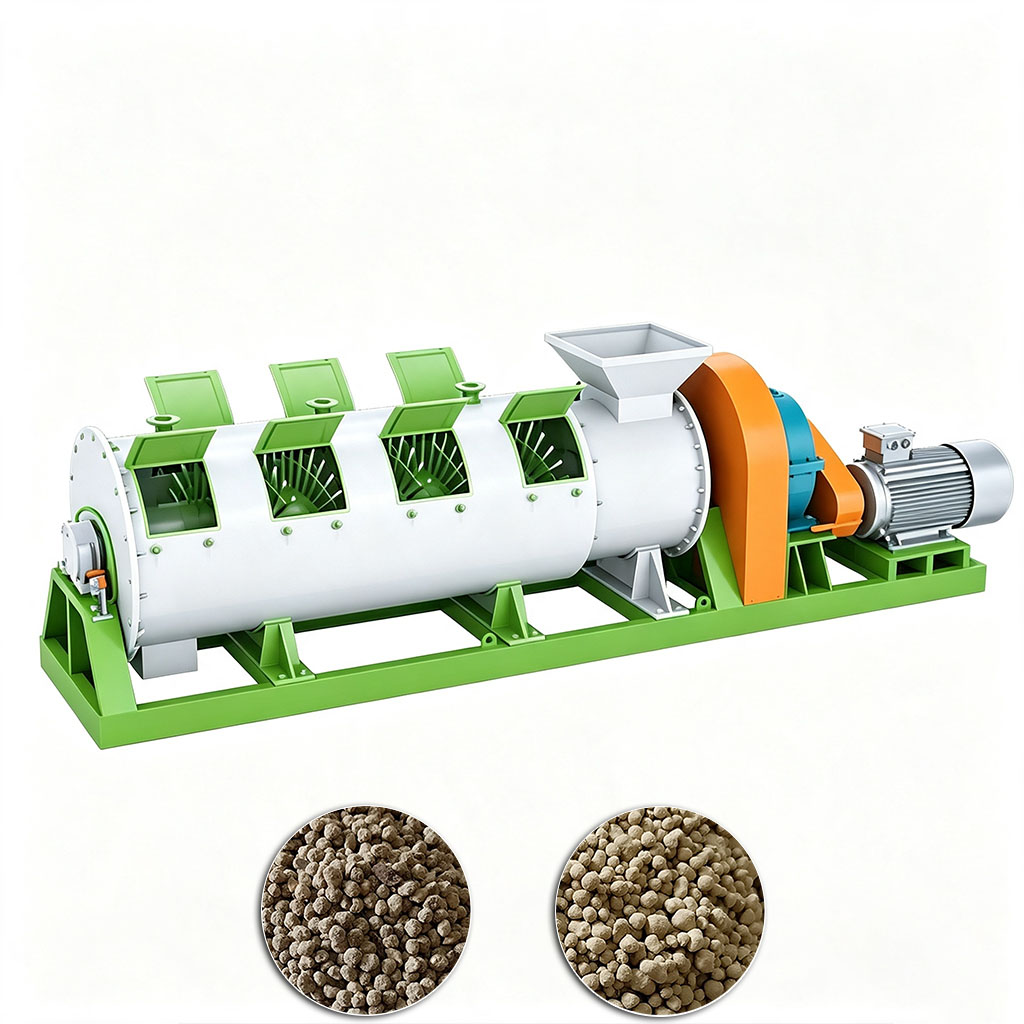
5. Stirring Tooth Granulator (New Type of Organic Fertilizer Granulator)
- Principle: The stirring tooth granulator uses the high-speed rotation of stirring teeth to repeatedly knead the material into granules within the drum.
- Advantages: Wide adaptability to materials (can handle wet materials with a moisture content of 20%–30%), medium granule density.
- Disadvantages: Higher energy consumption.
- Applicable Scenarios: Suitable for home gardening or small-scale ecological parks where high granule hardness is not required.
Key Factors in Selecting a Granulator
1. Raw Material Characteristics Analysis
- Moisture Content: High-moisture raw materials (such as fresh livestock and poultry manure) require a rotary drum or disc granulator; dry powders are suitable for extrusion granulation.
- Organic Content: High-organic-content raw materials (such as straw) require consideration of the equipment’s anti-sticking and wear-resistance properties.
- Fiber Content: For high-fiber materials (such as sawdust and mushroom residue), a roller pelletizer is recommended.
2. Production Capacity Requirements
Small Production Lines (1-5 tons/hour): Disc pelletizers or small extrusion pelletizers are preferred.
Medium Production Lines (5-20 tons/hour): Drum pelletizers or large flat die pelletizers.
Large Production Lines (over 20 tons/hour): Drum pelletizers or multiple units in parallel.
3. Granulation Requirements
- Pellet Shape: Disc/drum pelletizers are suitable for spherical pellets; extrusion pelletizers produce cylindrical pellets.
- Pellet Strength: For fertilizers requiring long-distance transportation or mechanized application, extrusion or roller pelletizers are preferred.
- Pellet Size Range: Conventional pellets (2- 5 mm) can be produced using either disc or drum pelletizers.
4. Energy Consumption and Environmental Protection
Extrusion pelletizers have higher energy consumption but do not require drying; disc/drum pelletizers require supporting drying equipment.
For scenarios with high dust control requirements, closed-type granulation equipment (such as rotary drum granulators) should be prioritized.
5. Investment and Maintenance Costs
When budgets are limited, disc granulators offer the best cost-effectiveness.
Long-term operation requires consideration of die replacement costs (e.g., extrusion granulators) or the lifespan of wear parts (e.g., rotary drum granulator liners).
Selection Considerations
Raw Material Testing First
It is recommended to provide raw material samples to the equipment supplier for trial operation to observe granulation results and equipment adaptability.
Compatibility with Supporting Equipment
The granulator must be compatible with equipment such as crushers, mixers, dryers, coolers, and screening machines to avoid capacity or process bottlenecks.
Expandability and Flexibility
If there is a possibility of future product type adjustments (e.g., producing organic-inorganic compound fertilizers), choose equipment with interchangeable dies or adjustable parameters.
After-Sales Service Guarantee
Prioritize manufacturers that provide installation and commissioning, operation training, and rapid spare parts supply.
Summary
Choosing the right granulator requires a comprehensive evaluation from multiple dimensions, including raw material characteristics, production scale, finished product demand, and cost control. Small and medium-sized organic fertilizer plants can prioritize disc granulators or drum granulators; extrusion granulators are more advantageous when processing special raw materials or producing high value-added products. It is recommended to communicate thoroughly with professional organic fertilizer equipment manufacturers, combining on-site inspections and trial run results to ultimately determine the optimal solution.
Through scientific selection, organic fertilizer plants can not only improve product quality and production efficiency but also reduce energy consumption and maintenance costs, gaining a competitive advantage in the organic fertilizer market.
Frequently Asked Questions (FAQ)
Q: What is the optimal moisture content of the raw material for organic fertilizer granulation?
A:
Wet agitator granulation/disc granulation: 28%–35%;
Dry roller extrusion granulation: 18%–24%;
Excessive moisture content easily leads to sticking to the walls and machine blockage; insufficient moisture content results in loose granules and more powder. Add an image with your Focus Keyword as alt text.
Q: What are the requirements for the fineness of the raw material grinding?
A: Raw materials should be crushed to ≤1mm; excessive coarse fiber and long straw will severely reduce the pelleting rate, so sieving is recommended. Add an image with your Focus Keyword as alt text.
Q: What if the organic matter content is too high and pellets cannot be formed?
A: Pure high-organic-matter manure lacks viscosity. Add 5%–12% bentonite, humus, or diatomaceous earth as a binder; a suitable amount of recycled material powder can also be added.
Q: Can under-fermented raw materials be granulated directly?
A: Not recommended. Unfermented raw materials have high coarse fiber content and generate a lot of heat, making them prone to scattering during granulation; subsequent drying will cause secondary fermentation, bulging, and cracking.
Related Organic Fertilizer Equipment
To complement your production line, Maxton also manufactures:
Organic Fertilizer Fermentation Equipment
Compost Turners
Organic Fertilizer Crusher
Rotary Dryers and Coolers
Rotary Screening Machines
Automated Fertilizer Packaging Machines
Get Customized Fertilizer Granulating Solutions
Are you looking for the best organic fertilizer granulation equipment for your next commercial project? Henan Maxton Machinery Co., Ltd. provides comprehensive EPC fertilizer plant solutions, from equipment selection and capacity planning to 3D plant layout design and global installation support.
Contact the Maxton Engineering Team Now:
Email: sales@maxtonorg.com
Services: Granulator Equipment Selection | EPC Plant Solutions | Technical Consulting
Related Posts
9 月 15, 2026
Fertilizer Plant Cost in 2026: Real Budget Ranges for Organic, Liquid, and NPK Production
Quick answer: A small organic fertilizer plant can start under $50,000. A commercial granular fertil...
8 月 24, 2026
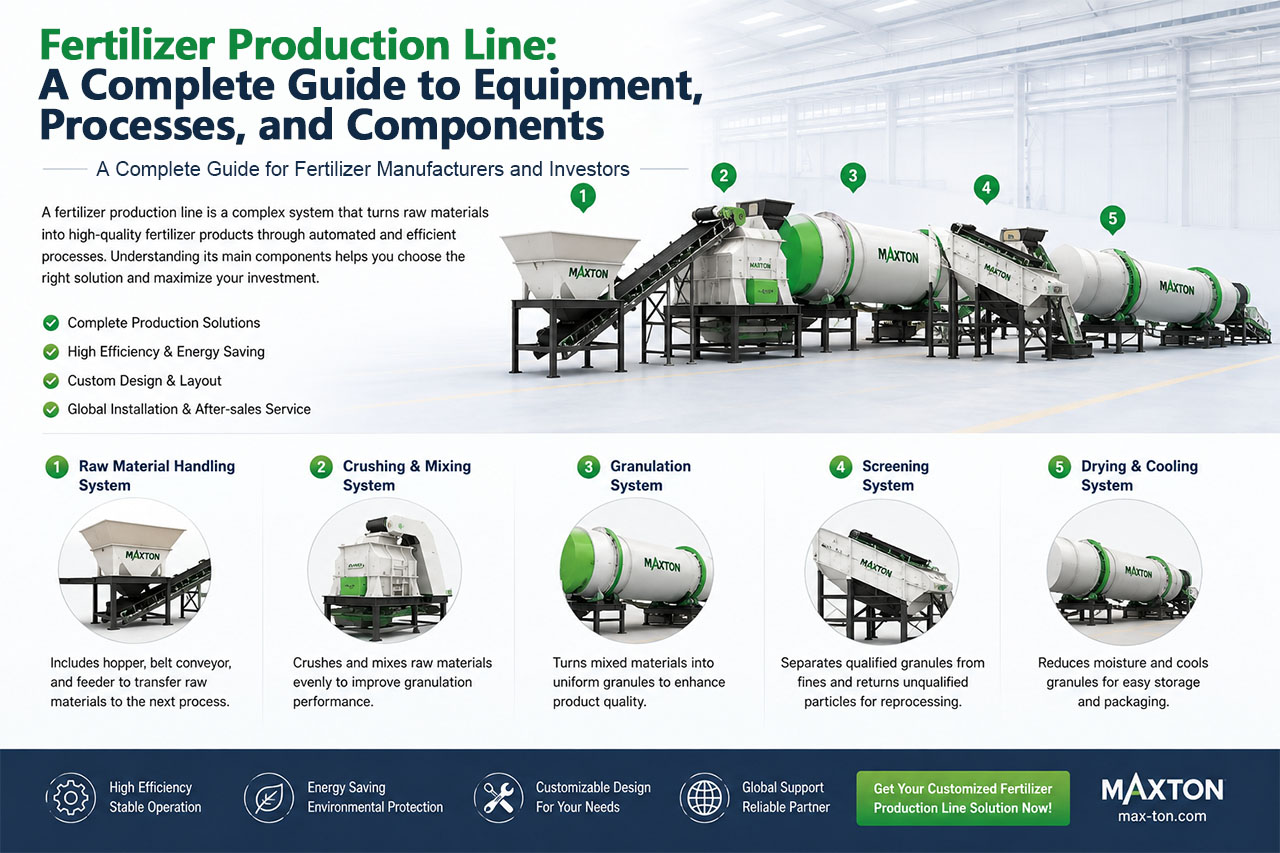
Fertilizer Production Line: A Complete Guide to Equipment, Processes, and Components
What Are the Main Components of a Fertilizer Production Line? A complete fertilizer production line ...
Give us a call or Simply Complete the Form
Address:Zhengzhou City, Henan Province, ChinaPhone:+86-18237180035Email:svip@maxtonorg.com