SINO MAXTON GROUP Co.,Ltd
News Details
Granular vs. Liquid Organic Fertilizer: Pros, Cons & Commercial Production Guide – MAXTON
Granular vs. Liquid Organic Fertilizer: How to Choose for Modern Agriculture? (With Commercial Production & Equipment Guide)
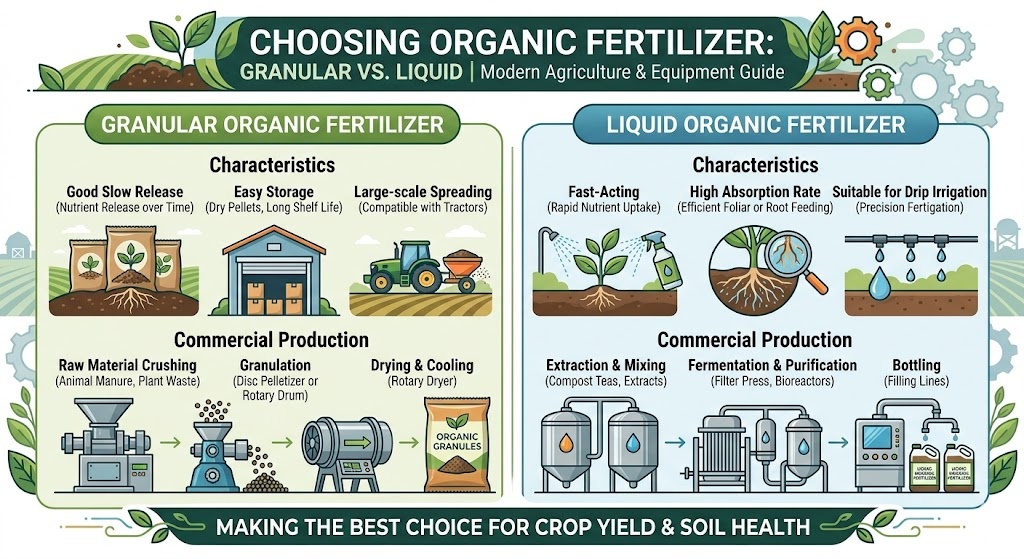
In modern sustainable agriculture, the choice of fertilizer form directly impacts a farm’s operational costs and crop yield. Granular organic fertilizer, with its slow-release properties, extended shelf life, and suitability for large-scale mechanized spreading, is the foundation for long-term soil remediation in broadacre crops. Conversely, liquid organic fertilizer excels in fertigation systems and high-value cash crops due to its rapid absorption and immediate efficacy. For commercial organic fertilizer manufacturers, utilizing advanced fermentation and granulation equipment (such as rotary drum fermenters and disc pelletizers) is the key to eliminating product dust, increasing premium pricing, and securing a competitive edge in the market.
The Two Mainstays of the Commercial Fertilizer Market: Granular and Liquid
Fertilizer is the lifeblood of agricultural production. As global agriculture transitions towards organic and sustainable practices, granular organic fertilizers and liquid organic fertilizers have emerged as the two dominant formats. While both aim to provide comprehensive nutrition and improve soil structure, they differ significantly in application scenarios, nutrient release cycles, production processes, and the required manufacturing equipment.
What is Granular Organic Fertilizer?
Granular organic fertilizer is a dry, solid pellet processed from fully aerobically composted biomass materials—such as animal manure and agricultural residues—using professional commercial granulation equipment like rotary drum granulators or disc pelletizers. This type of fertilizer is renowned for its slow-release characteristics, steadily releasing nutrients over time through the action of soil microorganisms.
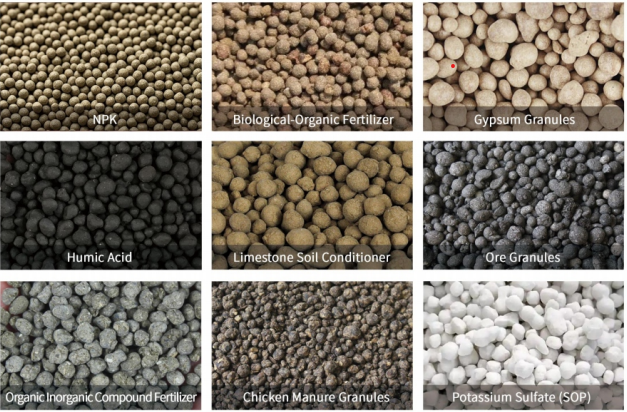
Application Advantages of Granular Organic Fertilizer
-
Long-Term Nourishment & Reduced Application Frequency: The slow-release nature makes it ideal for building long-term soil health. Typically applied once as a base fertilizer per growing season, its effects can last for weeks or even months, significantly reducing labor costs.
-
Superior Storage and Logistics: Dry, high-strength granules have a much longer shelf life than liquids and resist degradation. This lowers logistics costs for long-distance export shipping and large-scale warehousing.
-
Compatible with Large-Scale Mechanized Farming: Granules with high physical compressive strength are perfectly suited for large broadcast spreaders towed by tractors, enabling highly efficient, large-area mechanical application.
Granular Production Pain Points & Equipment Solutions
-
Industry Pain Point: Granular fertilizers produced using outdated, small-scale workshop methods often have low strength and generate excessive dust. This not only leads to uneven nutrient distribution when blown by the wind during spreading but also poses respiratory health risks to operators and lowers the product’s market appeal.
-
The Equipment Breakthrough: Upgrading to a high-standard, complete granulation production line is critical. By combining a highly efficient rotary drum fermenter for the preliminary stage (ensuring thorough composting) with advanced disc pelletizing, polishing, and rotary drying/cooling systems in the later stages, manufacturers can scale up the production of premium organic granules. The result is a uniform, smooth, high-strength, and dust-free product that completely resolves the end-user’s pain points.
What is Liquid Organic Fertilizer?
Liquid organic fertilizer is a highly concentrated liquid nutrient carrier (such as amino acid water-soluble fertilizers, high-purity humic acid liquids, or seaweed extracts), which usually requires dilution with water before use.
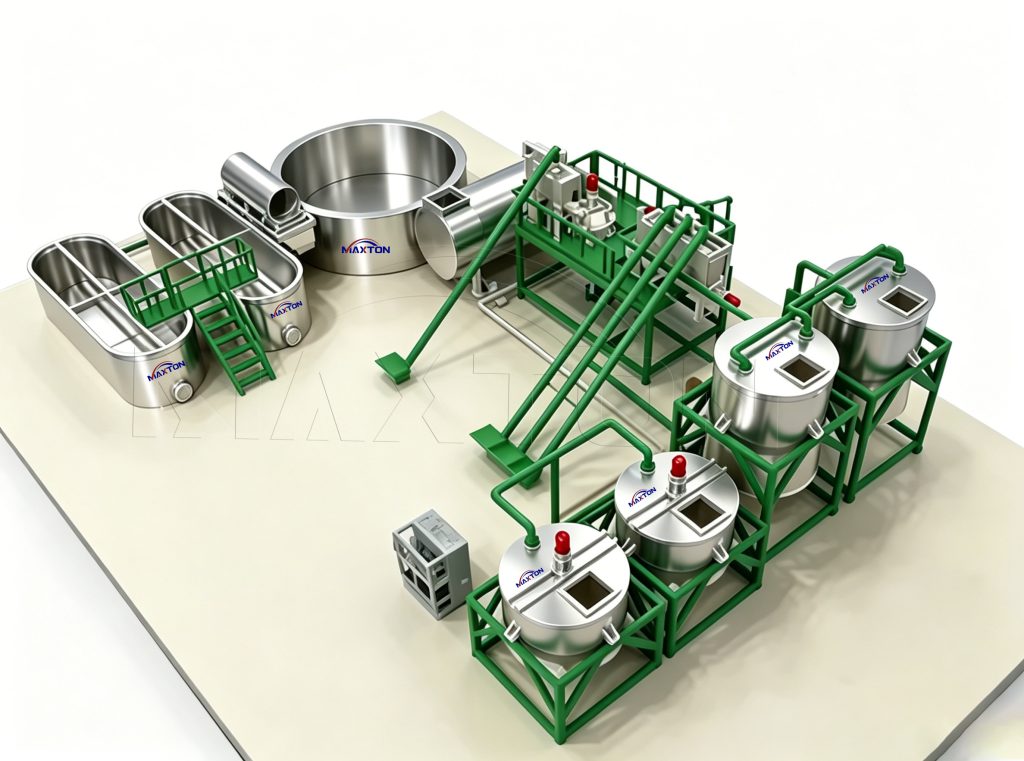
Application Advantages of Liquid Organic Fertilizer
-
Fast-Acting & Targeted Supplementation: Provides 100% water-soluble nutrients that can be rapidly absorbed by crops. It is the premier choice for “emergency” top-dressing when crops suffer from stunted growth, cold stress, or nutrient deficiencies.
-
Maximum Absorption Efficiency: In poor soils or arid regions, plants can rapidly absorb free-state nutrients directly through foliar stomata or capillary roots.
-
Perfect Integration with Modern Irrigation: Liquid fertilizers can be injected directly into drip irrigation or micro-sprinkler systems, a process known as fertigation. This ensures precise application, conserves water and fertilizer resources, and offers an exceptional ROI for greenhouses and high-value crops.
Liquid Fertilizer Production & Supply Chain Considerations
-
Higher Application Frequency: Due to its fast-acting nature, liquid fertilizer is easily leached away by water and has a shorter retention time in the soil, requiring a “little and often” application strategy.
-
Anti-Corrosion & Storage Costs: Liquid biological organic fertilizers, rich in active beneficial bacteria, have a relatively shorter shelf life. They also require specialized anti-corrosive storage tanks and IBC totes for transport, raising the barrier to entry for logistics.
The Core Value: Delivering Organic Matter
Whether you choose to invest in a granular or liquid production line, the core competitive moat of high-quality organic fertilizer lies in its rich active organic matter. Unlike synthetic fertilizers that can lead to soil compaction, organic fertilizers not only supply N-P-K but also awaken native soil microbiota, break up compaction, and enhance the soil’s water and nutrient retention capacity from both physical and biological dimensions.
Investment Advice: How Should Fertilizer Manufacturers Strategize?
For the end-user (farmers), granular organic fertilizer is the “staple food” for broadacre crops (like corn and wheat), while liquid organic fertilizer acts as the “nutritional supplement” for high-value cash crops (like avocados and cherries).
For commercial fertilizer manufacturers, maximizing profit comes from flexibly responding to market demands with highly efficient mechanized production. Modern fertilizer plants typically prioritize establishing a robust granular organic fertilizer production line to secure the bulk agricultural market base, and subsequently introduce liquid lines to serve high-end, customized client needs.
FAQ: Common Questions on Organic Fertilizer Production & Equipment
Q1: What core equipment is required to invest in a commercial organic fertilizer production line?
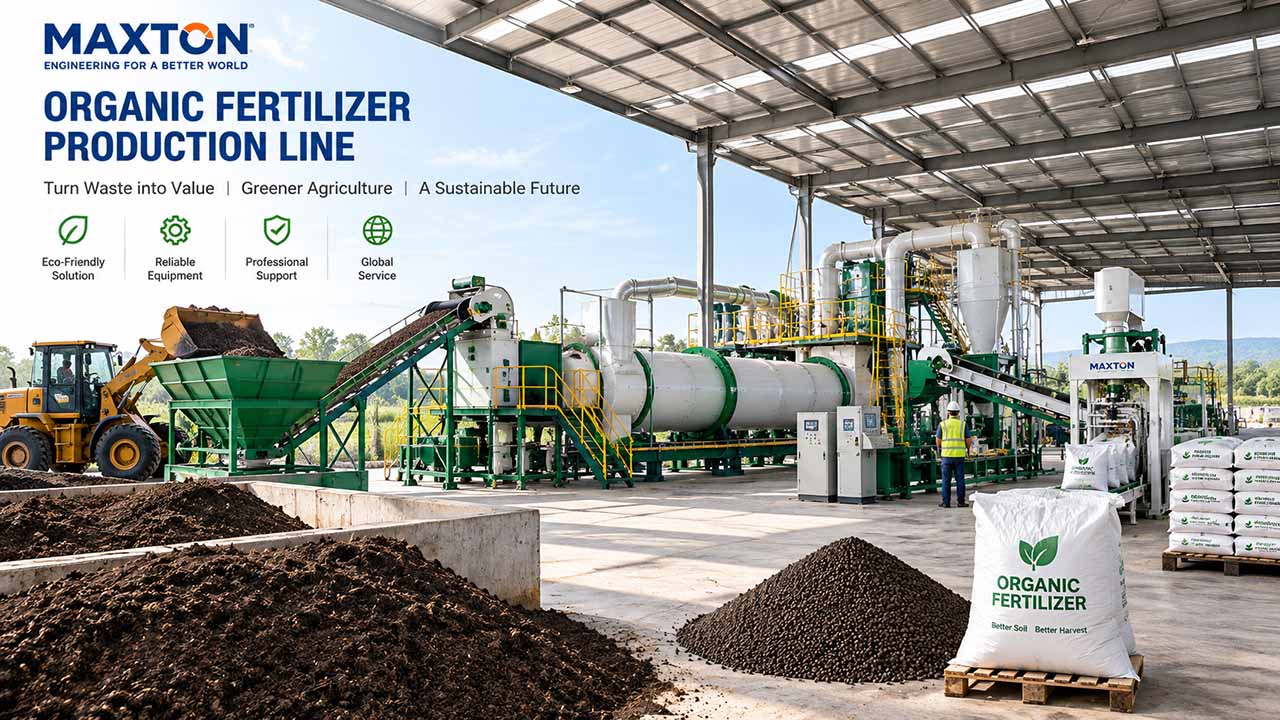
A complete, modern production line typically includes: preliminary fermentation and turning equipment (such as a rotary drum fermenter), crushers, mixers, core granulation equipment (disc pelletizer or rotary drum granulator), a rotary dryer and cooler, and fully automated screening and packaging scales.
Q2: How can I improve the granulation rate of my organic fertilizer and eliminate dust?
This depends heavily on moisture control and the precision of the granulator. Utilizing upgraded disc pelletizers, combined with the correct binders and a dedicated polishing (rounding) process, can achieve a granulation rate of over 90%. Pairing this with a backend cooling and dust-collection system will thoroughly resolve dust issues.
Henan Maxton Machinery Co., Ltd — Your Fertilizer Plant Engineering Partner
Whether you are planning to build a new turnkey organic fertilizer plant with an annual capacity of tens of thousands of tons or looking to upgrade your existing processing machinery, professional engineering support is the bedrock of project profitability. We provide:
-
Complete Granular Organic Fertilizer EPC Lines: From rotary drum fermenters to various high-end granulation, drying, and cooling systems—we design and manufacture the entire process.
-
Customized Process Layouts: Ensuring your final fertilizer granules are uniform, high-strength, dust-free, and highly competitive in the international market.
Contact our engineering team today to get your customized organic fertilizer plant layout and equipment solution:
📧 Email: svip@maxtonorg.com
Related Posts
9 月 15, 2026
Fertilizer Plant Cost in 2026: Real Budget Ranges for Organic, Liquid, and NPK Production
Quick answer: A small organic fertilizer plant can start under $50,000. A commercial granular fertil...
8 月 24, 2026
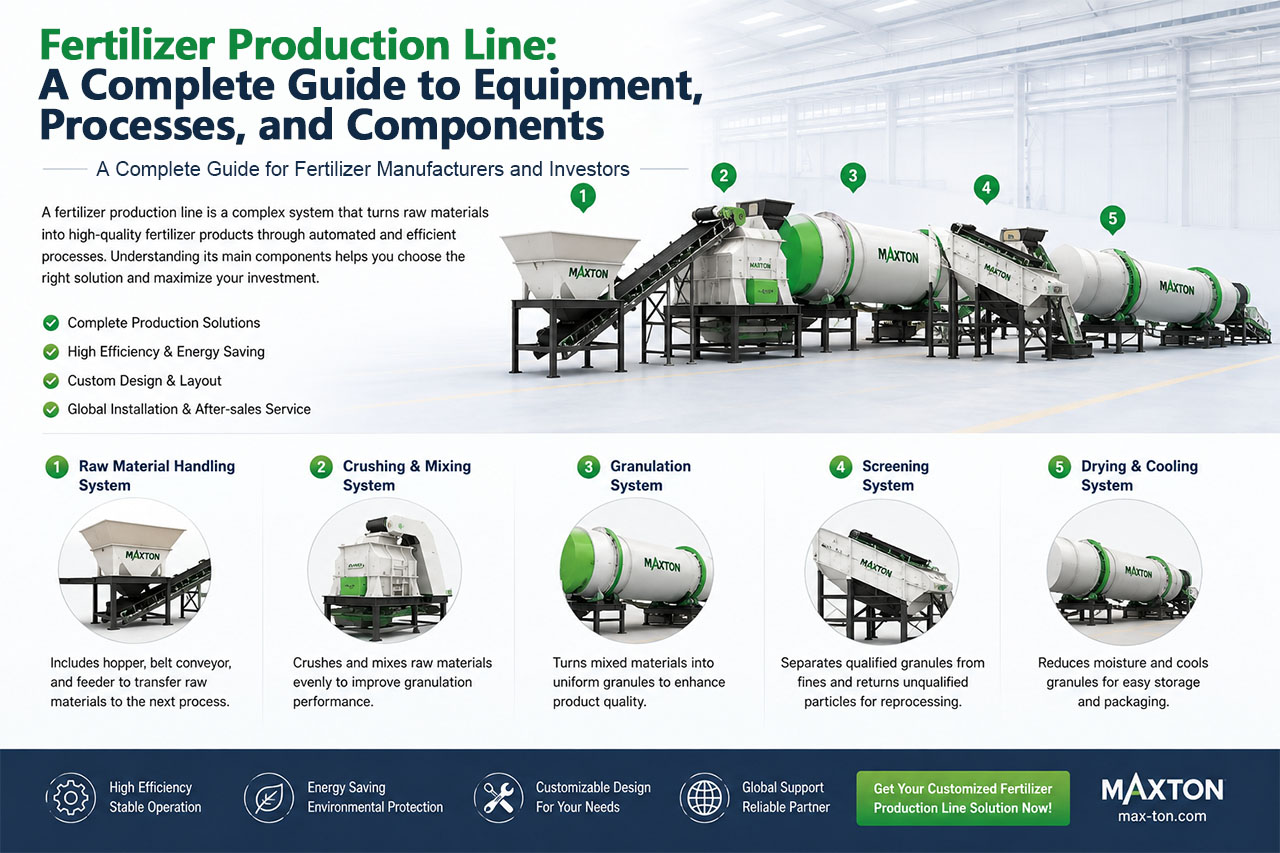
Fertilizer Production Line: A Complete Guide to Equipment, Processes, and Components
What Are the Main Components of a Fertilizer Production Line? A complete fertilizer production line ...
Give us a call or Simply Complete the Form
Address:Zhengzhou City, Henan Province, ChinaPhone:+86-18237180035Email:svip@maxtonorg.com