SINO MAXTON GROUP Co.,Ltd
News Details
Water-Soluble Fertilizer Equipment Manufacturer | Complete WSF Production Line Solutions | Maxton
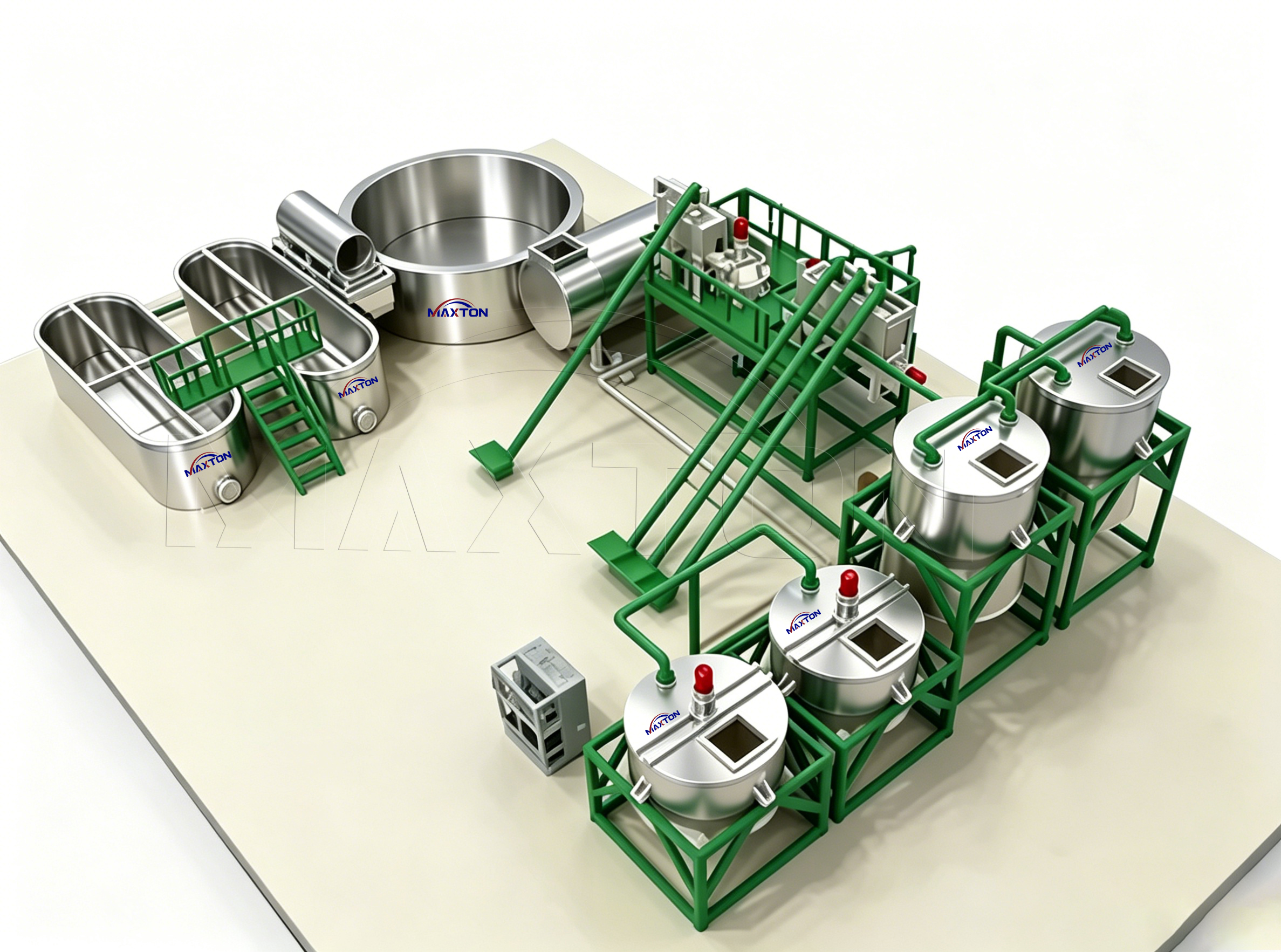
Commercial Water-Soluble Fertilizer Production Equipment for Modern Agriculture
As global agriculture rapidly adopts fertigation, hydroponics, drip irrigation, and precision nutrient delivery systems, the demand for premium water-soluble fertilizers (WSF) continues to increase. Modern growers require fertilizers that dissolve completely, deliver stable nutrient concentrations, and leave no sediment that could block irrigation systems.
According to the Food and Agriculture Organization (FAO), precision fertigation and water-soluble nutrient delivery systems are becoming increasingly important for sustainable agriculture and high-efficiency crop production worldwide.
Producing high-quality water-soluble fertilizer is not as simple as mixing powders with water. Commercial WSF manufacturing requires specialized water-soluble fertilizer equipment engineered for precise batching, rapid dissolution, micron-level filtration, automatic pH control, and foam-free filling.
Professional water-soluble fertilizer equipment typically includes automated batching systems, high-shear mixing tanks, fertilizer filtration systems, pH and EC adjustment units, automatic filling machines, and CIP cleaning systems designed for continuous industrial production.
Maxton provides complete turnkey water-soluble fertilizer production line solutions for liquid fertilizers, liquid NPK, hydroponic nutrients, micronutrient fertilizers, amino acid fertilizers, and specialty agricultural formulations.
This guide explains the essential machinery used in commercial WSF manufacturing and how integrated Maxton water-soluble fertilizer equipment solutions improve production efficiency, product quality, and long-term operational reliability.
Table of Contents
- Why Specialized WSF Equipment Matters
- Core Components of a Water-Soluble Fertilizer Production Line
- High-Shear Mixing & Dissolving Technology
- Precision Filtration Systems
- Automatic pH & EC Control
- Automatic Filling & Packaging Equipment
- CIP Cleaning Systems
- Powder WSF vs Liquid WSF Production Equipment
- Benefits of Turnkey Fertilizer Plant Solutions
- How to Choose the Right WSF Equipment
- FAQ About Water-Soluble Fertilizer Equipment
Why General-Purpose Mixing Equipment Fails for WSF Production
Many fertilizer startups initially attempt to use standard industrial mixers or repurposed food-grade tanks for fertilizer production. However, conventional equipment often fails under the demanding conditions of water-soluble fertilizer manufacturing.
The three most common problems include:
1. Incomplete Dissolution
Traditional agitators cannot effectively disperse hygroscopic fertilizer salts or micronutrient powders. This leads to sediment accumulation, crystallization, and poor product clarity.
In commercial fertigation systems, undissolved particles can clog drip irrigation emitters and damage hydroponic delivery systems.
2. Corrosion and Product Contamination
Water-soluble fertilizer formulations frequently contain:
- Phosphoric acid
- Nitric acid
- Potassium nitrate
- Chelated micronutrients
- Acidic stabilizers
These chemicals can corrode ordinary steel tanks and low-grade stainless steel, introducing metallic contamination into the final fertilizer product.
Professional WSF equipment uses 316L stainless steel, PTFE seals, and acid-resistant piping systems to ensure long-term corrosion resistance.
3. Inaccurate Micronutrient Dosing
Micronutrients such as:
- Boron
- Zinc
- Iron
- Molybdenum
- Copper
must be added in extremely precise quantities. Even small dosage deviations can cause nutrient imbalance, crop toxicity, or product non-compliance.
Professional WSF production lines, therefore, require high-precision automated batching systems with advanced PLC controls.
Core Components of a Water-Soluble Fertilizer Equipment
A modern liquid fertilizer production line consists of several integrated systems working together in a fully automated process.
Typical workflow:
Raw Material Feeding → Precision Batching → High-Shear Dissolving → Filtration → pH/EC Adjustment → Filling → Packaging → CIP Cleaning
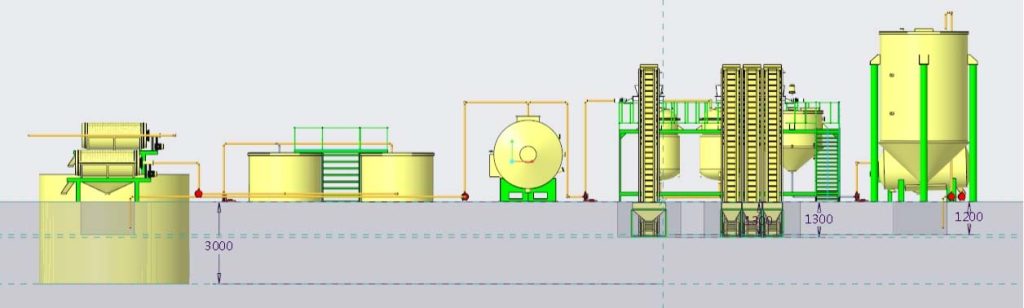
Each production stage directly impacts final fertilizer quality.
1. Batching & Weighing System
Function
The batching system automatically measures and feeds raw materials into the dissolving system according to the fertilizer formulation.
Typical materials include:
- Urea
- Potassium nitrate
- Monoammonium phosphate
- Chelated micronutrients
- Humic acid
- Seaweed extract
Key Equipment
- Raw material silos
- Screw conveyors
- Dust-free feeding stations
- Loss-in-weight feeders
- Automatic weighing hoppers
- PLC control systems
Precision Requirements
Commercial fertilizer manufacturing requires extremely high dosing accuracy:
| Material Type | Accuracy Requirement |
|---|---|
| NPK macronutrients | ≤ ±0.5% |
| Micronutrients | ≤ ±0.1% |
Maxton batching systems support multi-material automated feeding with anti-bridging technology to prevent material blockage caused by hygroscopic powders.
2. High-Shear Mixing & Dissolving System
The Core of WSF Manufacturing
The dissolving system is the heart of the entire fertilizer production line.
Maxton mixing tanks are engineered specifically for:
- Rapid dissolution
- High-viscosity processing
- Corrosion resistance
- Temperature control
- Vacuum defoaming
Tank Structure
Typical configuration includes:
- 316L stainless steel inner tank
- 304 stainless steel outer shell
- Double-jacket heating/cooling system
- High-speed disperser
- Anchor scraper agitator
- High-shear homogenizer
High-Shear Homogenization Technology
Unlike ordinary mixing systems, high-shear homogenizers rotate at speeds exceeding 3,000 RPM.
This technology:
- Breaks agglomerated fertilizer particles
- Improves dissolution speed
- Creates uniform liquid consistency
- Prevents sediment formation
- Produces crystal-clear liquid fertilizer
High-shear mixing is particularly important for:
- Liquid NPK fertilizers
- Suspension fertilizers
- Amino acid fertilizers
- Seaweed extract fertilizers
- Chelated micronutrient formulations
Heating & Cooling Functions
Certain fertilizer salts dissolve slowly at ambient temperature.
Maxton mixing systems support:
- Steam heating
- Thermal oil heating
- Cooling jackets
- Constant temperature control
Heating fertilizer solutions to 60–80°C significantly improves dissolution efficiency and shortens batch processing time.
Vacuum Defoaming Technology
High-speed mixing often generates excessive foam, which can:
- Reduce effective tank volume
- Interfere with filling accuracy
- Cause packaging leakage
Maxton vacuum defoaming systems remove entrapped air during processing, maintaining stable liquid levels and improving filling precision.
3. Precision Filtration Systems for Water-Soluble Fertilizer Equipment
Why Filtration Matters
Filtration is one of the most important quality control stages in liquid fertilizer manufacturing.
Even microscopic particles can:
- Block drip irrigation systems
- Damage filling equipment
- Reduce product appearance quality
- Cause customer complaints
Multi-Stage Filtration Design
Professional WSF production lines use multiple filtration stages:
| Filtration Stage | Typical Specification |
|---|---|
| Coarse filtration | 50 mesh |
| Precision filtration | 200 mesh |
| Security filtration | 1 micron |
Duplex Filter Systems
Maxton filtration systems use duplex switchable filters that allow uninterrupted production.
Benefits include:
- Continuous 24/7 operation
- No shutdown during filter replacement
- Reduced maintenance downtime
- Improved production efficiency
Product Quality Compliance
High-precision filtration helps manufacturers comply with modern WSF quality standards requiring minimal insoluble matter content.
4. Automatic pH & EC Adjustment System
Importance of pH Control
Nutrient availability is strongly affected by pH.
At improper pH levels:
- Iron may precipitate
- Zinc availability decreases
- Micronutrients become unstable
- Nutrient absorption efficiency drops
Professional WSF products, therefore, require tightly controlled pH levels.
EC Monitoring
Electrical conductivity (EC) reflects total dissolved nutrient concentration.
Excessively high EC levels may:
- Burn plant roots
- Damage hydroponic systems
- Reduce crop yield
Maxton automatic EC control systems ensure accurate nutrient concentration consistency across every production batch.
Closed-Loop PLC Automation
The system continuously monitors and adjusts:
- Acid dosing
- Alkali dosing
- Nutrient concentration
- Solution stability
PID-controlled automation prevents sudden pH fluctuations caused by manual operation.
5. Automatic Filling Machines for Water-Soluble Fertilizer Equipment
Specialized Filling Technology for Liquid Fertilizer
Water-soluble fertilizer filling requires specialized anti-foam filling systems.
Maxton filling equipment supports:
- 1L bottles
- 5L jugs
- 20L pails
- 1000L IBC totes
Sub-Surface Filling Technology
Sub-surface filling prevents:
- Foam generation
- Product splashing
- Under-filling
- Seal contamination
The filling nozzle enters the container before dispensing begins, allowing smooth and stable liquid filling.
Corrosion-Resistant Materials
All product-contact components use:
- PTFE (Teflon)
- FKM/Viton seals
- Acid-resistant stainless steel
This significantly improves equipment lifespan in corrosive fertilizer environments.
Supporting Packaging Equipment
Complete fertilizer packaging lines may include:
- Bottle unscramblers
- Automatic capping machines
- Induction sealers
- Self-adhesive labelers
- Inkjet coders
- Laser date printers
Powder WSF Equipment vs Liquid WSF Equipment
Although liquid fertilizer production is rapidly growing, water-soluble powder fertilizers remain an important market segment.
The equipment requirements differ significantly.
| Parameter | Liquid WSF Line | Powder WSF Line |
|---|---|---|
| Core Equipment | Mixing tanks, filters, fillers | Ribbon mixers, crushers, screens |
| Main Challenge | Sediment prevention | Anti-caking |
| Process Focus | Dissolution & filtration | Uniform dry blending |
| Packaging | Bottles, pails, IBCs | Foil bags, woven sacks |
| Automation | Liquid PLC control | Powder weighing systems |
Maxton provides turnkey solutions for both liquid and powder fertilizer manufacturing plants.
Why Choose a Turnkey Fertilizer Production Solution?
Many manufacturers attempt to purchase equipment from multiple suppliers.
However, this often causes:
- PLC communication problems
- Pipe connection mismatches
- Extended commissioning delays
- Warranty disputes
- Inconsistent automation systems
Benefits of Maxton Turnkey Solutions
Complete Process Engineering
Maxton designs equipment according to your specific formulation requirements, including:
- Amino acid fertilizers
- Humic acid fertilizers
- Seaweed fertilizers
- Suspension fertilizers
- High-concentration liquid NPK
3D Plant Layout Design
Professional layout planning optimizes:
- Material flow
- Pipe routing
- Operator access
- Future expansion capacity
Unified Automation System
A centralized PLC control cabinet manages the entire production line with:
- One-button startup
- Real-time monitoring
- Alarm systems
- Data recording
- Remote diagnostics
Installation & Training
Maxton engineers provide:
- On-site installation
- Equipment commissioning
- Operator training
- Maintenance guidance
- Technical support
Lifecycle Support
Comprehensive after-sales service includes:
- Spare parts supply
- Remote troubleshooting
- Process optimization
- Equipment upgrades
How to Choose the Right Water-Soluble Fertilizer Equipment
Before investing in a fertilizer production line, manufacturers should evaluate several critical factors.
1. Production Capacity
Pilot Scale
100–500L per batch
Suitable for:
- R&D laboratories
- Formula testing
- Small sample production
Commercial Scale
1–3 tons/hour
Suitable for:
- Regional fertilizer brands
- Medium-scale agricultural suppliers
Industrial Scale
5–15+ tons/hour
Requires:
- Fully automatic PLC systems
- DCS integration
- Continuous production capability
Maxton modular systems support future production expansion.
2. Raw Material Characteristics
Highly Corrosive Materials
Require:
- 316L stainless steel
- Hastelloy seals
- Acid-resistant pumps
High-Viscosity Formulations
Require:
- Double ribbon mixers
- Triple-shaft agitators
- Scraper mixing systems
Heat-Sensitive Materials
Require:
- Cooling jackets
- Low-temperature processing
- Controlled heating systems
3. Regulatory Compliance
Commercial fertilizer equipment should comply with:
- ASME standards
- GB pressure vessel codes
- GMP hygiene requirements
Smooth internal surfaces and dead-end-free piping improve cleanability and product safety.
FAQ About Water-Soluble Fertilizer Equipment
What equipment is required for a WSF production line?
A complete water-soluble fertilizer production line typically includes:
- Raw material feeding systems
- Precision batching equipment
- High-shear mixing tanks
- Filtration systems
- pH and EC control units
- Filling machines
- CIP cleaning systems
- PLC automation controls
Why is high-shear mixing important in liquid fertilizer production?
High-shear mixing improves dissolution efficiency, eliminates agglomerates, prevents sediment formation, and creates stable homogeneous fertilizer solutions.
What materials are used in fertilizer processing equipment?
Professional WSF equipment commonly used:
- 316L stainless steel
- PTFE seals
- FKM/Viton gaskets
- Acid-resistant pipelines
These materials resist corrosion and prevent contamination.
What is the difference between powder and liquid fertilizer production equipment?
Liquid fertilizer production focuses on:
- Dissolution
- Filtration
- pH control
- Foam-free filling
Powder fertilizer production focuses on:
- Uniform blending
- Crushing
- Screening
- Anti-caking
Why choose a turnkey fertilizer plant solution?
Turnkey systems simplify installation, reduce technical risks, improve automation compatibility, and shorten project commissioning time.
Conclusion
Water-soluble fertilizer equipment is not a single machine but a complete integrated manufacturing ecosystem combining precision dosing, high-shear dissolution, advanced filtration, intelligent automation, and reliable packaging technology.
Every production stage directly affects fertilizer quality, nutrient consistency, and operational efficiency.
For fertilizer manufacturers seeking stable production, scalable automation, and long-term reliability, choosing a professional turnkey supplier like Maxton significantly reduces technical risk while accelerating time-to-market.
Maxton delivers more than machinery — it delivers complete engineered fertilizer production solutions designed for modern precision agriculture.
Ready to Build Your Water-Soluble Fertilizer Production Line?
Maxton provides customized turnkey WSF manufacturing solutions for:
- Liquid fertilizer plants
- Powder WSF production
- Hydroponic nutrient manufacturing
- Liquid NPK production
- Specialty fertilizer processing
Contact Maxton Today For:
- Equipment pricing
- Factory layout design
- Production planning
- Technical consultation
- Turnkey fertilizer plant proposals
Get a Free Consultation Today →
Related Posts
9 月 15, 2026
Fertilizer Plant Cost in 2026: Real Budget Ranges for Organic, Liquid, and NPK Production
Quick answer: A small organic fertilizer plant can start under $50,000. A commercial granular fertil...
8 月 24, 2026
Fertilizer Production Line: A Complete Guide to Equipment, Processes, and Components
What Are the Main Components of a Fertilizer Production Line? A complete fertilizer production line ...
Give us a call or Simply Complete the Form
Address:Zhengzhou City, Henan Province, ChinaPhone:+86-18237180035Email:svip@maxtonorg.com