SINO MAXTON GROUP Co.,Ltd
News Details
MAXTON Rotary Drum Composter | Industrial-Grade Organic Waste Fermentation Equipment
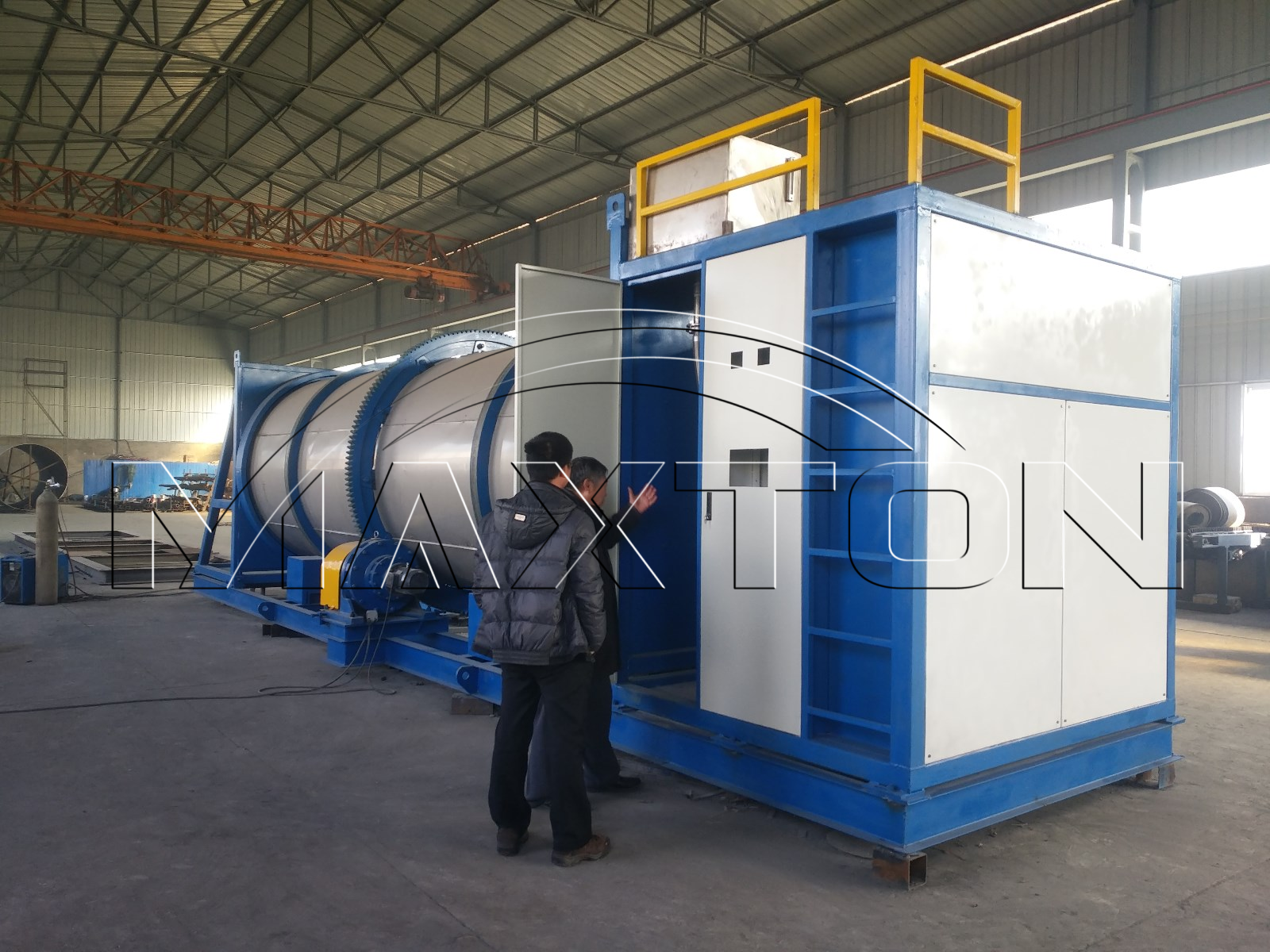
Are you troubled by the slow decomposition, odor, large footprint, and soaring costs of manual turning of organic waste? MAXTON rotary drum composters, developed by MAXTON Machinery using core German technology, are industrial-grade closed-loop aerobic fermentation systems that provide a one-stop solution for the resource utilization of organic solid waste such as livestock and poultry manure, kitchen waste, garden trimmings, and organic sludge.
With its core advantages of rapid composting in 7-15 days, a completely sealed and odorless process, automated continuous operation, and stable and efficient production capacity, it helps farms, organic fertilizer plants, municipal sanitation departments, and kitchen waste treatment centers achieve zero-waste recycling and high-value organic fertilizer production, while meeting local environmental standards in target markets. MAXTON provides customized and implementable organic waste treatment solutions for customers in different regions worldwide.
What is the MAXTON Rotary Drum Composter?
- 7-15 Days Fast Aerobic Rotary Drum Composter | Customizable Capacity 200-1000 Cubic Meters/Day
- EU CE Certified Rotary Drum Composter | Low Energy Consumption + Full Automation
- MAXTON: Global Leading Industrial Rotary Drum Composter Manufacturer
- Global Customized Rotary Drum Composter | Compliant with Local Environmental Standards
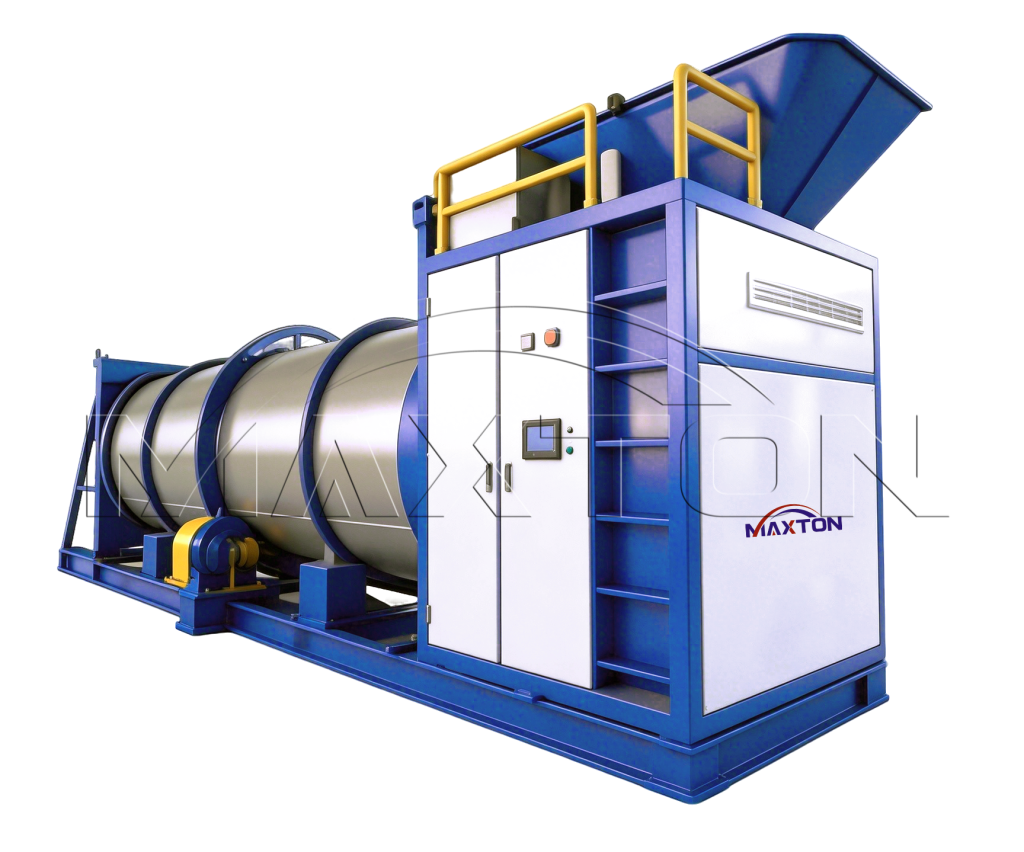
MAXTON Drum Composter (Rotary Drum Composter, In-vessel composter) is a high-efficiency organic waste treatment equipment integrating advanced German fermentation technology. With a horizontal closed drum structure, segmented aeration, intelligent temperature control, and automatic turning, it simulates the optimal aerobic environment, accelerating organic matter decomposition. Compared with traditional equipment, this customizable In-vessel composter adapts to global climate, waste characteristics, and environmental standards, ensuring stable and compliant operation worldwide.
Core Working Principle – MAXTON 7 Series Rotary Drum Composter
The core logic of a Rotary drum composter is based on the principle of mechanical rotation (Drum Rotating). The principle of this system provides an optimal environment for the aerobic decomposition of organic waste. Its refined workflow is as follows:
- A sealed drum rotates at a uniform speed, with internal specialized lifting plates automatically lifting and scattering materials, achieving 360° uniform mixing and forced aeration. This ensures aerobic microorganisms receive sufficient oxygen, providing a foundation for efficient decomposition.
- A PLC intelligent temperature control system monitors and maintains a high temperature of 55-65℃ for at least 48 hours in real time. Utilizing the exothermic reaction characteristics of aerobic decomposition, it rapidly heats up and effectively kills 99% of pathogens, insect eggs, and weed seeds, fully complying with international hygiene standards.
- A fully enclosed structure, combined with a negative pressure ventilation system and an integrated UV/biological deodorization device, thoroughly captures and decomposes odorous gases such as ammonia and hydrogen sulfide, achieving odorless, dust-free, and low-noise operation, perfectly meeting local emission standards for the target area.
- The integrated design of continuous feeding and discharging, coupled with an intelligent automatic control system, allows for unattended operation except for periodic inspections. Frequent manual turning of the material eliminates the need for manual labor, significantly reducing labor intensity and improving operational efficiency.
Main Components – 5-year warranty on industrial composting machines
MAXTON rotary drum composters are designed for durability, practicality, and operability. Core components have undergone rigorous selection and optimization, including:
Drum:
Constructed from corrosion-resistant molded polyethylene or steel (304 stainless steel optional, depending on operating conditions), equipped with dedicated lifters and optional chopper blades to effectively improve material mixing and crushing.
Drive System:
Equipped with a heavy-duty drive unit, featuring a 1hp 220V energy-efficient motor and reducer, offering low energy consumption and stable operation. Some smaller models can be adapted for a hand-crank drive mode.
Feeding and Discharge System:
The feeding hopper is located on one side or the top of the drum for easy material input; the discharge hopper… The outlet is located on the other side, enabling automatic discharge after fermentation. It features a quick-lock door design for easy operation.
Ventilation System:
Equipped with a dedicated fan and ventilation ducts, it achieves forced exhaust, introducing fresh air and efficiently expelling waste gas to ensure continuous aerobic fermentation.
Monitoring and Control System:
Equipped with a stainless steel temperature probe to monitor fermentation temperature in real time, and combined with a PLC intelligent control system, it offers automated operation that is simple and easy to use.
Key Technical Parameters
Capacity:
200-1000 cubic meters/day (customizable according to target market demand and waste treatment scale; 11-foot and 22-foot kits available for expansion).
Power:
15-37.5 kW (energy-saving inverter motor, 15% lower energy consumption than industry average; smaller models equipped with a 1-horsepower 220V motor, extremely low power consumption).
Fermentation Cycle:
7-15 days (traditional windrow composting requires 30-60 days; can be flexibly adjusted according to local temperature, material type, and humidity conditions).
Material:
Q235 carbon steel (suitable for general working conditions) / 304 stainless steel (suitable for corrosive materials such as kitchen waste and sludge, corrosion-resistant), corrosion-resistant polyethylene (molded, durable);
Service Life:
Overall equipment service life ≥ 10 years, core components are durable, low maintenance costs.
Control System:
PLC intelligent control, equipped with a touch screen, real-time monitoring of temperature, humidity, and oxygen content, supports remote operation (optional for customers in different regions), high degree of automation, and easy operation.
Certifications:
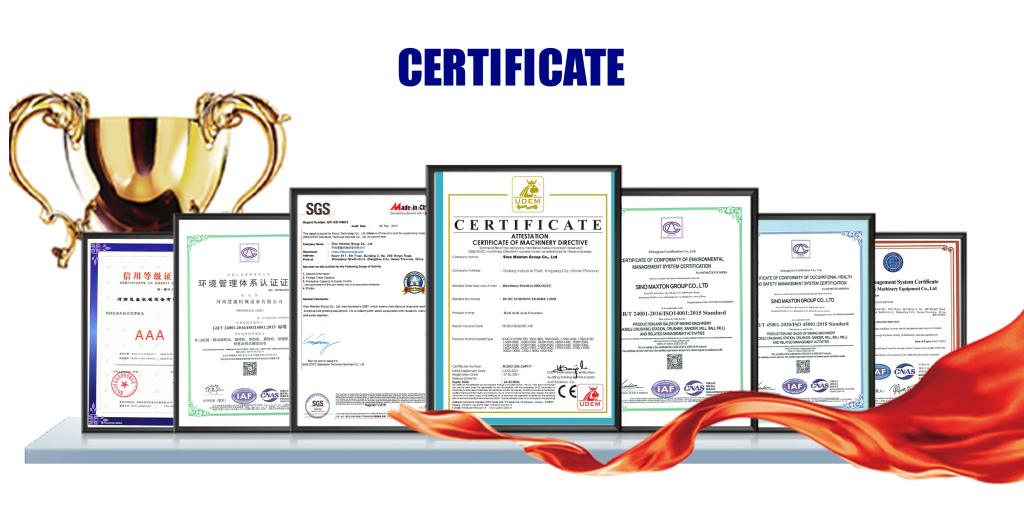
ISO 9001 (Quality Management System), CE (EU safety standard), SGS (International Quality Certification), meet local environmental standards of major target markets (such as the EU, Africa, Southeast Asia, North America).
Warranty:
5-year global after-sales warranty, providing 24-hour technical support to customers worldwide.
Dimensions:
3000-12000×1850-2600×1780-3200 mm (customizable to fit specific factory layouts and space limitations in various regions).
Operating Procedures and Key Control Parameters
MAXTON In-vessel composters are easy to operate with standardized procedures. They can be flexibly adjusted according to the characteristics of materials in different regions. The core operating procedures and key parameters are as follows:
Feeding and Mixing:
Put organic waste into the feeding port. It is recommended to mix wet materials (such as kitchen scraps, fresh manure) with dry materials (such as sawdust, hay, straw) in a 1:3 ratio, precisely adjusting the carbon-to-nitrogen ratio (C/N) to ensure fermentation efficiency.
Moisture Control:
The optimal moisture content of the compost material is 50-65% (similar to the state of a wrung-out sponge). Both excessively dry and excessively wet materials will affect the decomposition speed; this can be adjusted flexibly by adding dry or wet materials.
Turning and Aeration:
After starting the machine, the drum rotates slowly, mechanically turning the material to ensure it stays in different positions and is fully aerated. It is generally recommended to turn the material 2-3 times a day, about 15-20 revolutions each time, to ensure even fermentation.
Discharging the Finished Product:
After 7-15 days of fermentation (adjusted according to local climate), the compost material will transform into humus similar to soil, which is automatically discharged through the discharge port and can be directly used for agricultural planting or processed into commercial organic fertilizer.
Eight Core Advantages
1. Ultra-Fast Aerobic Fermentation:
Compared to traditional windrow composting (30-60 days), the MAXTON In-vessel composter, with its forced aeration and precise temperature control technology, shortens the fermentation cycle to 7-15 days, increasing efficiency by 4-5 times. This helps customers quickly start production and recoup their investment in a short period, making it particularly suitable for target markets with high requirements for waste treatment efficiency.
2. Fully Enclosed, 100% Odorless Operation:
Integrating closed fermentation, negative pressure ventilation, and dual UV + biological deodorization technologies, the system eliminates odorous gases such as ammonia and hydrogen sulfide, preventing secondary pollution. The equipment can be installed in urban areas, farms, or near residential areas, meeting the stringent odor emission standards of the EU and North America, making it environmentally friendly.
3. High-Temperature Sterilization, Meets Hygiene Standards:
The intelligent temperature control system automatically maintains a high temperature of 55-65℃ for at least 48 hours, effectively killing 99% of pathogens, insect eggs, and weed seeds. The produced compost meets national and international organic fertilizer standards and can be used for commercial sales and agricultural applications in all target markets. It also provides concealed disposal of dead animals, preventing scavenging.
4. Fully Automated, Reduced Labor Costs:
Equipped with a PLC one-button control system, the entire process—from automatic feeding and drum rotation to aeration, temperature control, and discharge—is fully automated. Only one person is needed for daily inspections, saving 80% of labor costs compared to traditional manual turning. This is a core advantage in regions with high labor costs, such as Europe and North America. The equipment is also clean, easy to operate, and easy to maintain.
5. Wide Applicability, Suitable for Different Regions:
It can efficiently process various types of organic waste with high moisture content, high fiber, and lumpy textures, including pig manure, cow manure, chicken manure, kitchen waste, food scraps, organic sludge, crop straw, mushroom residue, slaughterhouse waste, and garden waste. The equipment can be customized to suit the local waste characteristics and environmental standards of different target markets. It also includes various types such as hand-cranked, automatic, and mini-type models, suitable for different scenarios such as households, small farms, and medium to large-scale treatment plants.
6. Energy-efficient and durable with low operating costs:
Optimized transmission structure and variable frequency motor control energy consumption per ton of material to ≤5 kWh, lower than the industry average. Smaller models have extremely low power consumption. Thickened anti-corrosion rollers, high-quality imported bearings, and corrosion-resistant molding materials ensure stable operation for ≥10 years, resulting in low maintenance costs and long-term returns for customers worldwide.
7. Small footprint and flexible layout:
Modular horizontal/vertical layout, occupying only 1/3 the area of traditional fermentation tanks, suitable for new plant construction and old plant renovation. Flexible layout can be adapted to the space limitations of specific plants in various locations, reducing land investment costs. It also supports expansion, allowing for upgrades to meet processing needs.
8. High-quality compost with commercial value:
360° uniform mixing and ample oxygen supply ensure compost maturity ≥90%, with no root burn or odor, rich in organic matter and nutrients. It can be directly used for crop planting, landscaping, or processed into commercial organic fertilizer for sale, creating additional economic benefits for customers worldwide. Simultaneously, it eliminates soil and water pollution, achieving green and sustainable development.
Application Scenarios – Drum composting machines for livestock and poultry manure, targeting various markets
1. Livestock and Poultry Farms (Globally Adaptable)
- Materials Processed: Pig manure, cow manure, chicken manure, duck manure, biogas residue, and other livestock and poultry waste;
- Customer Benefits: Turning waste into treasure, eliminating environmental pollution caused by waste accumulation, reducing environmental inspection risks, and generating additional income through composting for self-use in planting or sales to the local agricultural market; it also provides concealed disposal of dead animals during the breeding process, preventing scavengers from intruding and maintaining a clean farm environment.
2. Organic Fertilizer Plants (Industrial Scale, Regional Market Expansion)
- Core Function: As the core fermentation unit, it is compatible with organic fertilizer production lines ranging from 10,000 to 200,000 tons/year, ensuring stable production capacity and consistent compost quality. By meeting local quality standards, it supports the expansion of the organic fertilizer business in various markets; equipment specifications can be expanded according to production capacity needs to improve production efficiency.
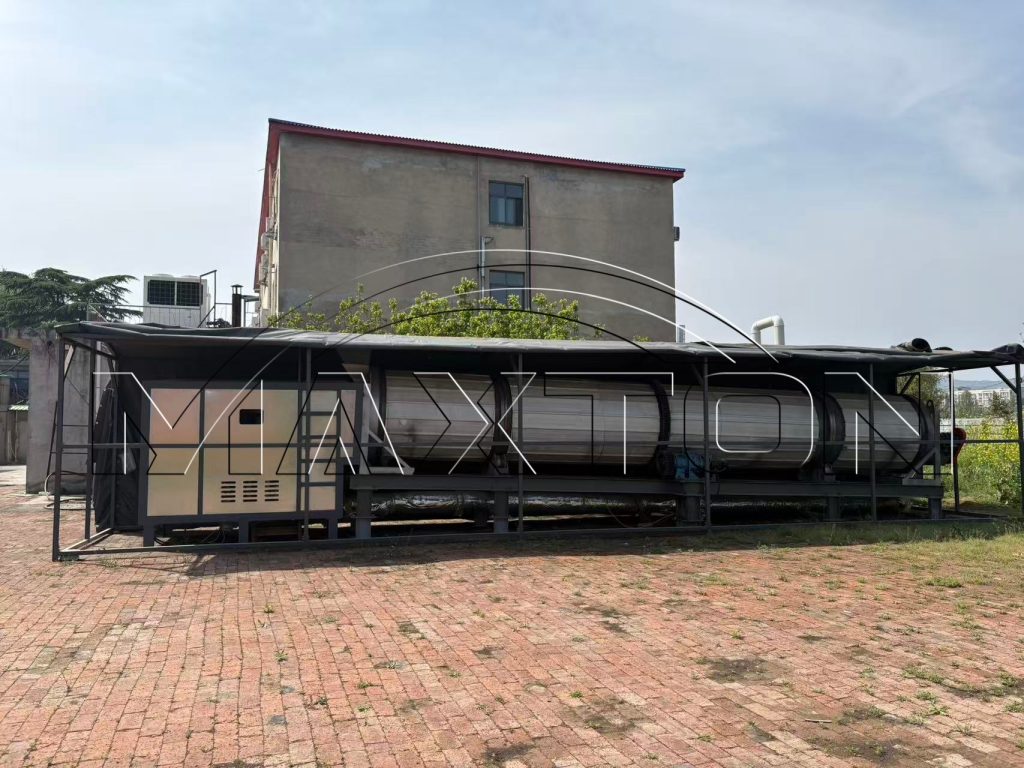
3. Municipal and Food Waste Treatment (Urban Market)
- Processed Materials: Urban food waste, food scraps, fruit and vegetable waste, garden branches, and other municipal organic waste;
- Customer Benefits: Achieve on-site waste reduction of ≥80%, reduce waste transportation and landfill costs, transform urban organic waste into high-value compost, and contribute to the construction of “zero-waste cities” in Europe, Asia, and the Americas; odorless and dust-free, suitable for installation needs in urban areas.
4. Industrial Organic Waste Treatment (Industrial Parks)
- Processed Materials: Food factory waste residue, brewing lees, papermaking sludge, traditional Chinese medicine residue, sugar factory filter mud, and other industrial organic solid waste;
- Customer Benefits: Achieve harmless treatment and resource utilization of industrial organic waste, comply with local environmental policies, avoid environmental fines, and create additional economic value through the production of organic fertilizer; the equipment is corrosion-resistant, operates stably, and is suitable for complex industrial conditions.
5. Landscape Architecture (Residential and Commercial Areas)
- Materials Processed: Dead branches, fallen leaves, pruning waste, grass clippings, and other garden waste;
- Customer Benefits: Converts garden waste into nutrient-rich soil or organic fertilizer for personal landscaping, reducing commercial fertilizer procurement costs and achieving green and sustainable development in residential and commercial areas; odor-free and neighbor-friendly.
6. Home and Small-Scale Applications (Decentralized Area Needs)
- Materials Processed: Household kitchen waste, small garden pruning waste, human excrement (micro-model);
- Customer Benefits: Enables on-site treatment of organic waste, reducing waste disposal; the resulting compost can be used for home gardening; environmentally friendly, easy to operate, and suitable for decentralized processing needs of homes and small farms.
MAXTON Company Strength
- A Professional Manufacturer with Global Experience: Maxton Machinery is a leading enterprise specializing in organic waste treatment equipment and organic fertilizer production lines. With over 12 years of R&D and manufacturing experience, and nearly a century of experience in Maxton container composting (which continues to grow), the company possesses extensive professional knowledge. Its equipment has been supplied to 92 countries and regions worldwide, demonstrating rich experience in adapting to regional markets. It has a well-established dealer network in North America, providing localized service and support.
- German Technology + Independent R&D: The company boasts 30 years of experience in composting from senior engineers and technical experts, covering all aspects of engineering, production, administration, and sales. Integrating imported core German technologies with independent innovation, it holds multiple national patents for drum composting technology, consistently pursuing excellence and focusing on improving composting efficiency and user-friendliness.
- Fully Certified for the Global Market: Products have obtained ISO 9001, CE, SGS, and other international certifications, meeting the quality and safety standards of major target regions such as the EU, the US, Africa, and Southeast Asia, ensuring smooth customs clearance and market access, and adapting to the compliance requirements of different regions.
- Global Project Experience: We have undertaken large-scale organic waste treatment projects for numerous foreign trade companies as OEM partners, including a 100,000-ton/year organic fertilizer project in Kenya, a municipal food waste treatment project in Malaysia, and a livestock manure resource utilization project in Germany. We have gained widespread recognition from clients worldwide and accumulated rich experience in regional adaptation and project implementation.
- One-Stop Regional Adaptation Service: Based on local waste characteristics, environmental standards, and client needs, we provide customized solutions covering the entire process from customized design to production, installation, training, and after-sales service. This ensures clients can smoothly use the equipment in their respective regions and achieve rapid production.
- Global After-Sales and Support System: We have a professional global after-sales team with dedicated customer service support to handle all customer service matters, from technical/parts issues to operational consultations. We maintain ample parts inventory and provide 24-hour online technical support and on-site service to clients worldwide. We plan to establish after-sales service centers in 15 key countries and dealer offices in Central Asia, the Middle East, Mexico, and the Philippines, staffed with support personnel, to provide services to the Gulf Cooperation Council region, ensuring timely response and efficient service.
- Convenient global transportation capabilities: With its comprehensive container shipping capabilities, it can transport goods to all parts of the world, covering a wide range and enabling convenient global transportation, ensuring the timely delivery of equipment and guaranteeing project progress.
Frequently Asked Questions
Q1: How long does it take to produce mature compost using the MAXTON rotary drum composter? Does it vary depending on the region?
A: The standard fermentation cycle is 7-15 days, which may vary slightly depending on the type of material, moisture content, and local temperature (regional climate conditions). For example, in warmer regions (such as Southeast Asia), the fermentation cycle for manure materials can be shortened to 7-10 days; in colder regions (such as Northern Europe), the fermentation cycle for garden waste may require 12-15 days. We will provide customized cycle adjustment suggestions based on your location, and the equipment will maintain compost activity even in cold weather to ensure fermentation results.
Q2: Is the equipment truly odorless? Can it be installed near residential areas in regions with strict environmental requirements (such as the EU)?
A: Yes. The equipment adopts a fully enclosed structure + negative pressure ventilation + dual UV + biological deodorization system, which can eliminate odor leakage and meet the most stringent odor emission standards in the EU, the US, and other regions. It can be safely installed in residential areas, farms, or near city centers without causing odor pollution, making it neighbor-friendly and effectively reducing the breeding of pests and diseases.
Q3: What is the suitable moisture content of the material? Does it need to be mixed? Can you provide guidance on materials specific to your region?
A: The optimal moisture content of the material is 50-65% (similar to the state of a wrung-out sponge). For high-moisture materials in your area (such as kitchen waste, fresh manure), you can mix in dry materials such as straw, sawdust, and rice husks to adjust the moisture content. We recommend a wet-to-dry material ratio of approximately 1:3 to adjust the carbon-to-nitrogen ratio (C/N). Our professional team will provide free material mixing guidance based on the characteristics of local organic waste in your market to ensure fermentation efficiency and compost quality.
Q4: Can the equipment process high-fiber materials such as straw and garden branches commonly found in agricultural areas?
A: Yes. The equipment features a reinforced mixing plate and optional crushing function, effectively breaking down high-fiber materials to prevent clogging and ensure uniform fermentation. It is specifically designed for agricultural waste commonly found in agricultural areas, such as straw and garden branches. It can also process lumpy materials, adapting to the characteristics of agricultural waste in different regions.
Q5: What is the energy consumption per ton of raw material? Is it suitable for areas with high energy costs?
A: The energy consumption per ton of raw material is only 3-5 kWh, 15% lower than the industry average. Equipped with a variable frequency motor, it automatically adjusts power according to operating conditions, further saving energy. The smaller model is equipped with a 1-horsepower 220V motor, consuming extremely little electricity, making it ideal for high-energy-cost regions such as Europe and North America, helping customers reduce operating costs.
Q6: Are there different types of equipment available? How can I choose the right one for my processing scenario?
A: Yes. MAXTON rotary drum composters include hand-cranked, automatic, and mini types, and are available in 11-foot and 22-foot kits, supporting expansion. Hand-cranked models are suitable for home or small farms, automatic models are suitable for medium to large-scale processing plants and organic fertilizer plants, and mini-models are suitable for decentralized processing needs in homes or remote areas. We will recommend the most suitable model for you based on your processing scale, geographical conditions, and material type.
Q7: Is the equipment difficult to maintain? Does MAXTON have after-sales support in my area?
A: The equipment is easy to maintain, with a simple structural design and simple operation. Routine inspections are all that’s needed. We also maintain a large inventory of spare parts for quick repair. MAXTON plans to establish after-sales service centers and dealer offices in 15 key countries worldwide, ensuring 24-hour online technical support and on-site service regardless of your location, guaranteeing stable equipment operation.
Contact MAXTON now for customized drum composting solutions, quotes, and local case studies!
Free local material testing + region-appropriate process design
Free on-site survey + factory layout planning for your area
Turnkey projects and lifetime technical support for clients worldwide
Global stock/customized production, delivery time 7-20 days (adjustable based on geographical distance), convenient global shipping supported
📞 Contact Us Now
Email: svip@maxtonorg.com
WhatsApp: +86-18237180035 (24/7 online service for clients worldwide)
Website: www.fertifactory.com.com (includes regional case studies and product videos)
Address: Zhengzhou, Henan Province, China – A professional manufacturer of industrial organic waste treatment equipment serving global markets
Ready to turn organic waste into revenue in your target market? Contact MAXTON – your trusted partner for industrial composting solutions.
Certified Manufacturer | ISO & CE Certified | Global Service & Support
Related Posts
9 月 15, 2026
Fertilizer Plant Cost in 2026: Real Budget Ranges for Organic, Liquid, and NPK Production
Quick answer: A small organic fertilizer plant can start under $50,000. A commercial granular fertil...
8 月 24, 2026
Fertilizer Production Line: A Complete Guide to Equipment, Processes, and Components
What Are the Main Components of a Fertilizer Production Line? A complete fertilizer production line ...
Give us a call or Simply Complete the Form
Address:Zhengzhou City, Henan Province, ChinaPhone:+86-18237180035Email:svip@maxtonorg.com