Turn Bentonite Powder into Premium Spherical Cat Litter
Turnkey disc granulation production lines for clumping clay cat litter. Build a high-yield plant with stable balling, rotary drying, cooling, grading, dust collection, and automatic packaging.
To view complete equipment configurations, production line cases, or request a custom solution, click below to get started.
The Business Case: Why Bentonite Cat Litter Dominates the Market
Bentonite cat litter production converts low-cost mineral powder into a high-margin retail product by controlling granulation, moisture, dust, and formula consistency across the full line.
Profitable Mineral-Based Clumping Litter
Mineral-based clumping litter, especially sodium bentonite, remains one of the most widely used and consistently profitable cat litter categories worldwide. It gives pet owners natural clumping performance at an affordable retail price.
From Low-Cost Clay to Bagged Spherical Product
Bentonite clay is abundant and inexpensive. A disc granulation line upgrades raw mineral powder into uniform, round, retail-ready litter pellets, multiplying the commercial value of the raw material.
Low Raw Material Costs
Bentonite clay is abundant and inexpensive worldwide. Transforming raw mineral powder into bagged spherical cat litter multiplies its commercial value several times over, delivering strong profit margins.
Massive Production Capacity
Disc granulation systems are built for heavy-duty continuous output from 2 T/H up to 20+ T/H, making them ideal for supplying major retail chains, supermarkets, and international distributors.
Unmatched Clumping Power
Bentonite's natural sodium swelling properties create hard, scoopable clumps that lock in moisture and odors instantly -- the gold standard for clumping cat litter performance globally.
Produce Retail-Ready, Premium Spherical Cat Litter
Disc pan agglomeration is the process of converting 200-mesh bentonite powder into dense spheres using centrifugal motion, controlled spray, and recycling of oversize or fine particles.
Perfectly Spherical Shape
Disc pan agglomeration forms smooth round pellets that feel soft on cats' paws and help reduce litter tracking around the house.
Rock-Hard Clumping
Controlled pellet density allows bentonite to absorb liquid quickly and form hard, scoopable clumps that lock in moisture and odor.
99% Dust-Free Final Product
Rotary sifting and pulse-jet dust collection remove fines, creating cleaner finished litter for feline respiratory comfort and retail quality.
Zero Material Waste Loop
Oversized pellets are crushed and recycled, while fines return to the granulator, keeping raw material utilization high across the complete line.
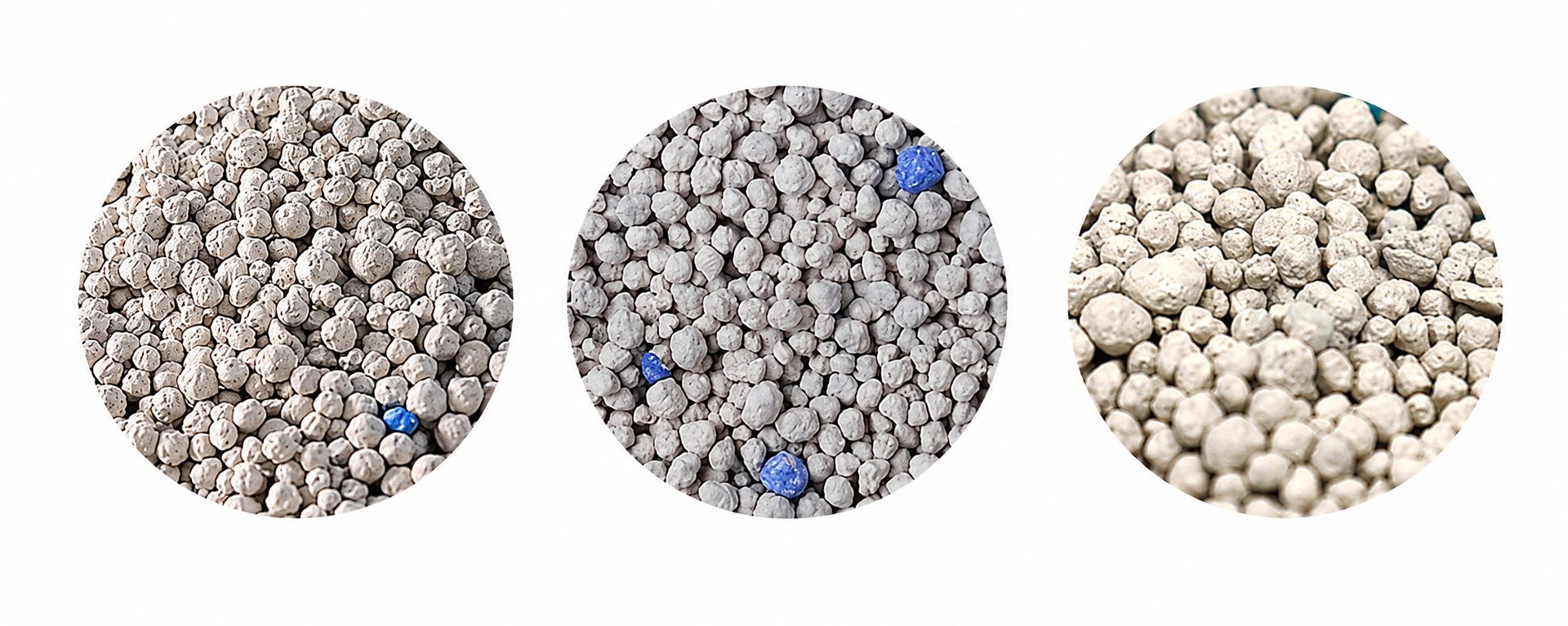
| Features | MAXTON Disc Granulator | Traditional Crushing Process |
|---|---|---|
| Shape | Perfectly Spherical (1-4 mm) | Irregular / Sharp Edges |
| Dust Rate | < 1% after sifting and dust collection | 5% - 8% with more fines and breakage |
| Clumping Speed | < 3 Seconds | 5 - 10 Seconds |
| Formula Flexibility | Sodium bentonite, calcium bentonite blends, activated carbon, STA odor crystals, zeolite, fragrance | Limited control over particle consistency |
Engineered for Yield: The MAXTON Disc Pan Granulator
A disc granulator turns dry mineral powder into uniform spheres by rotating an inclined pan, atomizing liquid, and building layered pellets with repeatable size control.
High balling rate: The industrial disc pan pelletizer is the core of the bentonite cat litter line, achieving an industry-leading granulation rate of over 93% through precise pan angle, water spray, and scraper design.
Premium spherical particles: Fine bentonite powder is sprayed with a controlled water mist inside the rotating pan, then agglomerates into dense, round pellets suitable for high-end mineral cat litter.
Shape control: the pan angle, lip profile, and liquid atomization are tuned together to keep the pellet range centered around 1-4 mm with fewer irregular edges and less downstream breakage.
Core Equipment & Technical Specifications
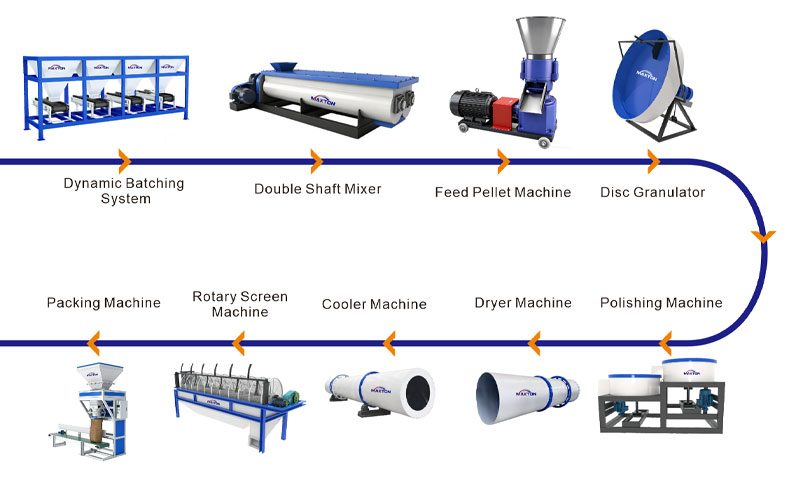
The core line includes crushing, batching, mixing, granulation, drying, cooling, grading, dust collection, and automatic packaging as one continuous engineering system.
Disc Pan Granulator Advantages
- Adjustable inclination angle: The disc angle can be adjusted between 35 and 55 degrees to match bentonite grades and control pellet size.
- Unpowered scraper system: Built-in scrapers clean the bottom and edges of the pan continuously to prevent buildup and keep granules uniform.
- Advanced spray system: Uniform water mist distribution supports rapid agglomeration without creating excessive mud or oversized lumps.
- Heavy-duty transmission: Driven by a hardened reduction gear and robust motor, ensuring smooth startup and 24/7 continuous operation without vibration.
| Module | Main Equipment | Function | Key Result |
|---|---|---|---|
| 1. Crushing & Batching | Jaw crusher, hammer mill, automatic weighing batching system | Crush raw bentonite ore into 200 mesh fine powder; automatically weigh additives. | Consistent particle size and precise formula ratios. |
| 2. Intensive Mixing | Twin-shaft paddle mixer | Homogenize bentonite powder with zeolite, silica crystals, activated carbon, STA odor crystals, fragrance, or other additives. | Uniform blend ready for granulation. |
| 3. Disc Pan Granulation | Disc pan granulator with adjustable inclination, unpowered scraper, atomizing spray system | Agglomerate powder into dense spherical pellets via controlled water mist spray inside rotating pan. | >93% balling rate, smooth 1-4 mm spherical pellets. |
| 4. Rotary Drying | Rotary drum dryer with internal lifting flights, hot air furnace | Reduce moisture from ~20% to 8-10% for shelf stability and clumping performance while improving heat transfer efficiency. | Stable low moisture, fuel-efficient drying. |
| 5. Rotary Cooling | Rotary drum cooler with air circulation system | Rapidly drop pellet temperature, harden dried spheres for screening. | Hardened pellets ready for grading. |
| 6. Grading & Screening | Multi-deck vibrating screen | Separate ideal 1-4 mm granules; oversize crushed and recycled; fines return to granulator. | Uniform product size, near-zero waste. |
| 7. Dust Collection | Pulse-jet baghouse filter, cyclone collectors, negative-pressure duct network | Capture airborne bentonite dust at mixer, dryer, sifter, transfer points, and packaging. | Clean workshop, 99% dust-free final product. |
| 8. Automatic Packaging | Automatic weighing, bagging, and sealing machine | Accurately weigh finished litter, fill bags, and seal for retail distribution. | Retail-ready bagged product with consistent weight. |
Capacity can be customized from compact 1-3 T/H lines to industrial 20+ T/H plants according to raw material, target pellet size, factory layout, fuel type, and packaging format. The same core equipment architecture — crushing, mixing, granulation, drying, cooling, screening — is also deployed in our NPK compound fertilizer production lines.
Step-by-Step: The Bentonite Cat Litter Manufacturing Process
Bentonite granulation is the process of converting 200-mesh fine powder into dense spheres using centrifugal force and controlled liquid atomization.
MAXTON designs the complete process from raw bentonite preparation to finished bagged cat litter, with recycling loops for oversize particles and fines to reduce waste.
The process is built around disc pan agglomeration, followed by rotary drying and cooling to stabilize moisture, harden the pellets, and protect clumping performance.
1. Crushing & Batching
Raw bentonite ore is crushed into fine powder, usually around 200 mesh, and automatically weighed with odor-control or color additives.
2. Intensive Mixing
A twin-shaft mixer homogenizes bentonite, zeolite, silica crystals, activated carbon, STA odor crystals, fragrance, or other formula components before granulation.
3. Disc Pan Granulation
Powder enters the rotating disc pan while a fine water mist triggers agglomeration into dense spherical pellets.
4. Drying to 8-10%
Wet granules pass through a rotary drum dryer. Hot air reduces moisture to the optimal range for shelf stability and clumping power.
5. Rotary Cooling
A rotary cooler rapidly drops pellet temperature, hardens the dried spheres, and prepares them for stable screening.
6. Grading & Recycling
Vibrating screens separate ideal 1-4 mm granules. Oversize material is crushed and fines return to the granulator.
7. Dust Collection
Pulse-jet baghouse filters capture airborne bentonite dust across transfer, drying, sifting, and packaging points.
8. Automatic Packaging
Finished cat litter is accurately weighed, bagged, sealed, and prepared for retail distribution or bulk shipment.
Built for High-Value Bentonite Cat Litter Manufacturing
Different cat litter formulas require the same core process but different powder blends, moisture targets, and downstream screening control.
Clumping Clay Litter Plants
Produce sodium bentonite litter with fast liquid absorption, firm clumps, and stable moisture control for daily household use.
Premium Spherical Litter Brands
Upgrade irregular crushed mineral litter into smooth round pellets that support higher-end positioning and better customer experience.
Private Label & Retail Supply
Configure automatic weighing, bagging, and sealing for supermarket supply, distributor programs, and private-label packaging formats.
Odor-Control Formulas
Blend bentonite with zeolite, colored silica crystals, fragrance, or other additives before granulation for differentiated product lines.
Overcoming Common Challenges in Bentonite Cat Litter Production
Buyers usually compare suppliers on dust control, balling rate, drying energy, formula compatibility, and whether the supplier can explain the process with measurable engineering data.
How does MAXTON reduce dust in bentonite cat litter production?
Mineral powder processing is naturally dusty, so MAXTON designs a closed-loop negative pressure dust extraction system across the mixer, dryer, sifter, transfer points, and packaging area. Pulse-jet baghouse filters capture airborne dust and can recycle collected fines back into the granulator.
Why choose a disc pan granulator instead of direct crushing?
Directly crushed mineral litter has irregular particles, sharper edges, and higher dust. Disc pan granulation rebuilds bentonite powder into smooth spherical pellets, improving paw comfort, retail appearance, tracking control, and product consistency.
What causes uneven pellet sizes and low granulation yield?
Common causes include unstable feed powder, incorrect disc angle, poor water atomization, and material buildup inside the pan. MAXTON uses adjustable pan inclination, reinforced pan lip design, optimized atomizing spray, and continuous scraper cleaning to keep the balling rate above 93% under proper operation.
Why is rotary drying important for clumping cat litter?
Disc granulation needs water, and wet pellets can mold or lose clumping performance if they are not dried correctly. Rotary dryers reduce moisture to about 8-10%, while internal lifting flights create a material curtain that improves hot-air contact and lowers fuel consumption per ton.
Can the plant be customized for different factory layouts?
Yes. MAXTON provides 3D layout design based on warehouse dimensions, local power supply, available fuel, target capacity, raw bentonite quality, dust-control requirements, and packaging type.
How does MAXTON reduce energy consumption in the drying process?
MAXTON rotary drum dryers are engineered with specialized internal lifting flights that create a continuous "material curtain," maximizing the contact area between wet cat litter and hot air. This design improves heat exchange efficiency by about 22% and reduces fuel consumption -- whether gas, coal, or biomass -- per ton of litter produced by approximately 15-18% compared with traditional rotary dryers.
Formula Compatibility & Visual Proof
MAXTON does more than supply machinery: we help buyers match mineral source, additive package, drying target, and packaging format to a stable production recipe.
Sodium vs. Calcium Bentonite
- Sodium bentonite: higher swelling, faster clumping, preferred for premium clumping clay litter.
- Calcium bentonite: lower swelling, often used as a lower-cost mineral base or in blended formulas.
- Engineering implication: the disc angle, spray rate, and drying target must be tuned to the raw mineral's plasticity and moisture response.
Additive Handling Logic
- Activated carbon and STA odor crystals can be blended in the mixer before granulation.
- Zeolite, fragrance, and color additives can be dosed into the batching system to create differentiated retail formulas.
- The process keeps the same core architecture, so formula changes do not require a full plant redesign.
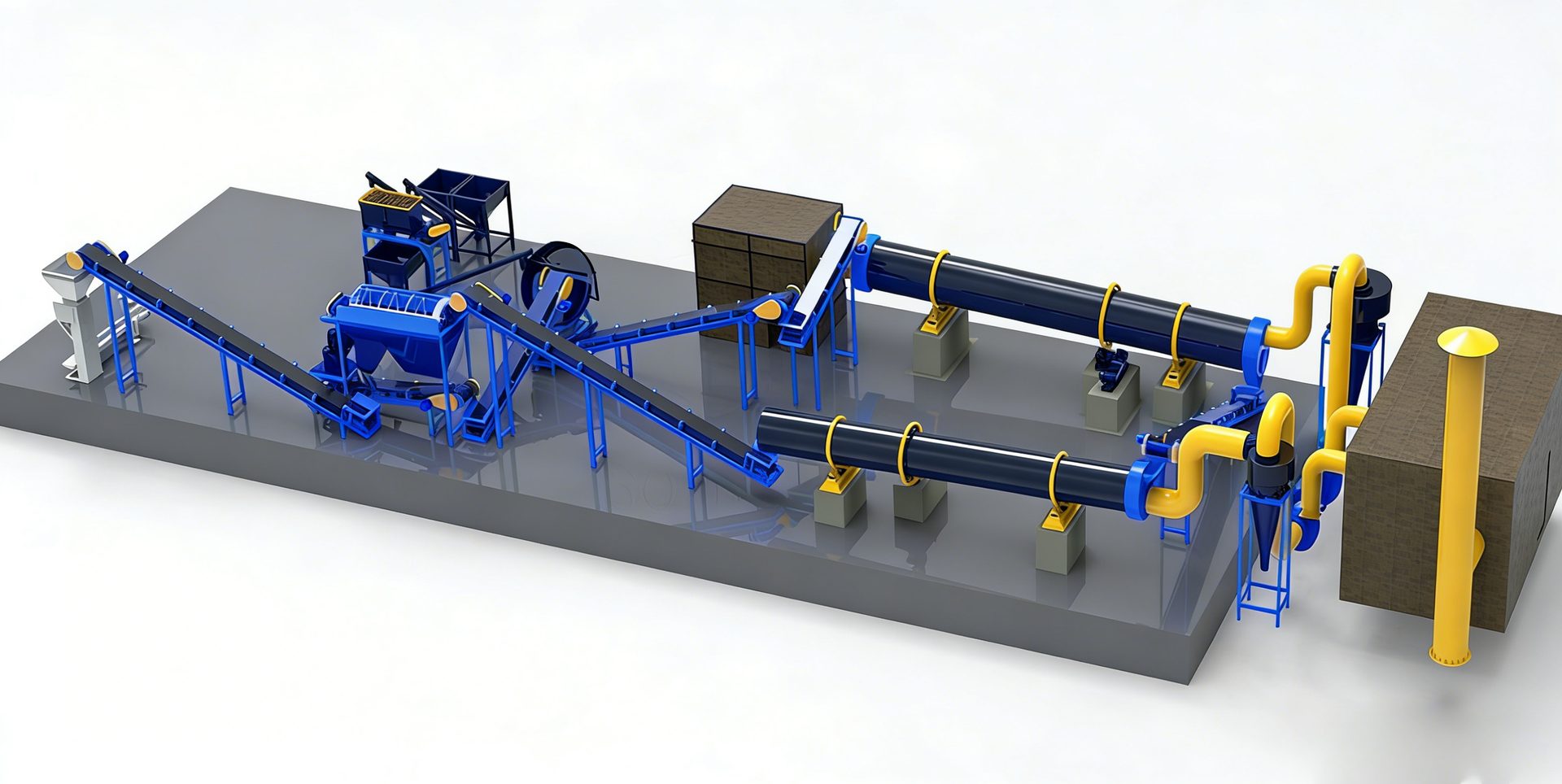
3D Plant Layout
A detailed 3D plant layout showing complete line geometry, equipment balance, and material flow — designed for your factory dimensions.
Process Flow Evidence
Complete process flow from batching through granulation, drying, cooling, grading, to finished packaging — each module engineered and matched for your target capacity.
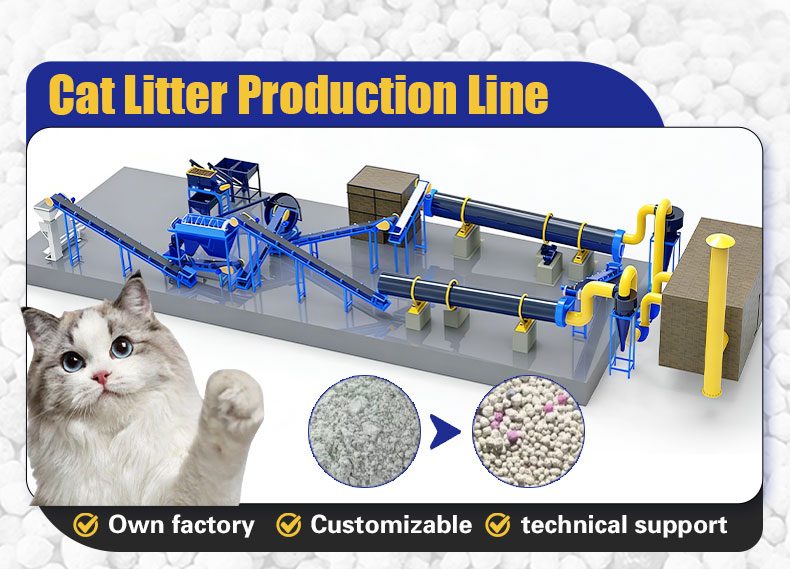
Product Concept Visual
Finished spherical bentonite cat litter product concept — smooth, uniform 1-4 mm pellets ready for premium retail positioning.
Why Choose Us
Start your plant design >Custom 3D Layout Design
Optimized for your specific warehouse dimensions to minimize material handling distances, reduce conveyor length, and improve overall production flow efficiency.
On-Site Installation
Our engineers travel to your site to assemble the plant, test every equipment module, commission the full line, and provide hands-on startup training for your operators.
Formula & Parameter Tuning
Operators are trained to adjust disc angle, spray volume, dryer temperature, and screening settings for local bentonite quality.
Complete Dust Control
Dust extraction, duct routing, cyclones, and baghouse collectors are planned as part of the production ecosystem.
Turnkey Equipment Matching
All units -- crusher, mixer, granulator, dryer, cooler, screen, conveyors, dust collector, and packaging machine -- are matched for balanced throughput as one integrated production line.
ROI-Focused Proposal
Each quotation includes capacity planning, a full equipment list, 3D layout concept, estimated utility consumption, and production cost breakdown to support your investment decision.