SINO MAXTON GROUP Co.,Ltd
News Details
Disc Granulator vs Rotary Drum Granulator for NPK Fertilizer: Which Fits Your Plant? – Complete 2026 Guide
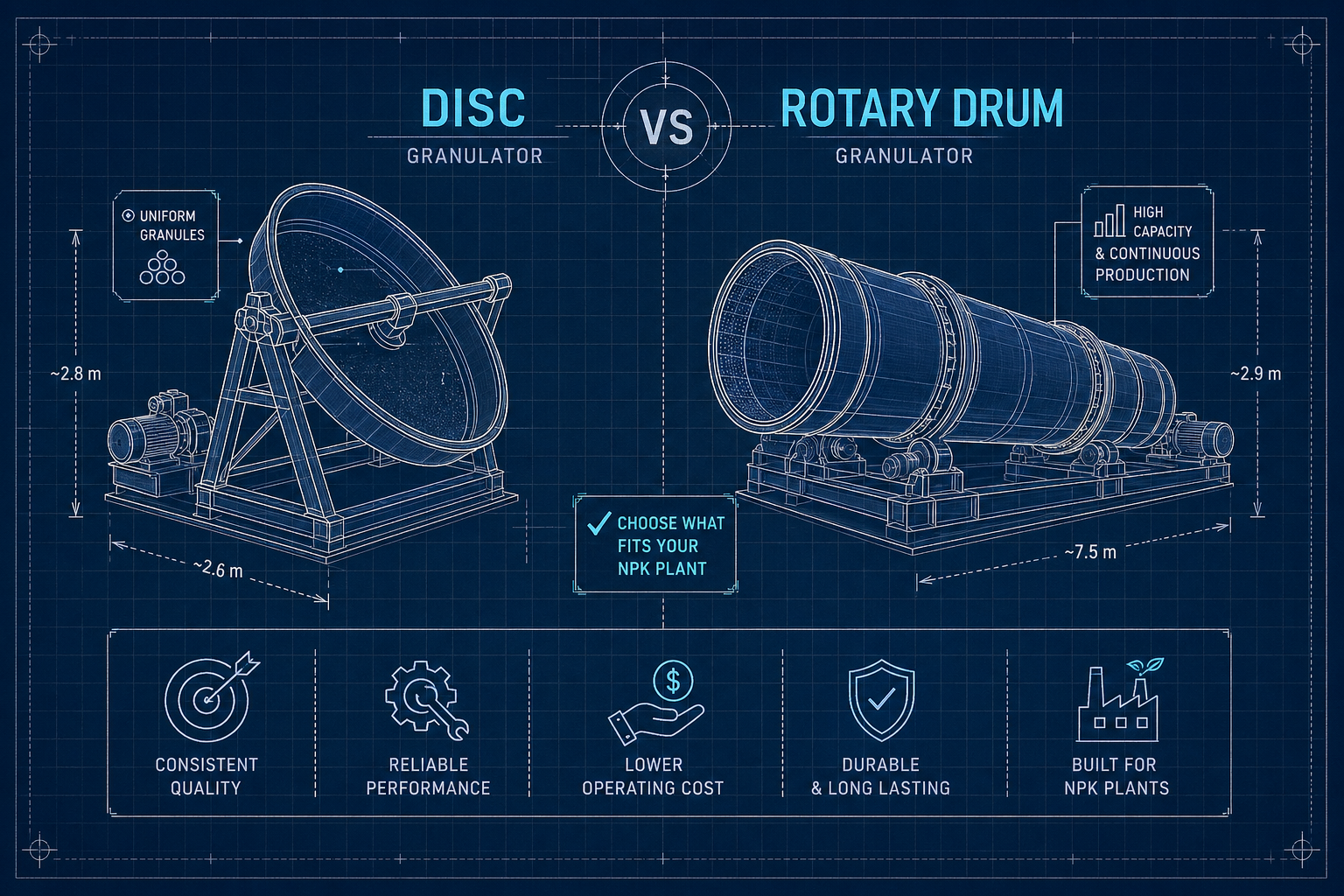
Choose the wrong granulator for your NPK line, and you will not know it immediately. When weighing a disc granulator vs a rotary drum granulator for NPK fertilizer, a poor match tends to surface over weeks to months: granulation rates running 15-20 points below target, a return material load overwhelming the crusher, or a maintenance crew burning time on a machine that was supposed to run steadily between scheduled inspections. The downstream cost in rework, lost output, and potential equipment changes can reach substantial five-figure sums depending on plant scale and how long the mismatch goes unaddressed.
At MAXTON, we manufacture both disc and rotary drum granulators for NPK production lines and have worked on equipment selection decisions across operations of every scale. Both machines work. Both produce market-ready NPK granules through wet granulation. But they work differently, and the performance gap between a good match and a poor one shows up at every point in the process. This article gives you the actual numbers: throughput ranges, granulation rates, energy draw, CAPEX benchmarks, and a clear framework to match machine type to your production scale and formula. Understanding the disc granulator vs. the rotary drum granulator for NPK fertilizer decision is critical for any NPK plant investment.
How Each Machine Actually Forms an NPK Granule
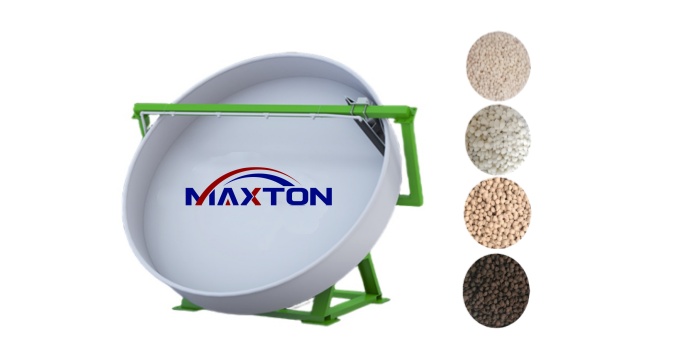
The disc granulator (also called a pan granulator or disc pelletizer) feeds raw material powder onto a rotating inclined plate set at a 35-55 degree angle. A liquid binder is sprayed in, particles nucleate, and centrifugal rolling action builds them into spheres layer by layer. Oversized and undersized material discharges separately for return or screening. The key design variables are disc diameter (ranging from 0.5 to 3.6 meters), rotation speed, and inclination angle. Each variable gives the operator a live adjustment point during the run.
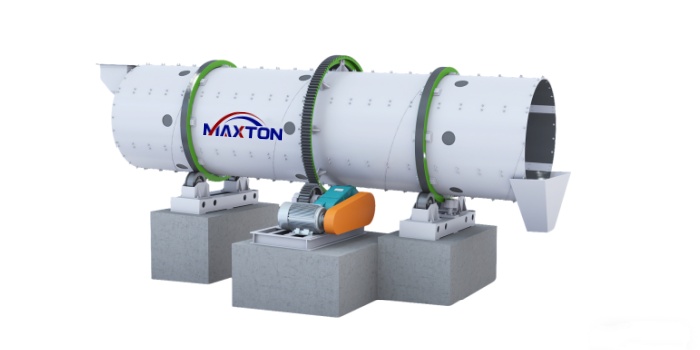
The rotary drum granulator moves material through a slowly rotating inclined cylinder at a 15-20% fill rate with a 2-5 degree slope. Binder or steam is injected at the feed end, and granules form through cascading tumble as material rolls the length of the drum. The process is continuous and enclosed. Design variables include the drum’s length-to-diameter ratio, retention time, and shell speed in RPM. Because the process is sealed, operators cannot observe granule growth in real time.
That mechanical difference shapes everything that follows. The open disc gives real-time visual control over granule development. An operator can adjust inclination or spray rate mid-run without stopping the machine. The enclosed drum locks in process conditions, which favor consistent output at scale but limit flexibility when the formula changes. These are not minor operational preferences—they drive the throughput figures, yield rates, and energy costs compared in the sections below. This fundamental difference is why the disc granulator vs rotary drum granulator for NPK fertilizer decision has such significant operational consequences.
Disc Granulator vs Rotary Drum Granulator for NPK Fertilizer: Throughput, Yield, and Granule Quality
Disc pelletizers operate in a standard commercial range of 1-6 t/h per unit. Larger models exist, but for most NPK plants, that 6 t/h ceiling is the practical limit of a single disc unit. To reach 10 t/h, you need at least two machines running in parallel. Rotary drum granulators handle 5-30+ t/h from a single unit. For a plant targeting 15 t/h, that is one drum versus three or more disc units, with all the coordination complexity that implies.
Granulation Rate and Return Material Load
Granulation rate tells a different story. Disc granulators consistently achieve 80-95% granulation rates for compound NPK, with well-tuned configurations reporting above 93% on a steady-state basis. Rotary drum granulators reach up to 70%. That 20-25 point gap has direct equipment and cost consequences. When evaluating disc granulator vs rotary drum granulator for NPK fertilizer, this granulation rate difference is often the deciding factor.
Material that does not granulate becomes return feed, which goes back through the crusher and elevator before re-entering the granulator. A higher return ratio means more wear on supporting equipment, more energy consumed per net tonne of product, and a larger auxiliary equipment specification to handle the load.
Granule Size, Sphericity, and Hardness
On granule quality, the two machines split along different lines. Disc units produce tight 3-5 mm spherical granules with sphericity typically above 80% under standard NPK operating conditions, making them the preferred choice for retail-bagged NPK where visual uniformity affects buyer perception.
Rotary drum granulators produce 3-6 mm granules with a wider size distribution, but the extended tumbling time builds harder granules with stronger crush strength. For bulk blending operations where physical durability in handling matters more than uniformity, the drum’s output profile is the better fit. This quality distinction is another key factor in the disc granulator vs rotary drum granulator for NPK fertilizer decision.
| Comparison Point | Disc Granulator | Rotary Drum Granulator |
|---|---|---|
| Throughput per unit | 1-6 t/h | 5-30+ t/h |
| Granulation rate | 80-95% (up to 93% steady-state) | Up to 70% |
| Granule size | 3-5 mm (tight distribution) | 3-6 mm (wider distribution) |
| Granule shape | Spherical (sphericity >80%) | Irregular (harder) |
| Process visibility | Open – real-time adjustment | Enclosed – cannot observe |
| Flexibility for formula changes | High | Low |
Energy, Footprint, and CAPEX: Disc vs Rotary Drum Granulator for NPK
Disc granulators carry a genuine low-energy classification. Based on motor ratings and throughput specifications across the product range, a disc unit processing NPK at 3-6 t/h draws approximately 5-15 kWh per tonne at the granulator stage, an estimate that varies with feed moisture and formula composition.
Rotary drum granulators have standalone motor ratings of 5.5-37 kW across the 1-30 t/h range, but the full wet-process system adds a rotary dryer, cooler, and recycle circuits. Total system energy for a drum-based line is typically modeled at 10-30+ kWh per tonne, depending on formula moisture and throughput utilization, with dryer load accounting for the largest share of that range. At full rated capacity, the drum’s high output amortizes the fixed energy draw and brings per-tonne costs down; at partial utilization, that efficiency advantage disappears quickly. This energy consideration is central to any disc granulator vs rotary drum granulator for NPK fertilizer analysis.
Footprint and Civil Requirements
Footprint and civil requirements are split clearly between the two machine types. A medium disc unit in the 5-11 kW range occupies roughly 2.8 x 2.75 meters and installs easily in existing buildings with standard ceiling heights. There are no significant rotational loads requiring specialized foundations.
A rotary drum line needs substantially more floor length to accommodate the drum body, feed connections, discharge chute, and the downstream dryer and cooler that the process requires. Drum installations commonly require reinforced foundations or a structural review to address rotational and dynamic loads. For greenfield plants designed around a drum line, that is a manageable engineering task. For a retrofit into an existing building, the disc unit is the far more practical choice.
| Comparison Point | Disc Granulator | Rotary Drum Granulator |
|---|---|---|
| Energy consumption (granulator stage) | 5-15 kWh/tonne | 5.5-37 kW motor |
| Total system energy | Lower | 10-30+ kWh/tonne (including dryer) |
| Footprint (medium unit) | ~2.8 x 2.75 m | Substantially larger (drum + dryer + cooler) |
| Foundation requirements | Standard | Reinforced required |
| Retrofit-friendly | Yes | No |
CAPEX and Operating Costs Across Production Scales
At a small scale (1-3 t/h), disc granulator CAPEX runs 800−5,000 for the machine alone. Drum systems at this scale are uncommon and economically illogical.
At medium scale (3-10 t/h), disc units range from 5,000to16,000; a complete drum-based wet line including dryer, cooler, and screener approaches 30,000−100,000. The gap widens with scale.
For large operations targeting 10-30 t/h, full drum production lines range from 30,000 to 460,000, depending on automation level and auxiliary specification, while reaching the same output with disc units requires multiple parallel machines, and the coordination, piping, and control complexity that multiplies capital costs non-linearly.
When comparing disc granulator vs rotary drum granulator for NPK fertilizer on CAPEX, the decision often comes down to scale:
| Scale | Disc Granulator CAPEX | Rotary Drum Granulator CAPEX (complete line) |
|---|---|---|
| Small (1-3 t/h) | 800−5,000 | Economically illogical |
| Medium (3-10 t/h) | 5,000−16,000 | 30,000−100,000 |
| Large (10-30 t/h) | Multiple parallel units required | 30,000−460,000 |
Operating Costs
Operating costs tell a different story. Drum systems carry higher return material ratios (up to 30% recycle in some configurations), which means the crusher, elevator, and screens upstream of the granulator must be sized and maintained to handle that load continuously.
Disc units have fewer internal wear surfaces, and because the disc is open and visible, maintenance access is straightforward. Drum internals, including lifting flights and shell lining, require inspection through access ports; service intervals are longer, but each service event is more involved.
The practical OPEX difference between the two machines shows up most clearly in how often operators need to intervene to adjust process parameters. A disc granulator running an NPK blend invites frequent fine-tuning; a drum running the same blend at steady state largely manages itself between scheduled inspections.
Matching the Right NPK Granulation Equipment to Your Formula and Scale
For low-to-medium concentration NPK formulas (up to roughly 40% total nutrients), both machines handle the chemistry. The decision comes down to what you are optimizing for.
Disc granulators are the stronger choice when granule uniformity and visual quality drive product value—retail-packaged specialty blends where end-users evaluate quality by appearance and consistency, for example.
Rotary drum granulators are the better fit when production volume is the primary variable and minor granule size variation is acceptable, as it typically is for bulk commodity NPK destined for large agricultural cooperatives or commodity markets.
Feed moisture changes the equation. Disc granulators work within a moderate moisture window, with 25-30% feed moisture commonly cited as optimal for compound NPK granulation. Rotary drum granulators operate best at 15-20% feed moisture with natural polymer binders at 3-5 kg per tonne. Both require binder inputs, but the drum system is more sensitive to feed moisture consistency because the enclosed environment limits real-time correction.
For high-concentration NPK blends above 40% total nutrients, neither machine is the obvious first choice. High-solubility salts at elevated concentration resist wet agglomeration without significant moisture addition, which then raises drying costs and can compromise granule integrity.
In these cases, dry granulation via a double roller extrusion granulator is worth serious evaluation before committing to a wet granulation line. No drying circuit is required, granules are dense, and the capacity range of 1-6 t/h covers the majority of specialty NPK operations. Many buyers miss this when quoting equipment: the granulator type must match the formula chemistry, not just the throughput target. This is an important consideration that goes beyond the standard disc granulator vs rotary drum granulator for NPK fertilizer comparison.
Decision Framework for Common Production Scenarios
The following framework distills those variables into actionable guidance for the most common production scenarios:
| Scenario | Recommended Granulator | Reason |
|---|---|---|
| Under 6 t/h with premium granule quality required | Disc Granulator | Superior uniformity, lower CAPEX, smaller footprint |
| Over 6-8 t/h with bulk commodity NPK | Rotary Drum Granulator | Higher throughput efficiency, better per-tonne economics |
| High-concentration formula above 40% nutrient | Double Roller Extrusion (evaluate first) | No drying required, dense granules |
| Tight capital budget, small plant, or retrofit installation | Disc Granulator | Wins on CAPEX and footprint |
| Greenfield plant, high throughput, long-term operation | Rotary Drum Granulator | OPEX efficiency at scale justifies a higher initial investment |
Raw material variability often changes the answer to all of the above. Particle size distribution, actual feed moisture, and salt composition in your specific NPK blend can push both machines’ performance outside the published ranges. A short technical review of the actual feed material is the most reliable way to confirm the disc granulator vs. the rotary drum granulator for NPK fertilizer selection before committing capital.
Which Machine Is Right for Your Operation?
The core finding holds across scales and formulas:
-
Disc granulators win on granule uniformity, lower CAPEX, and smaller footprint for plants under 6-8 t/h
-
Rotary drum granulators win on throughput efficiency and per-tonne economics once output targets exceed that threshold
Neither machine is universally better. Formula chemistry adds a third variable that can override both scale and budget logic entirely. When the question is disc granulator vs rotary drum granulator for NPK fertilizer production, the right answer is always the one tied to your specific formula, your site, and your output target—not a general preference.
Get a Free Granulator Selection Consultation from MAXTON
MAXTON manufactures both disc granulators and rotary drum granulators, along with complete NPK production lines from raw material handling through to packaging.
Our engineering team offers a free consultation to review your NPK formula, throughput target, and site conditions before recommending a specific configuration. It is a focused technical conversation, and the outcome is a clear equipment recommendation grounded in granulation line experience across plants of every scale.
Contact MAXTON today:
| Contact Method | Information |
|---|---|
| Email (fastest) | svip@maxtonorg.com |
| Website | https://fertifactory.com/ |
| Phone | +86-18237180035 |
| Response Time | Within 24 hours |
What MAXTON provides:
-
Both disc and rotary drum granulators – unbiased recommendations
-
Complete NPK production lines from raw material to packaging
-
Technical review of your specific formula and feed material
-
CAPEX and OPEX analysis for your target throughput
-
Installation guidance and operator training
-
Written after-sales support terms
Send your inquiry to svip@maxtonorg.com to schedule your free granulator selection review. Bring your formula specs and throughput target. We will handle the rest.
About MAXTON Machinery
MAXTON is a leading manufacturer of NPK fertilizer production lines, disc granulators, rotary drum granulators, and complete wet granulation systems. With over 20 years of experience and installations in more than 50 countries, MAXTON provides unbiased equipment recommendations based on your specific production requirements.
Why MAXTON for your NPK granulator decision:
-
20+ years of fertilizer equipment experience
-
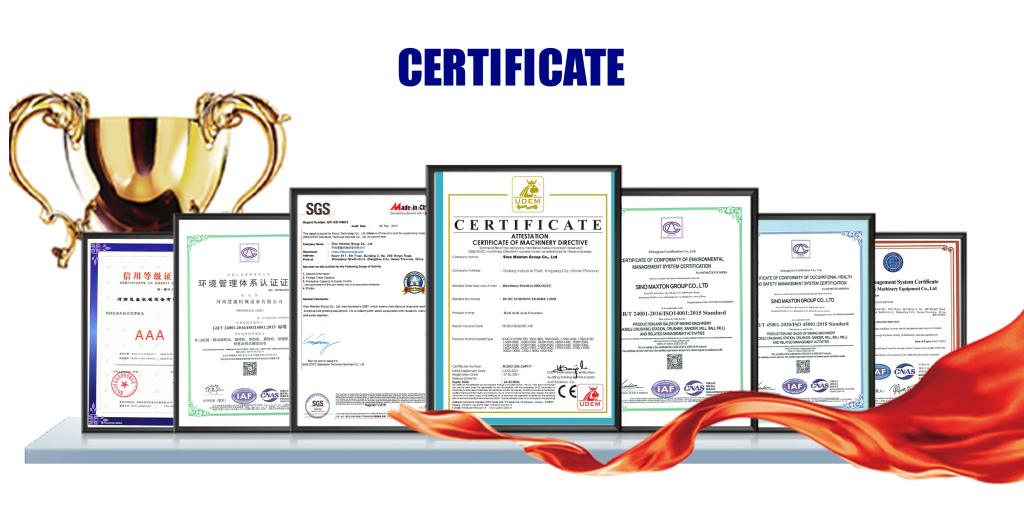
ISO9001 and CE certified equipment
-
Both granulator types available – unbiased advice
-
Complete production lines from a single supplier
-
On-site commissioning and operator training
-
Written after-sales service commitments
Related Posts
9 月 15, 2026
Fertilizer Plant Cost in 2026: Real Budget Ranges for Organic, Liquid, and NPK Production
Quick answer: A small organic fertilizer plant can start under $50,000. A commercial granular fertil...
8 月 24, 2026
Fertilizer Production Line: A Complete Guide to Equipment, Processes, and Components
What Are the Main Components of a Fertilizer Production Line? A complete fertilizer production line ...
Give us a call or Simply Complete the Form
Address:Zhengzhou City, Henan Province, ChinaPhone:+86-18237180035Email:svip@maxtonorg.com