SINO MAXTON GROUP Co.,Ltd
News Details
Fertilizer Plant Construction: Local Production Line & EPC Solutions
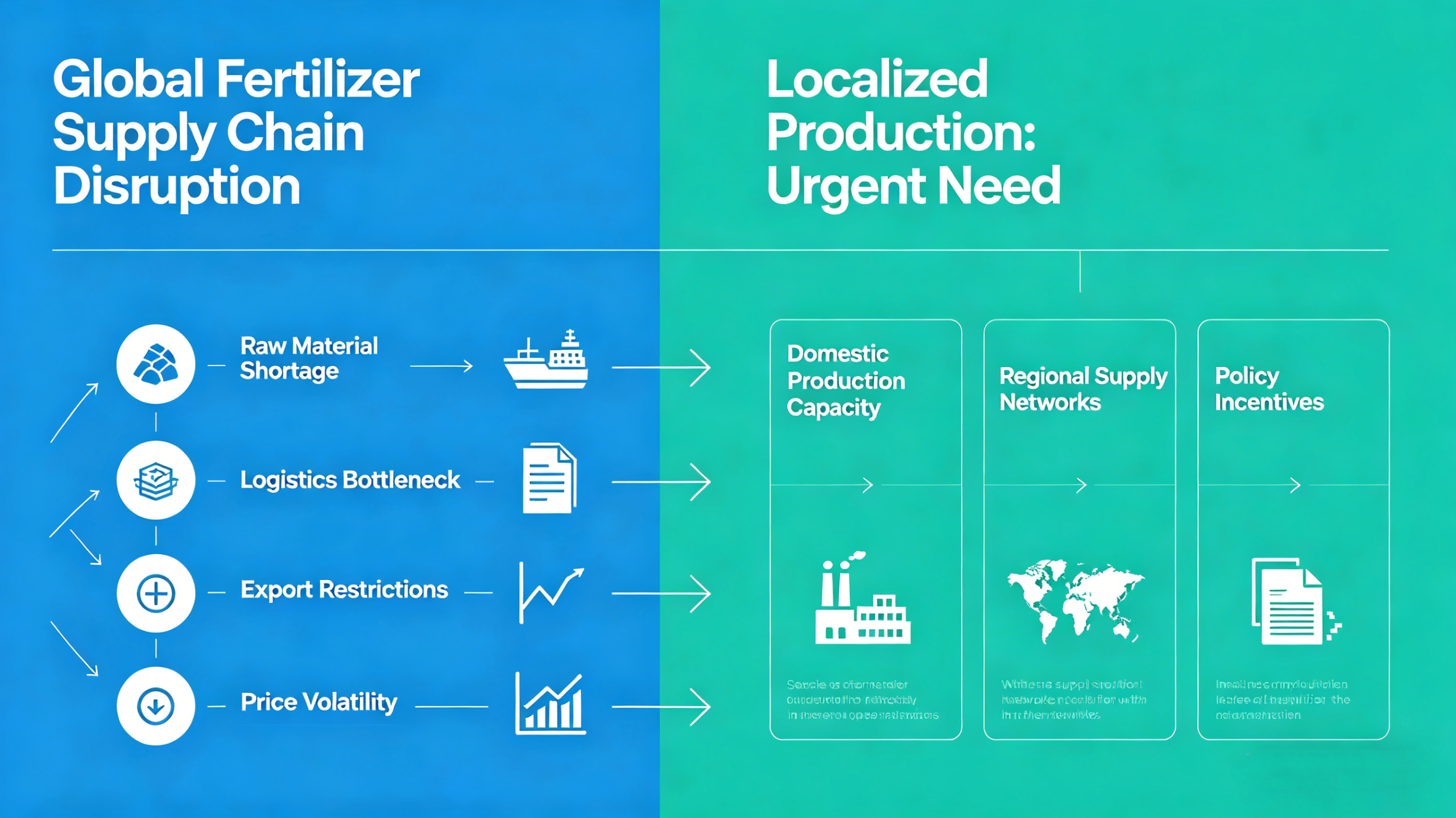
The Russia-Ukraine war continues. The Middle East is on fire. Global fertilizer supply chains are experiencing a double-break crisis:
-
Strait of Hormuz shipping down 95% – Middle East urea exports collapsed 80%
-
Russia tightens ammonium nitrate export controls
-
Sulfur and ammonia prices surge with energy costs
The results are already on the table:
-
Urea up over 75%
-
DAP up 25%
Farmers worldwide face empty fields with no fertilizer to apply.
Distant wars and narrow straits have so tightly gripped food security. A brutal and clear conclusion has emerged: the era of relying on imported fertilizer is accelerating toward its end.
Whoever builds a local fertilizer plant with stable, controllable, low-cost production will seize a true advantage in the next global agricultural cycle.
But building a fertilizer plant does not equal buying equipment. The geopolitical window is short, and blind investment carries greater risk than no investment at all.
1. Hard Supply Chain Breaks – The Gap Is Real and Growing Daily
Latest Global Supply Chain Data (April 2026)
Middle East: 35% of global urea, 28% of ammonia, and 22% of phosphate capacity are concentrated here. Qatar and Iran have urea, ammonia, and sulfur fully offline. Monthly urea exports have dropped from 1.7 million tons to just 300,000 tons. Wartime controls ban exports.
Russia: Controls over 40% of the global ammonium nitrate trade. Exports were suspended from March 21 to April 21, and nitrogen and compound fertilizer restrictions continue through May 31.
Strait of Hormuz: Carries 33% of global fertilizer shipping, 25% of ammonia trade, and 45% of sulfur exports. Shipping volume is down 95%. Three to four million tons of fertilizer are blocked monthly. Marine insurance has tripled.
China: The world’s largest fertilizer producer is restricting exports to protect domestic supply. All phosphate exports are suspended through August 31. The urea export quota is locked at 3.3 million tons per year.
Global Impact
-
South Asia & Africa: Spring planting window missed – summer crop losses are already certain.
-
Europe & Americas: Cost spikes plus tight supply mean farmers reduce planting and fertilizer use – driving higher global grain prices.
-
Import-dependent nations: Longer lead times, price volatility, and high supply disruption risk.
👉 Conclusion: Imported fertilizer is expensive, slow, and unreliable. Major agricultural nations are racing to build local fertilizer plant capacity. Can you still afford to wait?
Real-world success: Zambia was 100% dependent on imported urea. A Chinese-contracted fertilizer plant delivered 300,000 tons per year – covering over 85% of national demand. Complete import independence achieved. This has become Africa’s benchmark for local fertilizer plant construction.
2. The Economics of a Local Fertilizer Plant – Every Day Prices Rise, Payback Periods Shorten
Cost Comparison (Urea Example)
Imported cost: Middle East urea FOB has risen from $500 per ton to $850 per ton (+75%). Add freight, insurance, tariffs, and demurrage – landed cost often exceeds $950 per ton.
Local fertilizer plant production cost:
-
Regions with local feedstock or energy advantages: one-half to two-thirds of the import price
-
No local resources but close to market: still 15–30% lower than imports
Core Advantages of Building a Fertilizer Plant Locally
| Advantage | Description |
|---|---|
| Cost lock-in | Insulate from international price spikes and stabilize production costs |
| Logistics advantage | Drastically cut long-distance shipping and inland transport costs; shorten delivery times |
| Policy incentives | Many countries offer subsidies, tax breaks, and land support for local fertilizer plant projects |
| Market responsiveness | Adjust formulations and capacity to local growing seasons and farmer needs |
| Food security | Protect national agriculture from geopolitical shocks and international supply blocks |
👉 Conclusion: Investing in a fertilizer plant now is not an “extra cost” – it is a strategic move to lock in cost advantage for the next decade.
Proven examples: Egypt built a local phosphate-based fertilizer plant at two-thirds of import cost, exporting $350 million per year. Kyrgyzstan’s Baidoujia compound fertilizer plant achieved product prices 30% lower than imports – with international orders received within one month.
3. Hidden Pitfalls of Blind Fertilizer Plant Construction – Equipment Is Easy, Process Is Hard
Most fertilizer plant failures are not due to equipment quality. They fail because of:
-
Poor process design → poor granulation, uneven drying, material accumulation
-
No lab-scale validation → lab pellets work, but industrial scale fails completely
-
Formula changes → full shutdown, zero output
Equipment determines whether a fertilizer plant can run.
Process determines whether it can make money consistently.
Without mature process design and pre-validation testing, even the most expensive fertilizer plant can become a pile of non-performing assets.
Success case: Kyrgyzstan’s Baidoujia compound fertilizer plant completed pre-validation testing. Zambia’s urea fertilizer plant completed lab-scale process trials. Both achieved first-run success, stable capacity, and avoided blind investment traps.
Maxton: Not Just Equipment – Your Process + Lab Partner for Every Fertilizer Plant
We provide reliable machinery. But our real value is: validated process design plus pre-investment lab testing.
This is the fundamental difference between Maxton and ordinary equipment suppliers.
Our Model: Test First → Design Second → Manufacture Third
Step 1: You send 1–5 kg of your raw material sample.
Step 2: Maxton’s dual-professor lab team delivers:
-
Professor Yang: 30 years of equipment R&D experience
-
Professor Shen: 20 years of fertilizer plant process experience
-
Complete test report
-
Custom process solution
-
Precise equipment selection list
Step 3: After solution approval, detailed design, and full-plant EPC delivery.
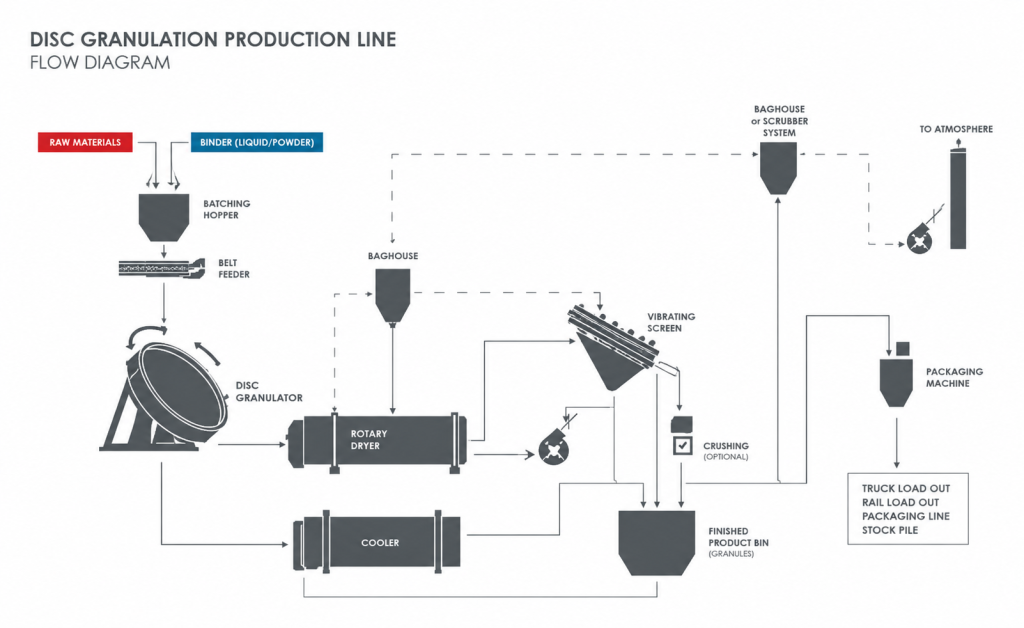
Result: Industrial scale-up risk reduced by over 80%. First-run success, stable output, low consumption, high ROI.
What Maxton Provides for Your Fertilizer Plant
| Category | Offerings |
|---|---|
| Full-range equipment | Granulation, crushing, drying, cooling, screening, coating, full automation control |
| End-to-end process design | Raw material adaptation, route optimization, heat balance, return control, emission compliance |
| Turnkey EPC delivery | Design to production – one responsibility, no delays, no excuses |
| Global proven cases | SE Asia 50,000-ton organic line; Russia 100,000-ton potash project; China high-nitrogen upgrade (pellet rate 75%→92%) |
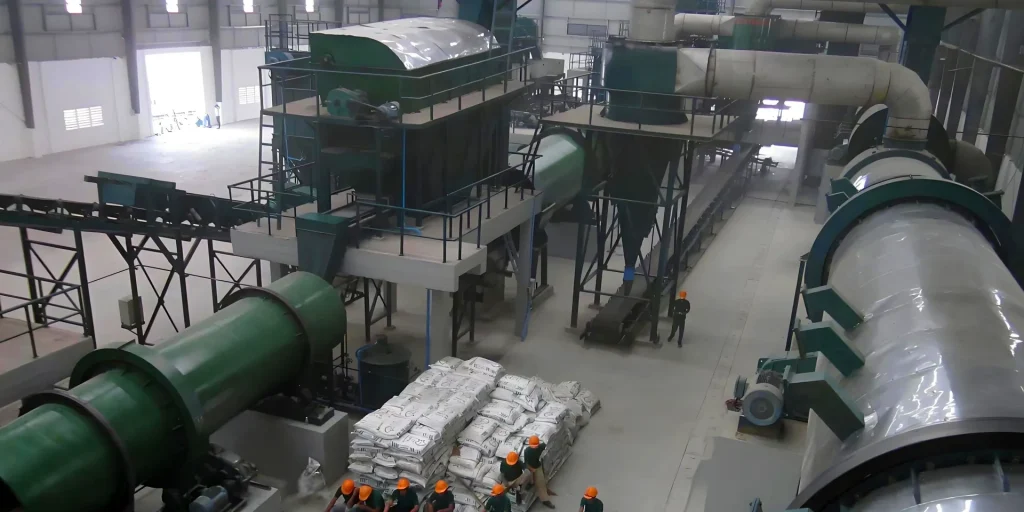
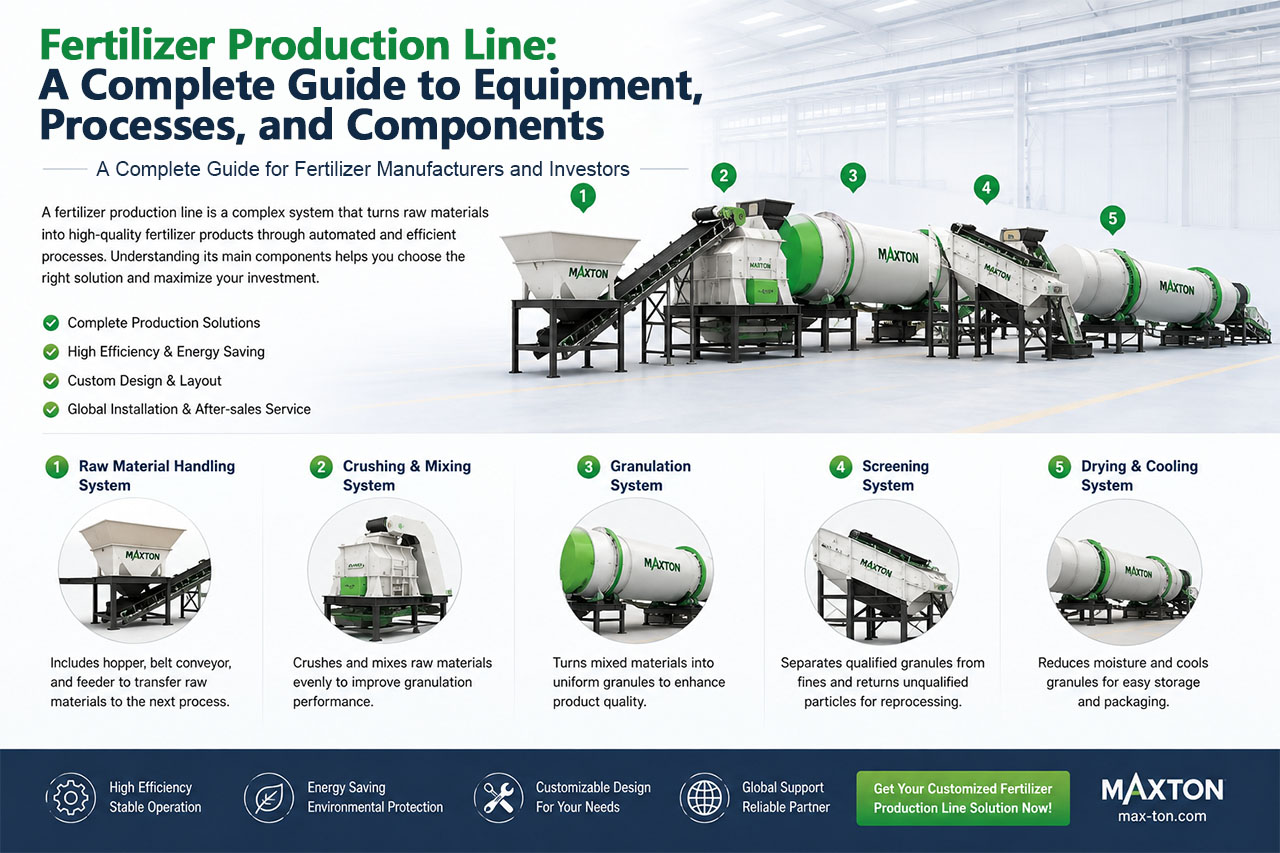
Figure 1: A complete local fertilizer production line designed and delivered by Maxton.
Act Now: 3 Steps to Secure Your Local Fertilizer Plant
The geopolitical window will not wait. Every day fertilizer prices rise, the value of a local fertilizer plant increases. You do not need to risk an entire production line to find out what works.
Step 1
Contact Maxton. Let us know your raw material type, target capacity, and product category (organic, inorganic, compound fertilizer, etc.).
Step 2
Send 1–5 kg of samples. Maxton performs lab-scale testing and feasibility validation.
Step 3
Receive a complete fertilizer plant solution – then make a rational investment decision.
Contact Maxton today and start your path to fertilizer autonomy. Don’t let distant wars and narrow straits choke your agricultural lifeline.
According to the Food and Agriculture Organization (FAO), global fertilizer prices have increased significantly since 2024. Read FAO data on fertilizer prices here.
For more information, see our guide on choosing fertilizer granulators for your local plant.
Process determines profit ceiling. Testing determines investment floor.
Maxton – equipment plus process, safeguarding global food security.
Related Posts
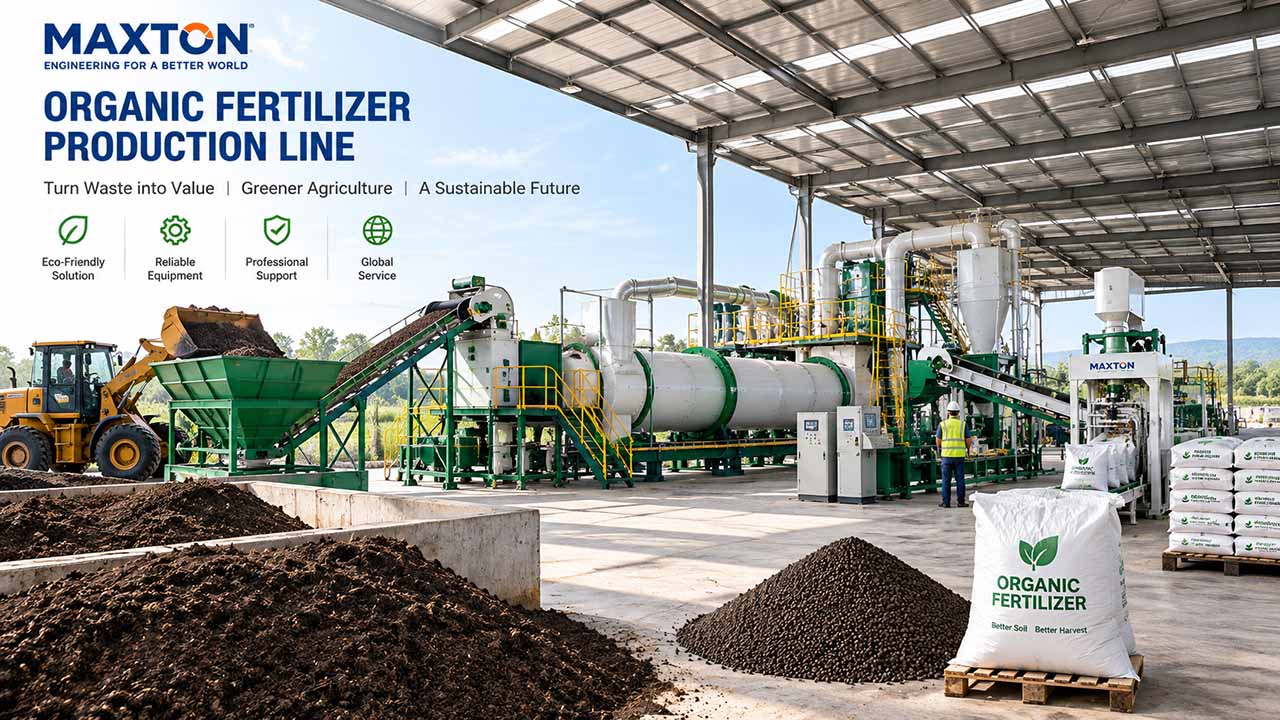
9 月 15, 2026
Fertilizer Plant Cost in 2026: Real Budget Ranges for Organic, Liquid, and NPK Production
Quick answer: A small organic fertilizer plant can start under $50,000. A commercial granular fertil...
8 月 24, 2026
Fertilizer Production Line: A Complete Guide to Equipment, Processes, and Components
What Are the Main Components of a Fertilizer Production Line? A complete fertilizer production line ...
Give us a call or Simply Complete the Form
Address:Zhengzhou City, Henan Province, ChinaPhone:+86-18237180035Email:svip@maxtonorg.com