SINO MAXTON GROUP Co.,Ltd
News Details
Best Organic Fertilizer Granulators: The Buyer’s Guide
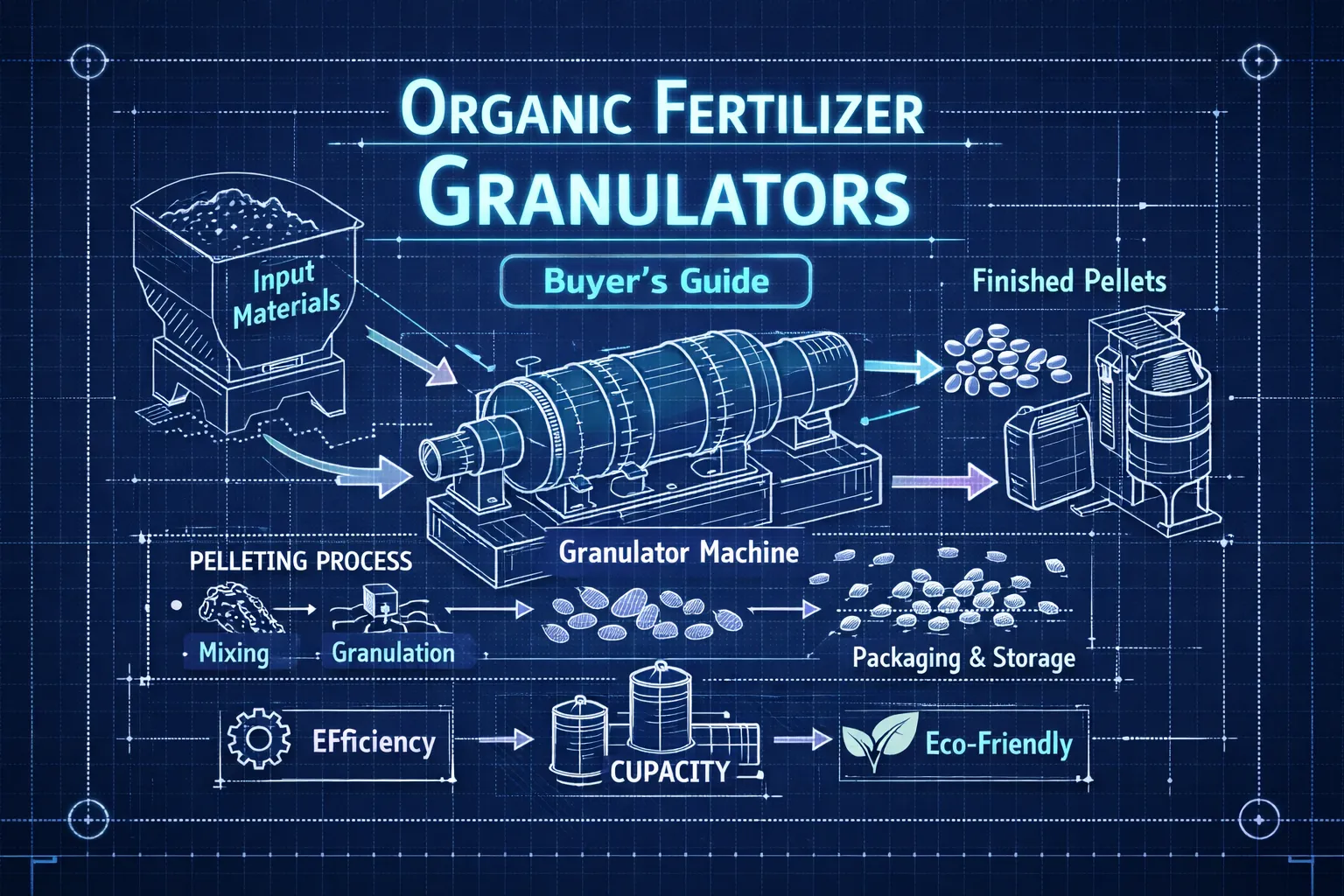
Choosing the best organic fertilizer granulator is the most consequential decision in any production line. Get it wrong, and you’re dealing with poor pellet quality, chronic underperformance, and expensive retrofitting. Get it right, and every stage downstream runs cleaner, faster, and more profitably.
Three granulator types dominate organic fertilizer production: the new-type stirring-tooth granulator, the disc (pan) granulator, and the rotary drum granulator. Each one serves a different scale, raw material profile, and budget. They are not interchangeable, and treating them as if they were is the most common and costly mistake buyers make. Working through the full decision with a single technical team, a manufacturer that builds all three types removes the inconsistencies that come from juggling separate vendors with competing sales priorities.
This guide covers throughput ranges, pellet quality benchmarks, material suitability, and a clear framework for making the final call. By the end, you’ll know exactly which machine fits your operation.
Why granulator selection shapes your entire production line
Replacing a granulator mid-operation is rarely straightforward. Once a granulator is specified for a production line, the dryers, screeners, conveyors, and packing systems are all sized around it. Replacing it later typically means significant rework or replacement of the downstream equipment built around it, a costly disruption to avoid with careful upfront specification.
Pre-treatment requirements are non-negotiable regardless of which type you choose. Input material needs moisture in the 20- 40% range, and for disc-type wet granulators, particle size should be crushed to 0.1- 1mm. A machine designed for dry, low-moisture materials will fail with high-moisture poultry manure. A machine built for sticky, high-organic inputs will not perform on dry mineral blends. The wet-versus-dry granulation divide is fundamental: disc, rotary drum, and stirring tooth granulators all belong to the wet granulation category and suit high-organic, high-moisture inputs. Dry extrusion types, flat die and ring die granulators, suit lower-moisture materials and are outside the scope of this guide.
Three metrics determine whether a granulator is actually performing: granulation rate (the percentage of input that becomes viable pellets, ranging from roughly 90% to 97% or higher across types depending on machine and material), throughput (tonnes processed per hour at rated capacity), and pellet quality (uniformity, strength, and size consistency, which directly affects how your product sells). Keep these numbers in mind as you evaluate each type below.
Best organic fertilizer granulator for pure organics: the new type stirring tooth granulator
This machine uses internal high-speed stirring teeth that combine mechanical force with aerodynamic tumbling to form spherical pellets. No binders are required. The organic matter self-coheres under force, which makes this particularly well-suited to sticky, high-moisture inputs like chicken manure, cow dung, and biogas residues. The mechanism handles the exact material profile that causes problems on other machine types. See the new type stirring tooth granulator for a full machine overview and typical configurations.
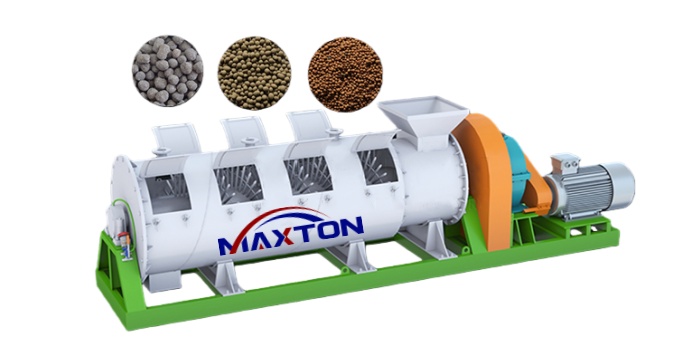
The performance numbers are the strongest in the wet granulation category. Granulation rate reaches up to 97% on high-organic inputs at 20, 40% moisture, with some configurations reported at 97, 98% depending on input material and model. Granule diameter ranges from 2 to 5mm, round and uniform. Throughput runs from 1 t/h on entry-level models up to 8 t/h on larger configurations, with power draw ranging from 37 kW to 110 kW across that range. Factor energy consumption into your operating cost calculations from the start, not as an afterthought. For an industry-focused explanation of the new-type stirring granulator’s operation and advantages, consult this detailed new-type stirring granulator overview.
Post-granulation drying is required because the output moisture is high. This adds both capital cost (a rotary drum dryer and cooler) and ongoing energy cost to the line. That said, if your raw material is sticky and high-organic, this organic fertilizer granulator machine delivers the highest granulation rate available, which means less material waste per tonne of finished product. For small to medium organic fertilizer plants running pure compost or manure inputs, the stirring tooth granulator is typically the right call.
Disc granulator: the accessible starting point for new producers
Pan granulation works on a straightforward principle. A slanted rotating disc receives powdered organic material and a controlled water spray. Centrifugal force rolls particles into balls, and finished granules discharge over the rim as they reach the correct size. The value proposition is mechanical simplicity: fewer moving parts, lower purchase price (typically $1,000, $12,000 depending on model), and easier operator training than the alternatives. Learn more about the standard disc granulator models and their use cases.
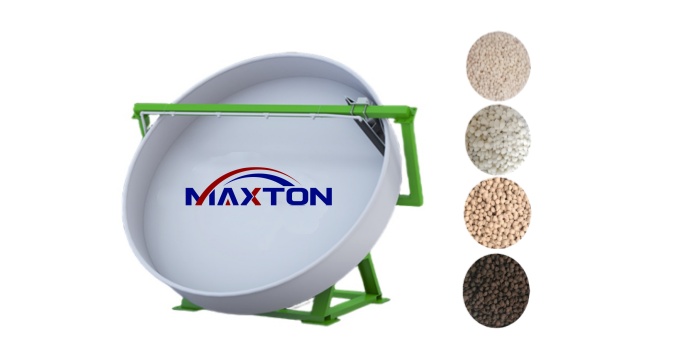
Throughput ranges from 1 to 6 t/h, making this organic fertilizer pelletizer machine the right fit for smaller operations or plants running production trials before committing to higher capacity. Granulation rate sits at approximately 93%, which is solid but below what the stirring tooth type achieves on the same inputs. The adjustable disc angle gives some control over granule size, with output typically in the 3- 6mm range. It works well with cow manure, poultry manure, and composted organic matter at 20 40% moisture, but it is less effective on very fine powders or materials with extremely high organic content compared to the stirring tooth type.
The honest trade-off: low upfront cost and ease of operation come at the expense of granulation efficiency and output ceiling. A disc granulator is a practical entry point for producers who are establishing their process and managing initial capital carefully. It is not a long-term solution for any plant that plans to scale past 6 t/h. Build your expansion plan before you buy, and factor in whether you’ll need to replace this machine within two or three years.
Rotary drum granulator: when you’re building for volume
The rotary drum granulator operates on continuous tumbling agglomeration. A rotating cylinder with internal lifters and a liquid spray system continuously rolls organic powder into pellets as material moves through the drum. The output is high-strength, round granules in the 3- 6mm range, with good uniformity that translates well into a commercially marketable product. It handles the full range of livestock and poultry waste inputs as well as composted kitchen waste at scale. See a representative rotary drum granulation production line for typical drum configurations and line integration notes.
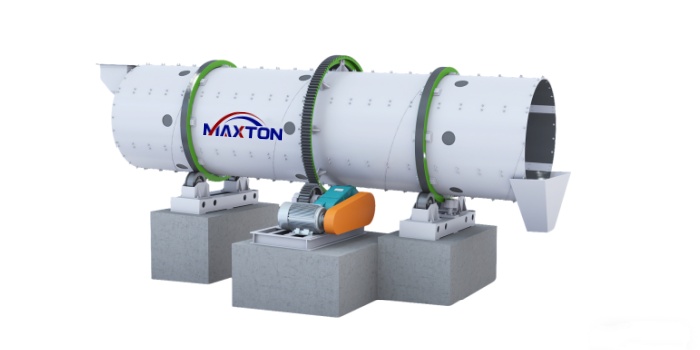
Capacity is where this machine separates itself. Throughput runs from 1 t/h on smaller models up to 30 t/h on large commercial configurations, with power draw typically in the 15- 37 kW range depending on model size. The energy cost per tonne of output at high capacity is approximately 1.5, 1.85 kWh/t, derived from motor power relative to rated capacity; actual consumption varies with load and operating conditions. For detailed rotary drum specifications and design variations, review this practical rotary drum granulator resource.
Purchase price ranges from $10,000, $30,000, with the higher end covering large-scale drum configurations. Downstream drying and cooling equipment is required, which adds to both capital and operating costs, but at high volumes, the cost-per-tonne drops significantly compared to disc or stirring tooth options.
This machine is specified for plants producing 5 t/h or more running continuous production shifts. It suits operations processing large volumes of cow manure or mixed organic waste at consistent moisture levels, and producers who have committed to a full production line and need a fertilizer granule-making machine capable of commercial-scale output. If you’re building a facility to supply fertilizer at meaningful regional volume, the rotary drum is the right foundation.
Side-by-side: throughput, pellet quality, and material fit
Raw material is the first filter. Chicken and poultry manure, with its sticky, high-moisture profile, is where the stirring tooth granulator leads. Cow manure at scale is where the rotary drum granulator handles volume without sacrificing output quality. Composted mixed organics at moderate volume work with either the disc or stirring tooth type, depending on your output targets.
Capacity planning is where buyers most often undersell themselves. The capacity ratings below assume correct moisture and particle size pre-treatment; real-world output drops when pre-treatment is inconsistent.
- Disc granulator: 1, 6 t/h, granulation rate ~93%, granule size 3, 6mm
- Stirring tooth granulator: 1, 8 t/h, granulation rate up to 97, 98%, granule size 2, 5mm
- Rotary drum granulator: 1, 30 t/h, granulation rate ~90, 97%, granule size 3, 6mm
Undersizing a granulator creates a bottleneck that affects the entire line. If your raw material supply can support 10 t/h of throughput, specifying a 6 t/h granulator limits every machine downstream and caps your revenue ceiling. Operating costs are the other factor buyers routinely underestimate. All three wet granulation types require post-granulation drying and cooling, which represents an additional capital line item and ongoing energy cost. At high volumes, large continuous-feed systems like the rotary drum generally require less manual handling per tonne than smaller disc setups, a labor efficiency advantage that compounds as production scales. For a technical performance comparison of disc and drum granulators, see this industry analysis.
Best organic fertilizer granulator: how to make the final call and where to source it
Before speaking to any supplier, answer these questions clearly: What is your primary raw material and its typical moisture level? What is your target throughput in tonnes per hour? Do you have, or are you budgeting for, post-granulation drying and cooling equipment? With clear answers in hand, you’re positioned to evaluate recommendations rather than simply receive them.
Sourcing from a manufacturer that builds multiple granulator types changes the dynamic of the buying conversation. Consulting separate vendors for each machine type creates inconsistencies in specifications, lead times, and technical accountability when something goes wrong. MAXTON carries disc granulators, rotary drum granulators, and new type stirring tooth granulators as part of a complete fertilizer pelletizer portfolio. A single technical consultation produces a recommendation based on your inputs, capacity targets, and budget, not a pitch for whichever machine a given vendor happens to stock.
MAXTON also supplies the supporting equipment a complete production line requires: dryers, screeners, conveyors, batching systems, and packing machines. That matters because a granulator without a properly matched downstream line is not a functioning fertilizer plant. For a broader market perspective, before you request quotes, consult this complete buyer’s guide to fertilizer granulator machines.
Before requesting a quote, confirm the following from any supplier: a granulation rate guarantee based on your specific raw material sample; power consumption data expressed as kWh per tonne of output, not just rated motor power; and confirmation of commissioning support and spare parts availability. Any manufacturer that can’t answer those questions with specifics is not ready to be your supplier.
The right granulator is the one that fits your operation
The best organic fertilizer granulator for your plant is not the most expensive or the most technically advanced. It’s the one that matches your raw material profile, fits your throughput target, and integrates cleanly with the rest of your production line. Stirring tooth granulators lead on granulation rate and suit high-organic sticky inputs. Disc granulators are the right starting point for smaller plants with modest budgets. Rotary drum granulators are built for continuous large-scale output where cost-per-tonne efficiency matters most.
Related Posts
9 月 15, 2026
Fertilizer Plant Cost in 2026: Real Budget Ranges for Organic, Liquid, and NPK Production
Quick answer: A small organic fertilizer plant can start under $50,000. A commercial granular fertil...
8 月 24, 2026
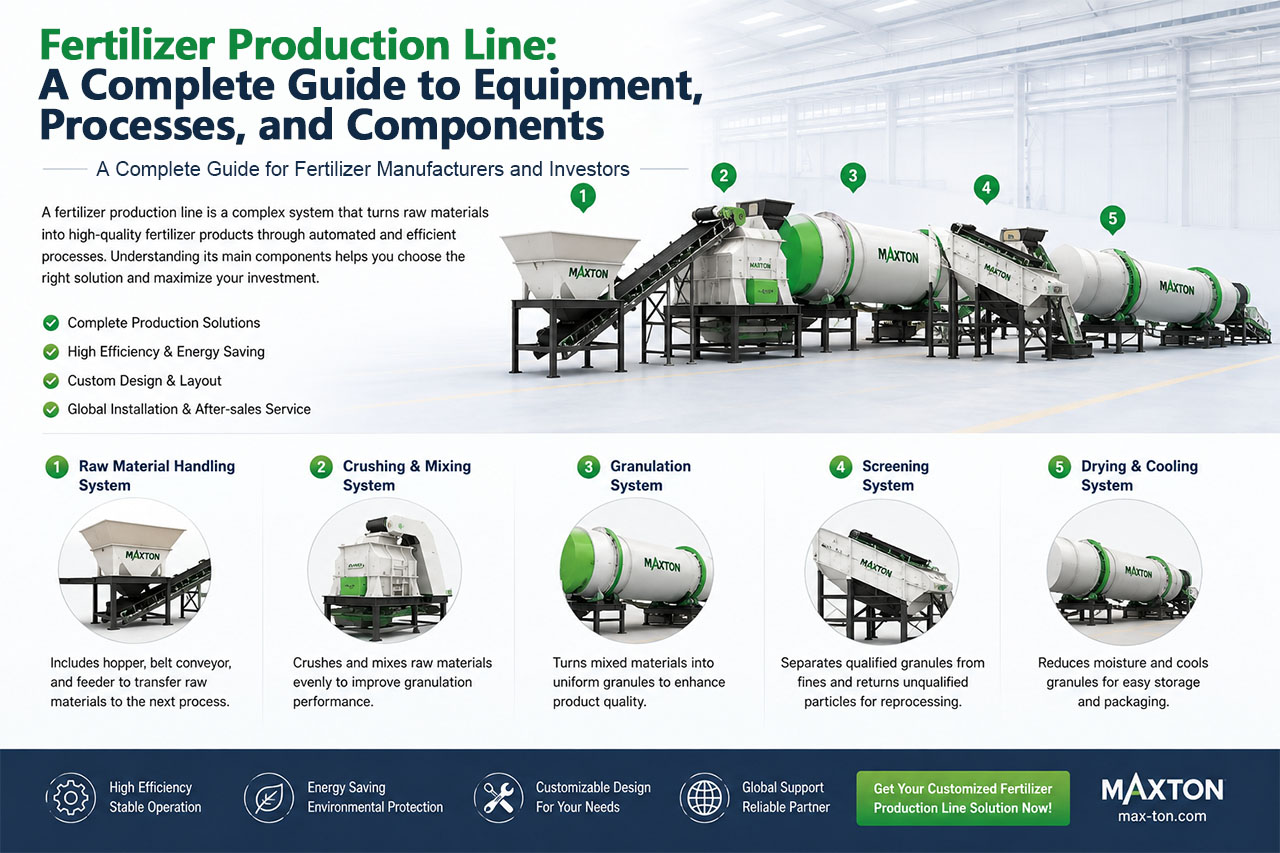
Fertilizer Production Line: A Complete Guide to Equipment, Processes, and Components
What Are the Main Components of a Fertilizer Production Line? A complete fertilizer production line ...
Give us a call or Simply Complete the Form
Address:Zhengzhou City, Henan Province, ChinaPhone:+86-18237180035Email:svip@maxtonorg.com